As of November 2026, exit polls and election results reveal that voter backlash over the military conflict with Iran contributed to major Republican losses, handing control of both congressional chambers to the Democrats, according to Reuters and CBS News.
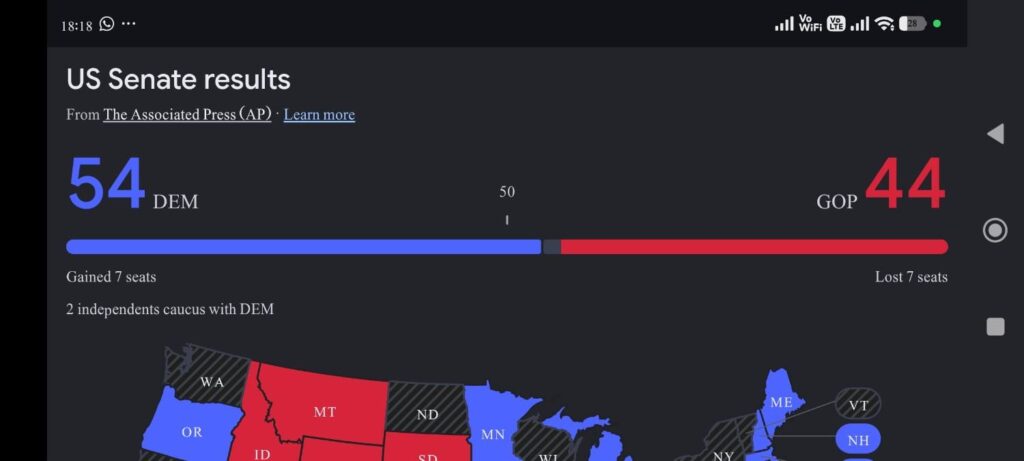
The shadow of a foreign military campaign and persistent economic anxiety collided at the ballot box as Americans reshaped the balance of legislative power. According to Reuters and CBS News, the protracted conflict with Iran proved to be a heavy anchor for Republican candidates, contributing to a bruising election cycle that handed Democrats functional majorities in both the House of Representatives and the Senate.
Exit polls conducted during the voting cycle painted a stark picture of public sentiment. Data indicated that roughly six in ten Americans viewed the military escalation with Tehran as a misguided venture, compounding widespread frustration over soaring living costs, climbing gasoline prices, and disrupted trade routes across the Strait of Hormuz. While domestic pocketbook issues remained the primary driver for a majority of the electorate, foreign policy fatigue emerged as a decisive catalyst in tightly contested districts.
Concessions and Deflection from the White House
Speaking in post-election interviews with Fox News and The Wall Street Journal, President Donald Trump candidly acknowledged that the military confrontation with Iran played a definitive role in the GOP’s congressional setbacks. However, the president maintained that he did not regret authorizing the strikes, asserting that the actions served long-term national security interests despite their immediate political cost.
”I think a part of it was Iran,” Trump remarked, while simultaneously pointing to short-term spikes at the pump as a primary irritant for voters. Deflecting broader personal responsibility for the legislative losses on social media, the president emphasized that his name was not physically on the ballot, writing on Truth Social that his absence shielded local candidates from what he claimed would have otherwise been a sweeping personal victory.
International Repercussions and Tehran’s Assessment
The domestic political earthquake immediately reverberated across international capitals, drawing sharp commentary from the Middle East. According to Al Jazeera and regional wire reports, Mohammad Bagher Ghalibaf, Iran’s chief negotiator and parliament speaker, stated via state media and social channels that the American midterm results reflected a resounding popular rejection of the White House’s military strategy.
”Americans said NO TO WAR, and we endorse this message,” Ghalibaf declared, warning that any attempt by Washington to ignore this democratic signal risks inviting deeper escalation. Despite the fiery rhetoric, back-channel diplomatic efforts continue to explore potential frameworks to secure commercial shipping lanes and de-escalate tensions in the region.
Why It Matters
The outcome introduces a profound institutional gridlock for the remainder of Trump’s term. With the opposition party controlling both chambers of Congress, the executive branch faces a newly empowered legislative branch capable of launching aggressive oversight hearings, probing military expenditures, and restricting appropriations. Trump has already signaled his expectation that Democrats will attempt to pass restrictive legislation, setting the stage for an immediate cycle of presidential vetoes.
As the administration weighs its next moves, the pressure is mounting to either secure a lasting diplomatic off-ramp in the Middle East or navigate an increasingly hostile domestic legislative landscape as political friction defines Washington’s road ahead.
FAQ:
Q1: How did the Iran conflict impact the U.S. midterm elections?
A: According to reports from Reuters and CBS News, voter dissatisfaction with the war and resulting fuel price spikes contributed to significant Republican losses, allowing Democrats to capture majorities in both the House and Senate.
Q2: What was Iran’s official reaction to the election outcome?
A: Iranian parliament speaker and chief negotiator Mohammad Bagher Ghalibaf stated publicly that the results demonstrated an American public rejection of the war, urging Washington to reassess its regional military posture.
Q3: Did President Donald Trump express regret over his administration’s military campaign?
A: No. While admitting the conflict weighed on GOP candidates at the ballot box, Trump told The Wall Street Journal that he does not regret the actions taken against Tehran and would repeat them if necessary.
Q4: What did exit polls reveal about voter sentiment regarding the war?
A: Exit polling indicated that roughly six in every ten American voters felt the military conflict with Iran was the wrong decision, with many citing it as a contributing factor to their vote alongside cost-of-living pressures.
Q5: How will the shift in congressional control affect governance moving forward?
A: With Democrats leading both congressional chambers, political analysts anticipate heightened legislative gridlock, increased oversight on military spending, and frequent presidential vetoes of opposition-led bills.

Khalid Minhas | Editor, Diplomatic Wire
A veteran journalist with three decades of comprehensive experience, Khalid Minhas has covered politics and international relations in depth throughout his career. He has also contributed to academia, teaching journalism and mass communication as a visiting faculty member at various universities in Pakistan. He holds an M.Phil in Mass Communication and is currently a Ph.D research scholar pursuing advanced studies in the field. He is also the author of the book America, Israel aur Islam, providing insightful analysis on the subject.