SpaceX CEO Elon Musk escalated his dispute over the delayed Starlink India license, sarcastically addressing billionaire Mukesh Ambani as the “Prime Minister” and alleging a telecom monopoly. The Indian government rejected the claims, while opposition leader Rahul Gandhi joined the online exchange, heightening the political debate over satellite internet spectrum allocation.
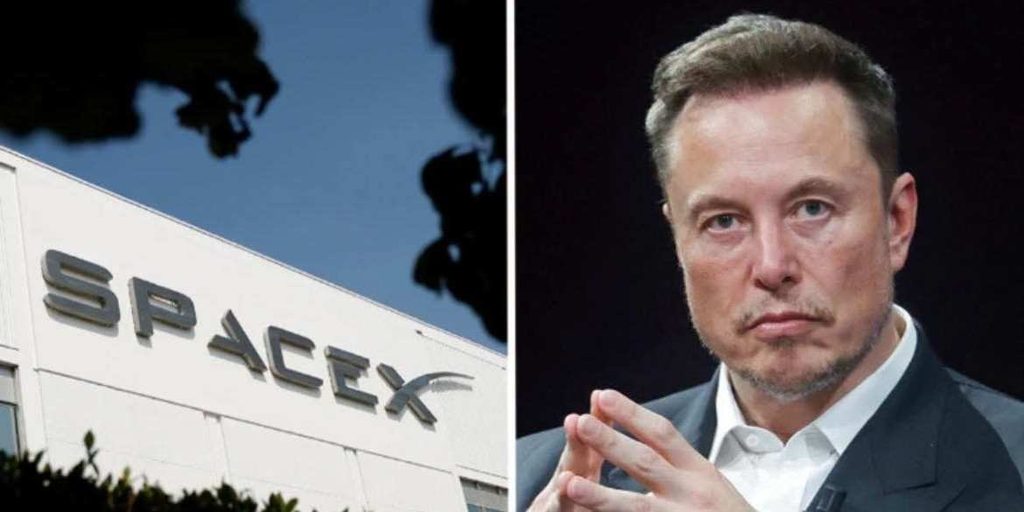
NEW DELHI, Oct 10: SpaceX Chief Executive Officer Elon Musk escalated his public dispute regarding the pending operational clearance for his satellite internet service by sarcastically referring to Reliance Industries Chairman Mukesh Ambani as the “Prime Minister” and the “real boss of India”.
The controversy over the Starlink India license has triggered a political debate involving the Indian government and the country’s primary opposition party.In a post on the social media platform X, which he owns, Musk accused Ambani of protecting a market monopoly while appealing for permission to operate in the South Asian nation.”Dear Prime Minister Ambani, Please accept my humble apologies for not realizing that you are the real boss of India,” Musk wrote. “Naturally, you would prefer to maintain your monopolistic exploitation of the great people of India, but would you nonetheless consider allowing Starlink to compete?”.
Musk argued that there are many areas in India currently lacking internet access. He stated that the absence of connectivity denies educational opportunities to children and prevents small businesses from reaching a global market, adding that his satellite network would change their lives for the better.
Regulatory Hurdles and the Starlink India License
The public remarks highlight ongoing delays in the regulatory process for the Starlink India license. While the company secured a satellite telecom license from Indian authorities, it cannot begin commercial operations until it receives final security clearance and an official spectrum assignment from the Department of Telecommunications.
Industry analysts indicate that all applicants for satellite communication services must undergo rigorous security assessments before spectrum can be assigned. One of the primary regulatory concerns involves ensuring that user data is routed through local gateways and complies with India’s domestic data storage laws.
The broader dispute involves the method of allocating satellite spectrum. Reliance Jio, Ambani’s telecom venture, previously advocated for an auction-based allocation to ensure a level playing field with terrestrial telecom operators who acquire spectrum through bidding. In contrast, Starlink supported an administrative allocation process, which aligns with international norms for satellite frequencies. The Indian government ultimately decided in favor of administrative allocation, but the final authorizations remain pending.
Government Dismisses Allegations of Bias
Following the social media posts, the Indian government quickly rejected the accusations of market protectionism. The Centre stated that its regulatory framework for satellite communication services is fair and non-discriminatory, noting that all licensees currently face pending security approvals.
Ram Madhav, a senior leader of the ruling Bharatiya Janata Party (BJP), defended the government’s approach and criticized Musk’s tone.
”Elon Musk must remember that he is not dealing with a banana republic,” Madhav said during a press conference. “He is dealing with a big country which is respected, whose leadership is respected globally. You should also be respectful towards this country and its leadership.”.
Madhav further emphasized that strict due process is being followed regarding the Starlink India license, pointing out that national security and regulatory compliance cannot be bypassed by foreign corporations.
Opposition Leaders Capitalize on the Dispute
The dispute quickly acquired a domestic political dimension when Rahul Gandhi, the Leader of the Opposition in the Lok Sabha, joined the online exchange. Gandhi’s Indian National Congress party has frequently accused Prime Minister Narendra Modi’s administration of favoring a small group of large corporate entities, specifically those led by Ambani and the Tata Group.
Responding to Musk’s initial post questioning Ambani’s influence, Gandhi wrote on X: “Welcome to India, Elon. Wait till you discover the other guy”.
Musk subsequently replied to Gandhi’s message, stating: “Thank you, Rahul. This is indeed troubling”.
The exchange amplified existing political narratives in New Delhi. BJP representatives retaliated against Gandhi, referencing historical telecom controversies. Madhav pointed to the 2G spectrum allocation case that occurred during the previous Congress-led United Progressive Alliance (UPA) government, contrasting it with the current administration’s procedures.
The Market Stakes for the Starlink India License
The core of the dispute involves access to one of the world’s largest unconnected populations. While India recorded more than 1.09 billion internet subscriptions as of March 2026, government data indicates that thousands of remote villages still lack reliable cellular coverage.
Starlink, which utilizes a constellation of low-Earth-orbit (LEO) satellites, aims to provide high-speed broadband to these geographically challenging regions where laying traditional fiber-optic cables or building cellular towers is economically unviable. The company has reportedly established over 20 gateway sites and implemented India-specific data controls to satisfy regulatory demands.
The satellite broadband market in India represents a significant commercial opportunity. Industry projections estimate the sector could generate up to $1.9 billion in revenue by 2030. Alongside Starlink, domestic competitors including Reliance Jio and Bharti Airtel are heavily invested in launching their own satellite internet services.
Despite the public confrontation, the telecom sector features complex corporate relationships. Both Jio and Airtel reportedly signed distribution agreements with Starlink in 2025, positioning them as potential partners as well as direct competitors once the regulatory deadlock is resolved.

The Diplomatic Wire Desk is the institutional news and analysis body of Diplomatic Wire, overseen by Founder and Editor Khalid Minhas. The Desk covers international relations, foreign policy, and critical diplomatic initiatives with objective, timely reporting for a professional readership.