
Russian Foreign Minister Sergey Lavrov has warned that extremist networks operating in Afghanistan, particularly the Islamic State Khorasan Province, represent a severe security threat to Central Asia and Russia, prompting Moscow to pledge enhanced military aid to Tajikistan.
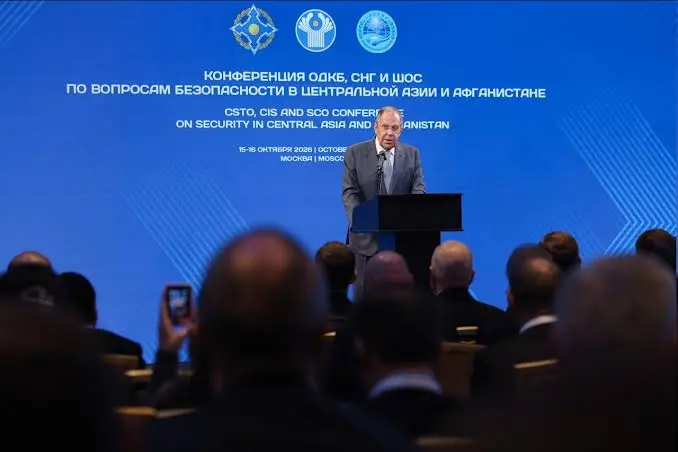
MOSCOW, October 16: Russian Foreign Minister Sergey Lavrov has warned that international extremist networks and militant groups operating within Afghanistan pose an escalating security challenge to Central Asia and the Russian Federation, emphasizing that regional stability remains highly vulnerable to cross-border infiltration.
Speaking at a regional security conference in Moscow involving the Collective Security Treaty Organisation (CSTO), the Commonwealth of Independent States (CIS), and the Shanghai Cooperation Organisation (SCO), Foreign Minister Lavrov stated that militant factions maintain active training camps and fortified strongholds near Afghanistan’s northern frontiers. He noted that operatives frequently attempt to cross into neighbouring Central Asian states, occasionally disguising themselves as refugees or tourists to evade detection.
Lavrov identified the Islamic State Khorasan Province (ISKP), also known as Wilayat Khorasan, as the most severe regional terrorist threat. According to Moscow’s assessments, the group actively seeks to undermine the de facto administration in Kabul while utilizing Afghan territory as a strategic springboard to project extremist operations into Central Asia and the Russian Federation. He further cautioned that these networks include seasoned fighters originating from Central Asia, the North Caucasus, and other regions who previously gained combat experience in the Middle East and Africa.
To counter these vulnerabilities, Lavrov announced that Moscow is stepping up practical security assistance to its allies along the frontier, focusing specifically on bolstering defensive capabilities in Tajikistan.
Read More: Pakistan and Russia Focus on Trade and Connectivity Expansion
Russia Pledges Military Hardware and Border Protection Systems to Tajikistan
Expanding on regional defense cooperation, Foreign Minister Lavrov confirmed that Moscow is actively implementing measures to deliver weapons, advanced military equipment, and technical border-surveillance systems to Tajikistan.
“Within the CSTO, we also pay special attention to implementing the targeted interstate programme to strengthen the Tajik–Afghan border,” Lavrov told delegates at the plenary session, highlighting that the timely provision of technical hardware is vital to intercepting illicit trafficking and unauthorized cross-border movements along the Panj River basin.
Official security assessments presented during the regional conference estimated that thousands of foreign militants belonging to multiple distinct extremist organizations remain active across various Afghan provinces. Moscow underscored that persistent challenges—including underground radical propaganda, digital recruitment networks, and attempts to smuggle weapons and narcotics outward from Afghanistan—demand continuous, coordinated surveillance and joint preventive measures among partner states.
While regional security frameworks emphasize the necessity of tighter border controls and collective defense readiness, international partners continue to evaluate diplomatic and security engagements with Kabul to address the long-term stabilization of South and Central Asia.

The Diplomatic Wire Desk is the institutional news and analysis body of Diplomatic Wire, overseen by Founder and Editor Khalid Minhas. The Desk covers international relations, foreign policy, and critical diplomatic initiatives with objective, timely reporting for a professional readership.