Islamabad / Washington D.C.: A new report submitted to the United States Congress has brought global attention to the brief but intense conflict between Pakistan and India in May this year, specifically noting Pakistan’s “military success” and the crucial role played by Chinese-supplied weaponry during the four-day clash.
The report, presented on Tuesday by the US-China Economic and Security Review Commission (USCC), underscored that the skirmish served as a testing ground for Beijing’s defense capabilities and provided an opportunity to aggressively promote its arms industry. The USCC is tasked with advising Congress on the national security implications of the US-China trade and economic relationship.
Chinese Weaponry in Focus
The Commission’s annual report highlighted that the conflict drew global scrutiny as “Pakistan’s military relied upon Chinese weaponry and reportedly leveraged Chinese intelligence.”
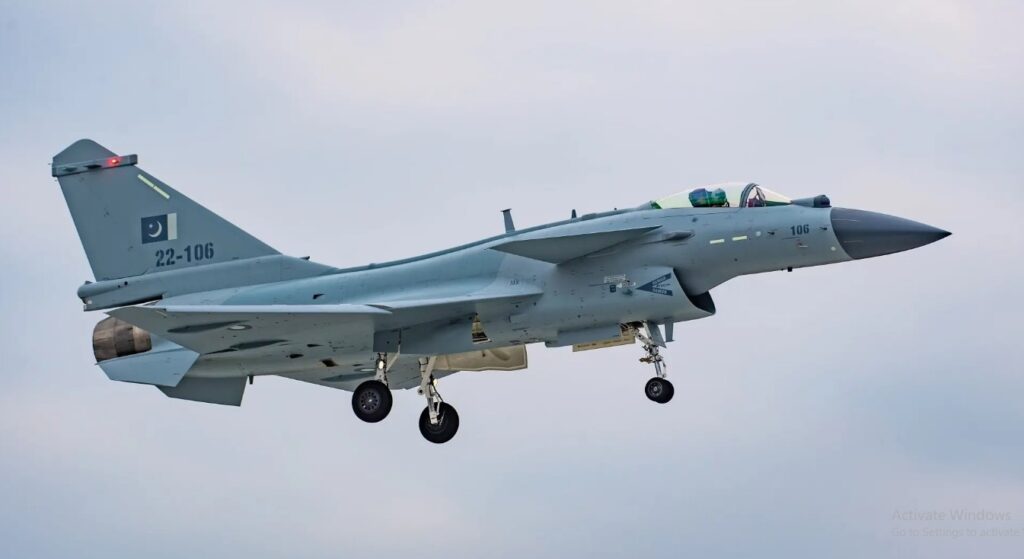
- Combat Debut: The May clash marked the first reported active combat use of China’s modern weapons systems by the Pakistan Air Force (PAF), including the HQ-9 air defense system, PL-15 air-to-air missiles, and J-10 fighter aircraft. The report characterized this as a “real-world field experiment” for China.
- Controversial Claims: New Delhi had previously alleged that China provided “live inputs on Indian military positions throughout the crisis,” a claim Pakistan strongly denied. China has not confirmed or denied its degree of involvement.
Pakistan’s Claims of Air Superiority
Following the intense aerial engagements, Pakistan initially claimed to have downed five Indian planes in air-to-air combat, a figure later raised to seven. Islamabad consistently denied any losses to its own fleet and reported hitting 26 Indian targets after three of its air bases were targeted. US President Donald Trump most recently commented that eight planes were “essentially” shot down.
The USCC report suggested that, while characterizing the conflict as a ‘proxy war’ might be an overstatement, “Beijing opportunistically leveraged the conflict to test and advertise the sophistication of its weapons.”
Expanding Defence Ties and Sales Push
The report pointed out that China, as Pakistan’s largest defense supplier, provided approximately 82 per cent of the country’s arms imports between 2019 and 2023.
The conflict’s outcome was immediately leveraged by Beijing:
- Sales Campaign: “In the weeks after the conflict, Chinese embassies hailed the successes of its systems in the India-Pakistan clash, seeking to bolster weapons sales,” the report alleged.
- Disinformation Campaign: The report cited allegations from French intelligence of China launching a “disinformation campaign to hinder sales of French Rafales in favour of its own J-35s” and propagating AI and video game images as supposed “debris.”
- New Deals and Budget Increase: In June, China reportedly offered to sell 40 J-35 fifth-generation fighter jets, KJ-500 aircraft, and ballistic missile defense systems to Pakistan. That same month, Pakistan announced a 20% increase in its 2025–2026 defense budget, raising planned expenditures to $9 billion.
Context of the Conflict
The May clash followed a deadly attack on tourists in occupied Kashmir, which New Delhi quickly, but without evidence, linked to Pakistan. Islamabad vehemently denied responsibility and called for a neutral investigation.
The fighting began with New Delhi launching air strikes in Punjab and Azad Kashmir on May 7. After a series of tit-for-tat strikes on airbases, American intervention secured a ceasefire on May 10. The USCC report also noted that China expanded its military cooperation with Pakistan in 2025, which “compound[s] its own security tensions with India.”

Khalid Minhas | Editor, Diplomatic Wire
A veteran journalist with three decades of comprehensive experience, Khalid Minhas has covered politics and international relations in depth throughout his career. He has also contributed to academia, teaching journalism and mass communication as a visiting faculty member at various universities in Pakistan. He holds an M.Phil in Mass Communication and is currently a Ph.D research scholar pursuing advanced studies in the field. He is also the author of the book America, Israel aur Islam, providing insightful analysis on the subject.