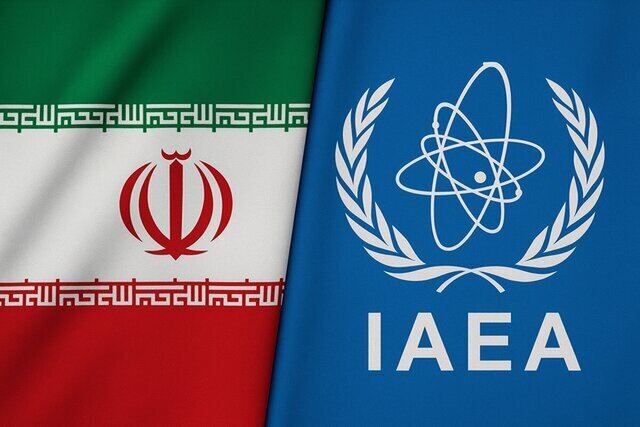
Vienna: Tensions between Iran and the United Nations nuclear watchdog have escalated, with Britain, France, Germany, and the United States submitting a draft resolution to the International Atomic Energy Agency (IAEA) board demanding Iran’s “cooperation fully” with the agency.
The draft resolution, seen by AFP on Wednesday, comes months after a 12-day war in June saw Israeli and US strikes target key Iranian nuclear facilities, further straining already difficult relations.
Restricted Access and Uranium Stockpile Concerns
Since the June conflict, IAEA inspectors have been denied access to two key nuclear sites, Fordo and Natanz, which were damaged in the strikes. Inspectors have, however, been permitted to visit other facilities.
The resolution, which is expected to be put to a vote this week, stresses that it is “imperative” for Tehran to comply with its obligations under the nuclear non-proliferation treaty (NPT) and urges Iran to provide “access that the agency requests.”
The Western powers highlight a specific compliance failure, stating the resolution:
“Iran has failed over the past five months to provide the IAEA with requested information regarding the status of its enriched uranium stockpiles and safeguarded nuclear facilities.”
The IAEA itself had called on Iran last week to allow verification of its enriched uranium inventories, specifically noting a “long overdue” verification of its sensitive stockpile of highly enriched uranium, according to a confidential report also seen by AFP.
Tehran Denies Enrichment, Warns of Consequences
Iran’s Foreign Minister Abbas Araghchi stated on Sunday that the country has no undeclared uranium enrichment sites.
Araghchi added that “no enrichment” is currently taking place because the sites were damaged in the recent conflict with Israel. This assertion follows US media reports, including in the Washington Post and the New York Times, suggesting Iran had accelerated construction at a secret underground nuclear site called “Pickaxe Mountain,” or Kuh-e Kolang, near the Natanz facility.
Tehran has warned the UN body against adopting the resolution. Iran’s deputy foreign minister, Kazem Gharibabadi, stated:
“In case of a resolution, Iran will consider a review of its relations with the IAEA and will conduct a fundamental review.”
In the aftermath of the mid-June war, which saw an unprecedented Israeli bombing campaign and brief US participation, Tehran suspended its cooperation with the IAEA. Iran accused the watchdog of bias and failure to condemn the attacks, prompting the restrictions on inspectors accessing the bombed sites.

Khalid Minhas | Editor, Diplomatic Wire
A veteran journalist with three decades of comprehensive experience, Khalid Minhas has covered politics and international relations in depth throughout his career. He has also contributed to academia, teaching journalism and mass communication as a visiting faculty member at various universities in Pakistan. He holds an M.Phil in Mass Communication and is currently a Ph.D research scholar pursuing advanced studies in the field. He is also the author of the book America, Israel aur Islam, providing insightful analysis on the subject.