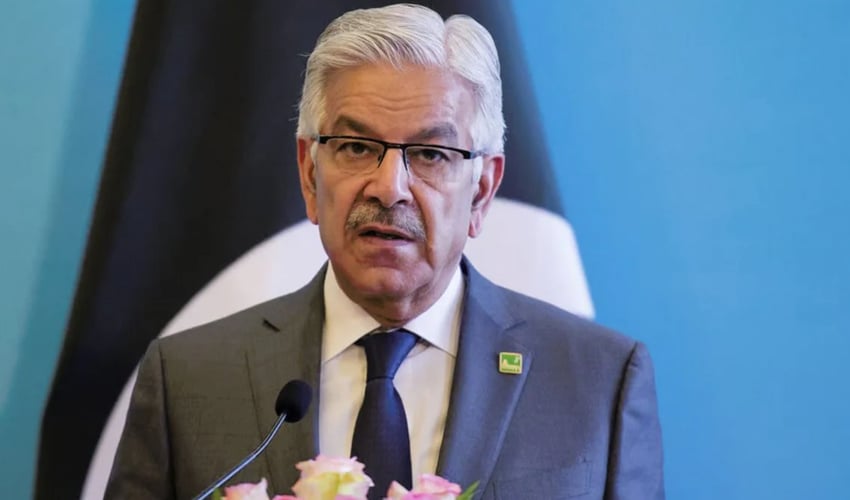
In a significant shift marking the lowest point in Pakistan–Afghanistan relations, Defence Minister Khawaja Asif declared that Pakistan is effectively writing off the Afghan Taliban, ending any remaining expectations of constructive engagement. His remarks, delivered during a televised interview, underscore a rapidly deteriorating bilateral relationship defined by mutual distrust, accusations of cross-border militancy, and diplomatic deadlocks.
This development comes as Afghanistan’s Taliban regime accused Pakistan of conducting air strikes inside Afghan territory—allegations firmly rejected by Islamabad. The clash reflects a larger crisis shaping South Asia’s security landscape and the future of regional diplomacy.
Defence Minister Khawaja Asif Rejects Afghan Taliban Allegations
Earlier in the day, Taliban spokesman Zabiullah Mujahid claimed Pakistan had carried out air strikes in Khost, Kunar, and Paktika provinces. Pakistan’s military spokesperson dismissed the accusations as baseless.
Khawaja Asif, when questioned about the claims, firmly stated that neither the strikes nor civilian casualties occurred, stressing that Pakistan’s military is disciplined, professional, and bound by a strict code of conduct.
He emphasised that Pakistan “does not target civilians” and described the Taliban forces as a “ragtag group” lacking established military ethics, tradition, or religious discipline.
Pakistan’s Patience Reaches Its Limit
Asif acknowledged that Pakistan had once hoped for constructive engagement with the Afghan Taliban—especially after their 2021 takeover of Kabul—but said that hope has now fully evaporated.
“Today, we are completely writing them off and we have no good hope from them,” he stated.
He reflected on his earlier goodwill message welcoming the Taliban, admitting that time had shown those hopes were misplaced.
Pakistan’s core grievances centre around the Tehreek-i-Taliban Pakistan (TTP), whose escalating cross-border attacks have left Islamabad deeply frustrated. Despite repeated commitments, the Afghan Taliban have not taken meaningful action against the militant group.
Questioning the Taliban’s Interpretation of Islamic Law
The Defence Minister rejected the Taliban’s claim that they would retaliate “as per Islamic law,” questioning the logic and legitimacy of such statements.
He asked:
“Which Islamic law allows someone to live in a neighbour’s home for decades and then spill blood? Is this their self-invented Shariah? This is not the Shariah of the Holy Prophet (Peace Be Upon Him).”
His remarks highlight Pakistan’s growing anger at what it sees as the Taliban’s distortion of religion to justify political and military actions.
Regional Powers Concerned Over Potential Escalation
Khawaja Asif disclosed that Turkey, Iran, and Qatar—key regional stakeholders—are urging both sides to de-escalate, stressing that peace would benefit all regional economies and open employment opportunities, including for Afghans suffering from chronic economic decline.
However, he warned that the Afghan Taliban are now enemies of their own people, in addition to being “defined enemies” of Pakistan.
He predicted that if the situation continues to deteriorate, regional states may be compelled to intervene to prevent complete destabilisation of Afghanistan.
Trade Relations Collapse Following Diplomatic Breakdown
Following the failure of three rounds of talks addressing border security and terrorism, the Afghan Taliban suspended all trade ties with Pakistan. Islamabad had already sealed its borders after deadly clashes in October.
Mediation attempts by Turkey and Qatar temporarily revived dialogue, but complexities stalled the arrival of a high-level Turkish delegation expected to visit Pakistan.
The Pakistani Foreign Office recently stated that trade will recommence only if Afghanistan stops cross-border terrorism and ends its support for groups operating against Pakistan. Major energy and economic projects have also been put on hold due to the unresolved security situation.
No Trust Left: Pakistan Dismisses Taliban Threats
When pressed about the Taliban’s threats of retaliation, Asif dismissed them as meaningless:
“There will be no greater idiocy than trusting them.”
He argued that although Pakistan pursued cordial relations, including senior-level visits to Kabul, no behavioural change ever emerged from the Afghan side.
Pakistan now views the Taliban regime as uncompromising, unreliable, and detrimental not only to Pakistani security but to Afghanistan’s own future stability.
The TTP: The Core of the Conflict
At the heart of Pakistan’s frustration lies the TTP’s increasing operational freedom in Afghanistan. Pakistan has repeatedly demanded that Kabul prevent its territory from being used for attacks, but Afghan authorities continue to deny harbouring militants.
The failure of diplomacy, combined with the Taliban’s refusal to act against the TTP, has led Pakistan to shift its policy from engagement to strategic distancing.
Afghanistan Heading Toward Isolation, Says Asif
The Defence Minister warned that the Afghan Taliban’s current trajectory would lead to complete isolation—political, economic, and diplomatic. He predicted that this isolation would eventually result in Afghanistan’s collapse unless the regime adopts responsible governance and prevents terrorist groups from using its soil.
Pakistan believes that regional powers cannot allow prolonged instability, and an intervention—diplomatic or otherwise—may be unavoidable if the crisis worsens.
Pakistan’s Position Going Forward
With the end of negotiations and the collapse of trade ties, Pakistan’s new policy direction appears clear:
- Zero expectations from the Afghan Taliban
- Zero tolerance for cross-border terrorism
- No further goodwill gestures from Islamabad
- Continued coordination with regional allies for peace
- Firm stance on protecting Pakistan’s borders and national security
As tensions continue to rise, the coming weeks will be critical in determining whether relations deteriorate further or if regional diplomacy can prevent an irreversible breakdown.
Khalid Minhas | Editor, Diplomatic Wire
A veteran journalist with three decades of comprehensive experience, Khalid Minhas has covered politics and international relations in depth throughout his career. He has also contributed to academia, teaching journalism and mass communication as a visiting faculty member at various universities in Pakistan. He holds an M.Phil in Mass Communication and is currently a Ph.D research scholar pursuing advanced studies in the field. He is also the author of the book America, Israel aur Islam, providing insightful analysis on the subject.