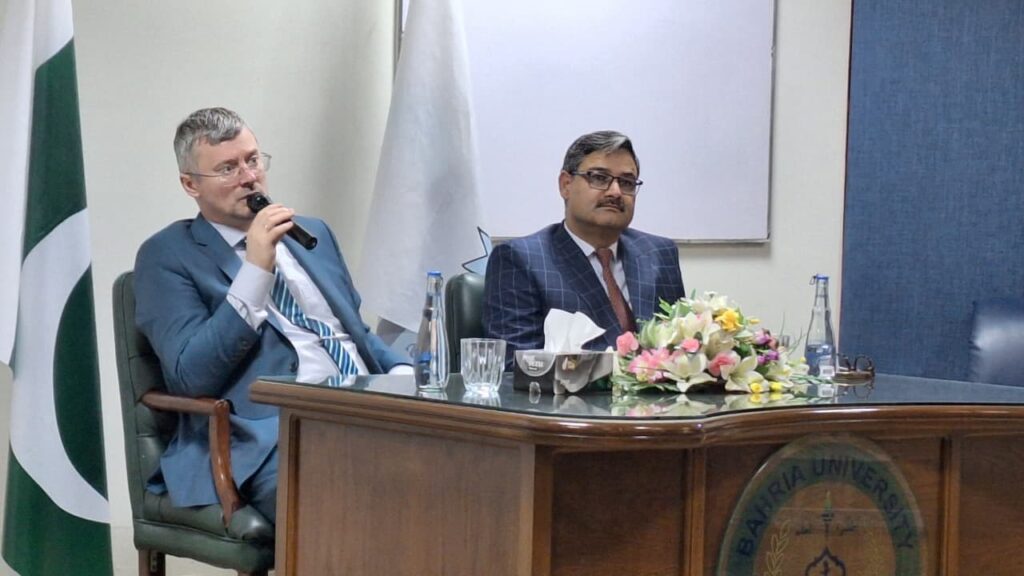
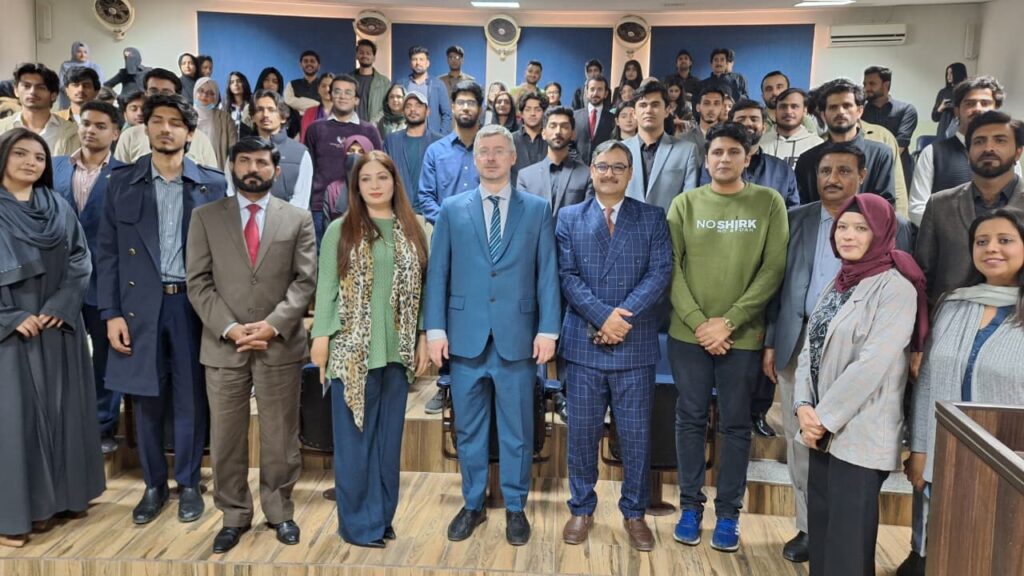
ISLAMABAD, Feb 18 — Russian Ambassador Albert P. Khorev delivered a high-level lecture at Bahria University today, emphasizing the historical depth and modern trajectory of Russia-Pakistan relations. Addressing a cohort of students and faculty, the Ambassador framed the bilateral partnership as a cornerstone of Eurasian stability, rooted in decades of industrial and energy cooperation.
Geopolitical Pivot and Historical Continuity
The “Nut Graf” of today’s engagement underscores Moscow’s intensified “Pivot to the East” strategy. By highlighting Soviet-era contributions to Pakistan’s industrial backbone, Russia is signaling its intent to remain a primary stakeholder in Islamabad’s economic sovereignty amidst a shifting 2026 multipolar landscape.
Historical Foundations of Cooperation
Ambassador Khorev traced the lineage of bilateral ties to the 1970s and 1980s, identifying critical infrastructure projects as “enduring symbols” of constructive engagement.
- Industrial Pillars: He cited the Karachi Steel Mills (KSM) and the Guddu Thermal Power Plant as foundational projects implemented with Soviet technical expertise.
- Contemporary Shifts: The Ambassador stated that current relations are characterized by “increasingly dynamic” political, economic, and humanitarian exchanges.
- Modern Energy Security: Official sources noted that discussions remain ongoing regarding the modernization of KSM and the expansion of the Eurasian Economic Union (EAEU) trade corridors into South Asia.
Regional Stability and the Ukraine Context
A significant portion of the lecture addressed the ongoing situation in Ukraine. Ambassador Khorev detailed Russia’s perspective on the “root causes” of the crisis, specifically:
- Western Destabilization: He characterized the role of Western nations as a destabilizing force within the Eurasian region.
- Protection of Rights: The Ambassador emphasized Russia’s “vital efforts” to safeguard the rights of Russian-speaking populations in Ukraine.
- Multilateral Neutrality: Khorev acknowledged Pakistan’s consistent stance on regional peace and its role within the Shanghai Cooperation Organization (SCO).
Academic and Strategic Partnerships
On the sidelines of the lecture, Ambassador Khorev held a closed-door meeting with the Rector of Bahria University, Vice Admiral Abid Hameed HI(M).
- University Consortia: The parties explored developing formal partnerships between Bahria University and leading Russian academic institutions.
- Research Exchange: Interest was expressed in facilitating student exchange programs and joint research initiatives in maritime studies and international relations.
Strategic Outlook
- Energy and Industry Integration: Expect renewed Russian technical bids for Pakistan’s aging energy infrastructure. Following the 2025 Intergovernmental Commission agreements, Moscow is likely to prioritize the Karachi Steel Mills modernization as a flagship project for 2026.
- Educational Soft Power: The move toward academic partnerships suggests a long-term Russian strategy to build “Track II” diplomacy channels through Pakistan’s professional and military-affiliated educational sectors.
- Diplomatic Alignment: While Pakistan maintains a neutral posture on the Ukraine conflict, the frequency of high-level Russian briefings in Islamabad indicates a deepening of the “polycentric” world order vision shared by both capitals.

The Diplomatic Wire Desk is the institutional news and analysis body of Diplomatic Wire, overseen by Founder and Editor Khalid Minhas. The Desk covers international relations, foreign policy, and critical diplomatic initiatives with objective, timely reporting for a professional readership.