Executive Summary
- Pakistani authorities have reportedly arrested two Azerbaijani nationals linked to Islamic State Khorasan Province (ISKP) in Orakzai district, Khyber Pakhtunkhwa.
- The case highlights ISKP’s continued ability to recruit beyond its traditional Afghan-Pakistani base.
- It raises concerns about foreign fighter pipelines, regional security vulnerabilities, and intelligence gaps.
- The development underscores Pakistan’s ongoing counterterrorism challenges amid evolving militant ecosystems.
Background & Context
Islamic State Khorasan Province (ISKP), established in 2015, has emerged as one of the most resilient regional affiliates of ISIS, primarily operating across eastern Afghanistan and parts of Pakistan’s tribal belt. The group has historically drawn recruits from disaffected factions of Tehrik-i-Taliban Pakistan (TTP), Afghan Taliban defectors, and Central Asian militants.
Since the Taliban’s return to power in Afghanistan in 2021, ISKP has repositioned itself as the primary anti-Taliban jihadist force in the region, expanding its propaganda outreach and attempting to internationalize its recruitment base.
The arrest of Azerbaijani nationals—if verified—fits into a broader pattern of ISKP attracting fighters from Central Asia, the Caucasus, and even further afield. This trend mirrors earlier ISIS recruitment strategies in Syria and Iraq.
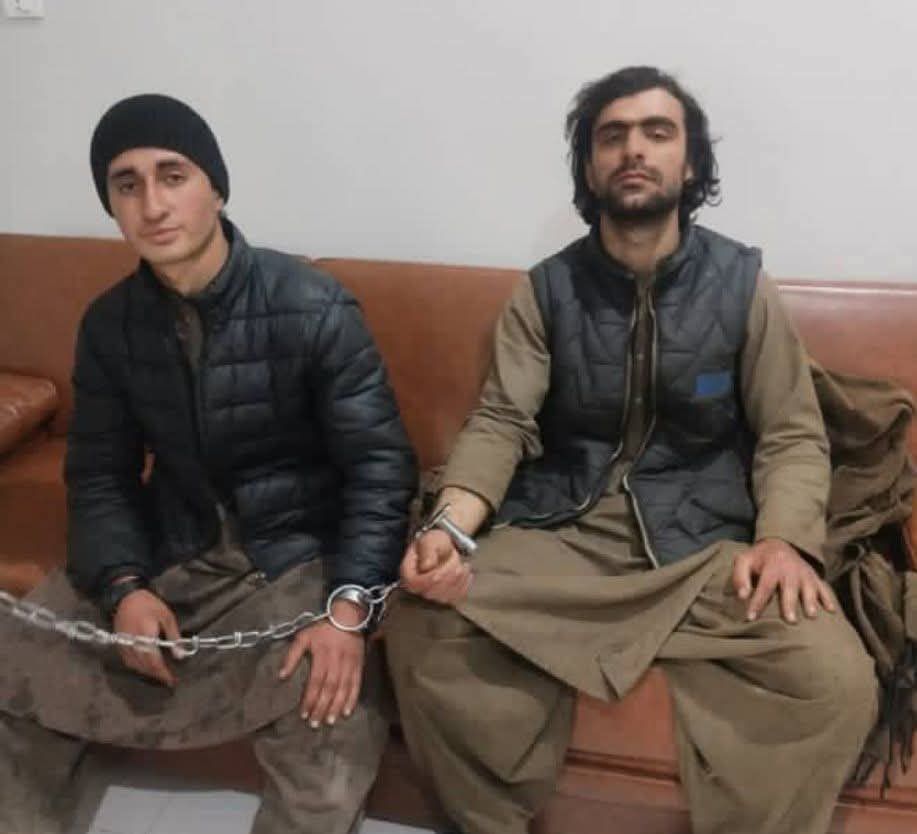
The two men, have been identified as Kazim Ghor and Muhammad Younus from Azerbaijan: Police
Key Stakeholders & Strategic Interests
Pakistan
- Objective: Prevent resurgence of militant networks within former FATA regions.
- Concern: ISKP infiltration could destabilize already fragile districts like Orakzai.
- Hidden dynamic: Balancing counterterrorism operations while managing TTP resurgence.
Afghanistan (Taliban Government)
- Objective: Eliminate ISKP as a rival insurgent force.
- Concern: Cross-border militant movement undermines claims of internal security control.
Azerbaijan
- Likely concerned about radicalization pipelines and potential returnees.
- May face diplomatic pressure to cooperate on intelligence sharing.
ISKP
- Objective: Expand operational footprint and legitimacy as a global jihadist entity.
- Strategy: Recruit non-local fighters to signal international reach and resilience.
Strategic & Diplomatic Analysis
The presence of Azerbaijani nationals in a Pakistani tribal district suggests a multi-layered operational network, potentially involving:
- Cross-border facilitation routes via Afghanistan
- Digital radicalization and recruitment pipelines
- Logistical safehouses within Pakistan’s peripheral regions
This development may indicate that ISKP is transitioning from a localized insurgent group to a hybrid transnational network, leveraging both physical mobility and online ecosystems.
A key underreported angle is the possible overlap between ISKP and Central Asian jihadist networks, such as remnants of the Islamic Movement of Uzbekistan (IMU), which historically operated in the Afghanistan-Pakistan borderlands.
Economic & Security Implications
- Security: Reinforces concerns about porous borders and intelligence gaps in remote districts.
- Regional Stability: Could strain Pakistan-Afghanistan coordination mechanisms.
- Counterterrorism Costs: Increased surveillance and operations will demand more resources from Pakistan’s already stretched security apparatus.
Indirectly, persistent instability in Khyber Pakhtunkhwa affects investor confidence, particularly in projects linked to regional connectivity initiatives such as CPEC.
Media Narratives vs Strategic Reality
Media Framing
- Focus on arrest as a tactical success for Pakistani police
- Emphasis on foreign nationality as headline value
Strategic Reality
- The more significant issue is ISKP’s sustained ability to attract non-local recruits
- Arrests may represent symptoms of deeper network penetration, not isolated incidents
- The narrative risks underestimating the organizational adaptability of ISKP
Future Scenarios
Most Likely
- Continued low-level arrests of foreign-linked ISKP operatives in Pakistan
- Incremental tightening of intelligence coordination with regional actors
Best Case
- Disruption of recruitment pipelines linking Central Asia/Caucasus to ISKP
- Improved Pakistan-Afghanistan intelligence sharing reduces cross-border flows
Worst Case
- Emergence of a structured foreign fighter cell within Pakistan
- ISKP leverages such recruits for high-profile attacks to demonstrate global reach
Black Swan
- Discovery of a broader multinational ISKP network operating across South and Central Asia
- Diplomatic fallout involving multiple countries over militant transit routes
Impact on Pakistan / South Asia
For Pakistan, this incident reinforces three critical realities:
- Persistent Vulnerability of Tribal Districts: Despite military operations, these regions remain exploitable.
- Shift in Threat Profile: From domestically rooted militancy to internationalized jihadist networks.
- Regional Security Interdependence: Pakistan’s internal security is increasingly tied to developments in Afghanistan and beyond.
For South Asia broadly, ISKP’s expansion introduces a non-state destabilizing factor that operates outside traditional India-Pakistan or Afghanistan-centric security frameworks.
Conclusion
The arrest of alleged Azerbaijani ISKP affiliates in Orakzai is less significant as an isolated counterterrorism success and more as an indicator of evolving militant architectures in the region.
ISKP’s ability to recruit across geographies suggests that its long-term strategy is not territorial control alone, but network expansion and ideological persistence.
For policymakers, the critical challenge lies in shifting from reactive arrests to proactive disruption of transnational recruitment and facilitation ecosystems—a task that demands deeper regional cooperation, intelligence integration, and strategic clarity.

Khalid Minhas | Editor, Diplomatic Wire
A veteran journalist with three decades of comprehensive experience, Khalid Minhas has covered politics and international relations in depth throughout his career. He has also contributed to academia, teaching journalism and mass communication as a visiting faculty member at various universities in Pakistan. He holds an M.Phil in Mass Communication and is currently a Ph.D research scholar pursuing advanced studies in the field. He is also the author of the book America, Israel aur Islam, providing insightful analysis on the subject.