Get the complete guide to the 2027 Germany DAAD Scholarships. Learn about monthly stipends, eligibility criteria, required documents, and application steps for international Master’s and PhD candidates.
Germany DAAD Scholarships 2027: Fully Funded Master’s & PhD Guide
| Feature | Details |
| Scholarship Name | Germany DAAD Scholarships (Master’s & Doctoral Programmes) |
| Host Country | Germany |
| Host Institution | Premier German universities and research institutes |
| Scholarship Provider | German Academic Exchange Service (DAAD) |
| Degree Levels | Postgraduate Master’s and PhD (Doctoral) Degrees |
| Eligible Applicants | International students and graduates from eligible countries (varies by specific scheme) |
| Eligible Fields | All academic disciplines, with specialized tracks for STEM, social sciences, public policy, and development-related fields |
| Funding Coverage | Fully Funded (Tuition-free framework, living stipends, travel allowances, and comprehensive insurance) |
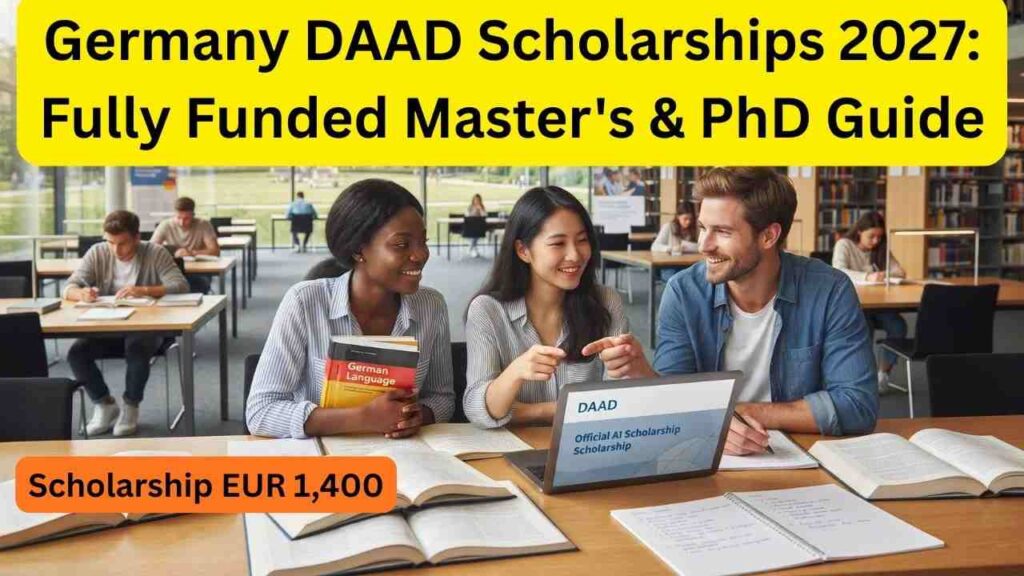
| Monthly Stipend | EUR 992 for Master’s students; EUR 1,400 for doctoral candidates |
| Program Duration | 10 to 24 months for Master’s; up to 3 to 4 years for PhD programs |
| Application Deadline | Varies by program and country of origin (typically falls between October and December for general cycles; course-specific for EPOS) |
| Application Status | Open / Active for the 2027 intake cycles |
| Official Application | DAAD Scholarships Database |
Introduction
The official call for applications for the 2027 Germany DAAD Scholarships offers a prestigious pathway for top-tier international students to pursue postgraduate and doctoral education at premier German universities. Funded by the German federal government, the German Academic Exchange Service (DAAD) program supports high-achieving graduates who aim to advance their academic expertise and contribute to global research, public policy, and sustainable development.
This comprehensive guide breaks down the financial benefits, strict eligibility criteria, required documentation, and a step-by-step application roadmap to help international applicants successfully navigate the 2027 selection cycle.
🎓 Scholarship Overview
The DAAD scholarship ecosystem is globally recognized for supporting academic mobility and scientific cooperation. Through various tracks—including Study Scholarships for All Academic Disciplines, STEM-focused grants, Research Grants for Doctoral Candidates, and Development-Related Postgraduate Courses (EPOS)—the program targets exceptional scholars worldwide.
- Purpose: To promote international academic exchange, specialized graduate training, and long-term institutional partnerships between Germany and other nations.
- Sponsoring Organization: DAAD (Deutscher Akademischer Austauschdienst / German Academic Exchange Service).
- Target Audience: Highly qualified graduates, young academics, researchers, and mid-career professionals from eligible international regions.
- Academic Scope: Encompasses all fields of study, including engineering, natural sciences, social sciences, law, economics, political science, public policy, and international relations.
💰 Scholarship Benefits and Financial Coverage
The DAAD scholarship is a fully funded award designed to cover living costs, health protection, and academic mobility without placing a financial burden on the scholar. Confirmed benefits include:
- Monthly Living Stipend: EUR 992 per month for Master’s and postgraduate candidates; EUR 1,400 per month for doctoral (PhD) candidates.
- Insurance Coverage: Comprehensive health, accident, and personal liability insurance funded directly by the DAAD.
- Travel Allowances: A lump-sum airfare and travel allowance to cover round-trip travel between the home country and Germany, unless covered by home country funding.
- Study and Research Allowance: An annual study allowance (typically EUR 460 for Master’s scholars) to assist with course materials and books.
- Additional Support: Optional rental subsidies or family allowances under specific program guidelines, where applicable.
Note on Tuition: Most public German universities operate on a tuition-free model for standard degree paths, meaning the scholarship funding focuses primarily on living, travel, and research maintenance.
🌍 Eligibility Criteria
Eligibility requirements vary slightly depending on whether you apply for a general Master’s study grant, a research PhD, or a specialized track like EPOS. However, core standards apply universally:
- Academic Qualifications: Applicants must hold an undergraduate Bachelor’s degree (typically a 4-year program) or a Master’s degree with above-average academic results.
- Degree-Age Rule: As a rule, the most recent university degree should not date back more than 6 years at the time of the application deadline.
- Residency Restrictions: Applicants who have been resident in Germany for longer than 15 months by the application deadline are generally ineligible.
- Professional Experience: Required for specific tracks like EPOS (at least two years of proven, relevant professional experience post-Bachelor’s degree).
- Language Proficiency: Proof of English or German language competence (such as IELTS, TOEFL, or TestDaf certificates) depending on the medium of instruction of the chosen degree program. Certificates must typically be no older than 3 years.
📋 Required Documents
Incomplete applications are automatically disqualified. Prepare and upload the following standard documents through the official DAAD portal:
- Curriculum Vitae (CV): A comprehensive, tabular CV (maximum 3 pages, preferably in Europass format without unexplained gaps).
- Letter of Motivation: A detailed statement (1 to 3 pages) outlining academic, professional, and personal reasons for the study project in Germany.
- University Transcripts & Certificates: Complete transcripts of records and final degree certificates indicating final grades (certified translations required if not in English or German).
- University Admission: A letter of admission from the German host university, or proof that an application has been submitted (admission must be secured before funding starts).
- Letters of Recommendation: A recent, signed letter of recommendation from a university professor or academic supervisor, submitted via the official portal recommendation form.
- Language Certificates: Official scores verifying command of the instruction language.
- Employment Certificates: Required for career-linked programs like EPOS, validating professional timelines.
🖥️ How to Apply
The application procedure varies depending on your chosen funding track. For general study and research grants, follow these steps:
- Search and Select: Explore the official DAAD Scholarships Database to find a program matching your academic profile.
- Verify Country Deadlines: Check your home country’s specific opening windows and cut-off dates.
- Register on the Portal: Create an account on the DAAD portal.
- Compile Documents: Scan and format all mandatory certificates, CVs, and motivation essays.
- Secure University Admission: Apply concurrently to your chosen German university program if university admission is a prerequisite.
- Submit Digitally: Upload all files to the DAAD portal before midnight (CET/CEST) on the deadline date.
📅 Application Deadline and Current Status
- Application Window: Active now for the 2027 academic intakes.
- Deadlines: Deadlines are strictly country-specific and program-specific, typically falling between October and December for general streams, while EPOS postgraduate courses feature individual course deadlines.
- Start of Funding: Academic funding typically commences on October 1, 2027 (or earlier if preceded by a mandatory German language course).
⚠️ Important Application Warnings
Critical Advisory: DAAD charges no application fees for its scholarship portals. Beware of third-party agencies or unauthorized websites requesting payments or service fees to “guarantee” a DAAD scholarship. Always verify links against the official domain (
daad.de). Furthermore, note that missing documents or late submissions past midnight CET will result in automatic rejection without review.
Frequently Asked Questions
Is the DAAD Scholarship fully funded?
Yes. It covers living expenses through a monthly stipend (EUR 992 for Master’s; EUR 1,400 for PhD), health insurance, travel allowances, and study subsidies.
Can I apply without an IELTS score?
Language requirements are strictly enforced. You must provide valid proof of the language of instruction (usually English or German) as specified by your target program guidelines.
Is work experience mandatory?
Work experience is not required for general Master’s and research grants, but it is mandatory (at least 2 years) for Development-Related Postgraduate Courses (EPOS).
Can I apply directly through the DAAD portal for all programs?
While most study and research grants use the central DAAD portal, certain programs like EPOS require you to apply directly to the university first before receiving a nomination to the DAAD portal.
Step-by-Step Application Roadmap
- Open and review the official guidelines on the DAAD scholarship database.
- Confirm that your nationality and degree level match the eligibility scope.
- Identify suitable English- or German-taught Master’s/PhD programs at German universities.
- Note your exact country-specific application deadline and time zone.
- Draft your academic CV and compelling motivation letter.
- Request academic recommendation letters from professors well in advance.
- Take required language proficiency exams (IELTS/TOEFL) if you lack current valid scores.
- Complete university admission applications alongside scholarship requirements.
- Upload all mandatory credentials to the DAAD portal well before the final deadline.
- Save submission receipts and monitor your portal dashboard for selection updates.
Official Source Links
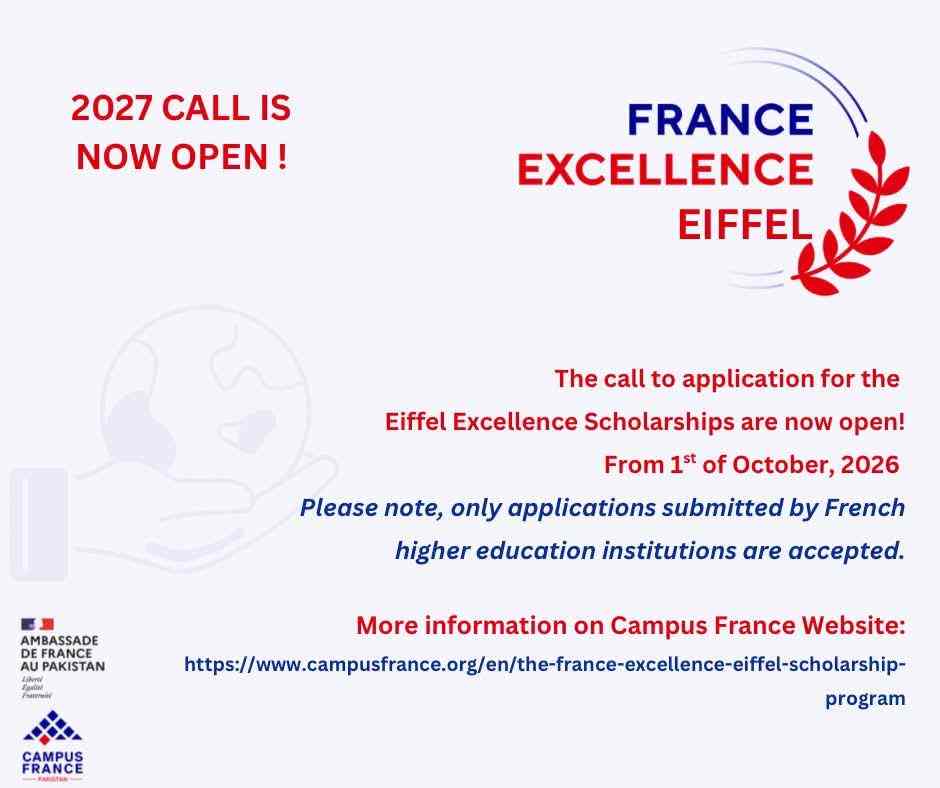
Check also:France Opens 2027 Eiffel Excellence Scholarship Call for International Students
The Diplomatic Wire Desk is the institutional news and analysis body of Diplomatic Wire, overseen by Founder and Editor Khalid Minhas. The Desk covers international relations, foreign policy, and critical diplomatic initiatives with objective, timely reporting for a professional readership.