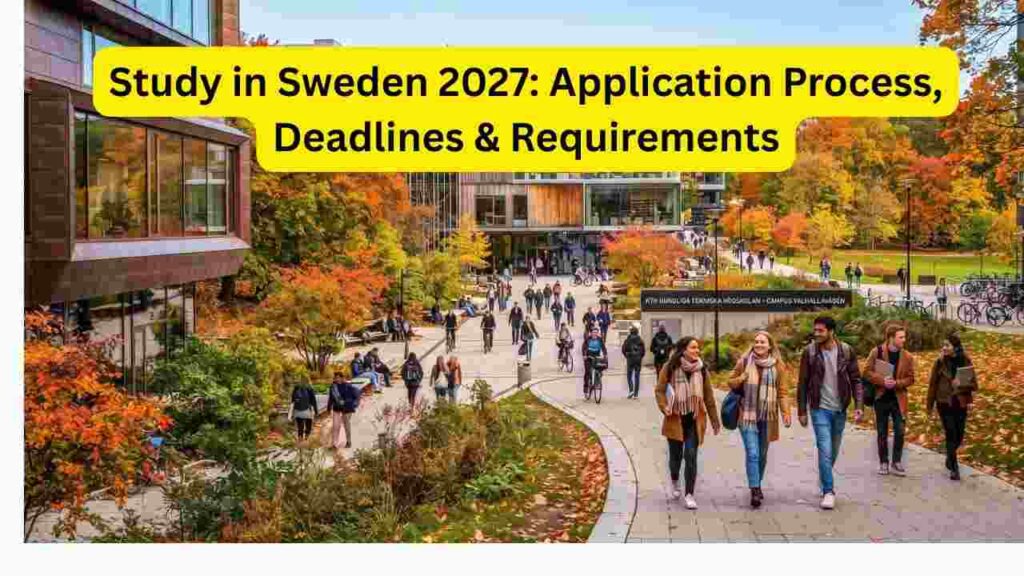
Study in Sweden offers international students access to a world-class, innovation-driven higher education system characterized by academic freedom, critical thinking, and close collaboration with industry and global diplomacy networks. For the Autumn 2027 intake, the centralized admissions cycle opens an array of more than 1,000 English-taught bachelor’s and master’s programs across 39 Swedish universities.
Navigating the application process correctly is critical for international applicants, particularly those targeting competitive government grants such as the Swedish Institute (SI) Scholarship. With the primary admissions round closing on 15 January 2027, prospective students must understand the precise steps, strict documentation requirements, and fee criteria mandated by Sweden’s central application authority, UniversityAdmissions.se.
Quick Benefits & Eligibility Table
| Feature | Details |
|---|---|
| Scholarship Name / System | Swedish University Admissions & Swedish Institute Scholarships (SI Scholarship) |
| Host Country | Sweden |
| Host Institution | 39 Swedish Universities (e.g., Lund, Uppsala, KTH, Stockholm) |
| Sponsoring Organization | Government of Sweden / Swedish Council for Higher Education (UHR) |
| Degree Levels | Bachelor’s and Master’s Degree Programs |
| Eligible Applicants | International students worldwide (Non-EU/EEA students require fee payment and permits) |
| Eligible Fields | Over 1,000 English-taught programs across Arts, Sciences, Technology, Law, Diplomacy, and Public Policy |
| Funding Coverage | Varies; self-funded or external scholarships like the fully funded Swedish Institute Scholarship |
| Monthly Stipend | Dependent on specific scholarship awards (e.g., SEK 12,000/month for SI scholars) |
| Program Duration | 1 to 2 years for Master’s; 3 years for Bachelor’s |
| Application Deadline | 15 January 2027 (First International Round for Autumn 2027) |
| Application Status | Open |
| Official Application Portal | University Admissions Sweden |
🎓 Study in Sweden: Admission Overview
Sweden’s higher education framework is structured around the Bologna Process, offering internationally recognized qualifications. The centralized admission system simplifies applications, allowing candidates to apply to multiple institutions through a single portal.
- Target Audience: International students from outside the European Union (EU), European Economic Area (EEA), and Switzerland who wish to pursue high-standard European degrees.
- The Central Portal: All applications are processed online via UniversityAdmissions.se.
- Choice Limits: Master’s applicants can select up to four programs and rank them in order of preference. Bachelor’s applicants can choose up to eight courses or programs.
- The Ranking System: Program ranking is binding. For master’s studies, applicants receive only one offer of admission—securing a spot in a higher-ranked preference automatically cancels lower-ranked choices.
💰 Funding and Scholarship Opportunities
While higher education is free for citizens of the EU, EEA, and Switzerland, international students from outside these regions are subject to application fees and tuition costs. However, several robust funding avenues exist:
- Tuition and Application Fees: Non-EU/EEA students must pay a non-refundable application fee of SEK 900 (approx. $90 USD), alongside semester-based tuition fees ranging from SEK 80,000 to over SEK 200,000 depending on the discipline.
- The Swedish Institute (SI) Scholarship: A prestigious, fully funded opportunity targeting global professionals from eligible countries. It typically covers full tuition fees, a monthly living stipend (e.g., around SEK 12,000), travel grants, and insurance.
- University-Specific Scholarships: Many Swedish universities (such as Lund, Uppsala, and KTH) offer partial or full tuition-waiver scholarships based on academic merit.
🌍 Eligibility Criteria
To qualify for admission to Swedish universities for the 2027 intake, applicants must meet specific baseline criteria:
- General Entry Requirements (Bachelor’s): Completed upper-secondary (high school) education that qualifies you for university studies in your home country, alongside verified English proficiency.
- General Entry Requirements (Master’s): A completed Bachelor’s degree (equivalent to a Swedish kandidatexamen) from an internationally recognized university.
- English Language Proficiency: Most programs require demonstrated proficiency equivalent to Swedish English 6. This is typically proven via standardized tests such as:
- IELTS Academic: Overall score of 6.5 with no section below 5.5.
- TOEFL iBT: Total score of 90 (writing 20) or newer score equivalents.
- PTE Academic: Overall 62, writing 61.
- Program-Specific Requirements: Certain disciplines—especially in science, technology, public policy, and international relations—may require specific prerequisite credits, professional background, or supplementary statements.
📋 Required Documents
Applicants must provide verified documentation to support their academic credentials. Standard requirements include:
- Identity Proof: A clear copy of a valid passport or official national identity document.
- Academic Transcripts and Degrees: Official university diplomas, graduation certificates, and grade transcripts covering all years of prior study.
- English Test Results: Official score reports sent directly from testing agencies or verified online.
- Proof of Fee Exemption or Payment: Documentation proving citizenship status exempting you from fees, or receipt of the SEK 900 application fee payment.
- Supporting Program Documents: CVs, letters of motivation, letters of recommendation, or research summaries if requested by specific department guidelines.
- Official Translations: Documents not issued in English, Swedish, Danish, Norwegian, or French must be accompanied by official certified translations.
🖥️ How to Apply: Step-by-Step Procedure
- Explore and Shortlist Programs: Browse courses on UniversityAdmissions.se and university portals. Note specific prerequisites.
- Create a User Account: Register on UniversityAdmissions.se using a secure, permanent email address.
- Select and Rank Programs: Add up to four master’s programs or eight bachelor’s courses, ordering them strictly by personal preference.
- Submit Online: Complete and submit your application prior to the central deadline.
- Pay the Application Fee: Pay the SEK 900 application fee or submit documentation proving an exemption before the corresponding deadline.
- Upload Documents: Upload legible scans of your transcripts, degree certificates, and English test scores directly to your portal account.
- Monitor Notification Results: Check your account on notification release dates for your official selection results.
📅 Application Timeline and Current Status (Autumn 2027)
The official timeline for the Autumn 2027 international admissions round is structured as follows:
- Application Opens: 16 October 2026
- Application Deadline & Ranking Lock: 15 January 2027 (Midnight CET)
- Application Fee & Document Deadline: 1 February 2027
- Admissions Results (Master’s): 1 April 2027
- Admissions Results (Bachelor’s): 8 April 2027
- Studies Begin: Late August / Early September 2027
⚠️ Important Application Warnings
Critical Advisory for Applicants:
- Strict Deadlines: The 15 January 2027 deadline is absolute. Changing your course ranking after this date is prohibited, and applications submitted afterward are treated as late applications.
- Separate Scholarship Tracks: Gaining admission to a Swedish university does not automatically grant you a scholarship. External funding bodies like the Swedish Institute require separate applications submitted through their own designated timelines.
- Beware of Unofficial Agents: Always use the official portal (
UniversityAdmissions.se). Disregard third-party services charging unauthorized fees or guaranteeing admission outcomes.
Frequently Asked Questions
Is studying in Sweden free for international students?
No. Tuition and application fees apply to students from outside the EU, EEA, and Switzerland. However, scholarships like the Swedish Institute program can cover these expenses entirely for qualifying candidates.
Can I apply without an IELTS score?
You must prove your English proficiency. While IELTS and TOEFL are standard, some applicants may meet the requirement through previous upper-secondary or university studies conducted entirely in English, as evaluated by University Admissions guidelines.
What happens if I miss the 15 January deadline?
Programs that do not fill their capacity may open for “late applications” after the primary round. However, applying late severely compromises your chances of admission and leaves virtually no time to secure tuition funding or a student residence permit.
How many master’s programs can I choose?
You can select up to four master’s programs in a single application cycle, ranked carefully by preference.
Step-by-Step Application Roadmap
- Research eligible English-taught degree tracks on official portals.
- Set up your profile on UniversityAdmissions.se.
- Take and pass an approved English proficiency test (e.g., IELTS or TOEFL).
- Order certified copies of your university transcripts and degree certificates.
- Arrange and prioritize your program selections before 15 January 2027.
- Submit your electronic application form.
- Pay the SEK 900 application fee or submit exemption proof by 1 February 2027.
- Upload all mandatory supporting documents securely to your profile.
- Track your evaluation status and look out for selection results on 1 April 2027.
- Respond to admission offers and prepare for tuition payment and residence permit applications.
Ready to start your academic journey? Visit the University Admissions Sweden Portal to review program details and open your applicant account today.
Official Source Links
- University Admissions in Sweden Official Portal
- Study in Sweden Official Guide
- Detailed Autumn 2027 Application Process Breakdown via Scholarships365
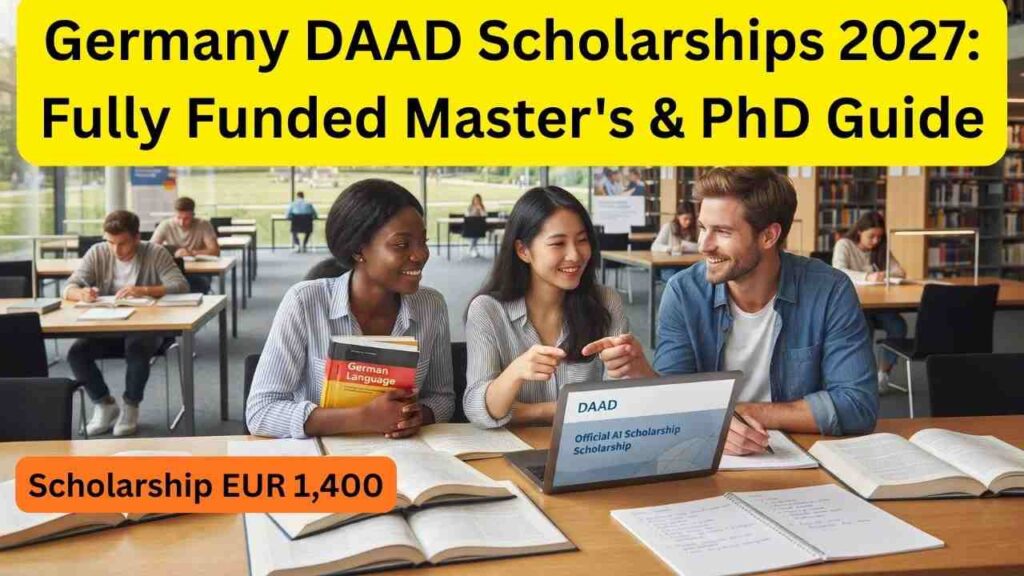
Read also: Germany DAAD Scholarships 2027: Fully Funded Master’s & PhD Guide
The Diplomatic Wire Desk is the institutional news and analysis body of Diplomatic Wire, overseen by Founder and Editor Khalid Minhas. The Desk covers international relations, foreign policy, and critical diplomatic initiatives with objective, timely reporting for a professional readership.