Following the federal imposition of governor rule in Khyber Pakhtunkhwa, an 11-member technocratic advisory council has been constituted. Led by Governor Faisal Karim Kundi, the body features security, economic, and legal experts managing provincial affairs and prioritizing counter-terrorism initiatives.
ISLAMABAD / PESHAWAR — Following the federal imposition of emergency and governor’s rule in Khyber Pakhtunkhwa, the provincial administration has been formally replaced by an 11-member technocratic advisory council designed to manage regional affairs, stabilize governance, and direct an uncompromising counter-terrorism campaign. Governor Faisal Karim Kundi chaired the inaugural session of the newly constituted body at the Governor House, where the appointed technocrats formally assumed their respective portfolios.
The emergency governance structure was established to assist Governor Kundi in exercising executive authority following the dismissal of the previous provincial government led by the Pakistan Tehreek-e-Insaf (PTI). According to Information Minister Attaullah Tarar, the council comprises competent and experienced professionals from diverse administrative, legal, financial, and technical backgrounds intended to stabilize the provincial apparatus and restore efficient administrative service delivery.
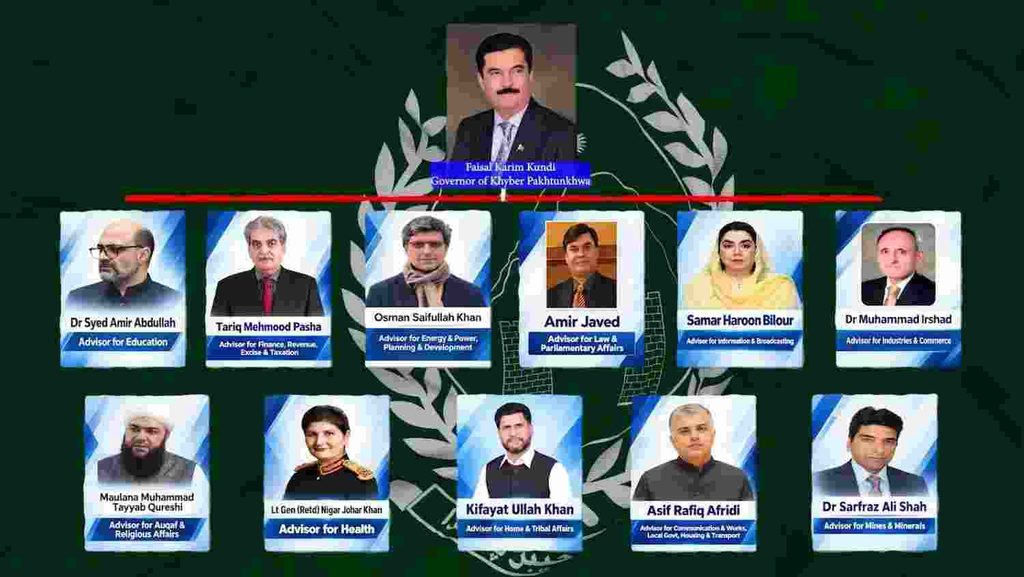
To address security and legal administration, two seasoned officials have been assigned critical supervisory roles. Mr. Kifayat Ullah Khan, a former provincial prisons inspector general and former commissioner of Dera Ismail Khan and Mardan, has taken charge as the adviser for home and tribal affairs. Alongside him, Mr. Amir Javed, a Supreme Court advocate and former provincial advocate general, has been appointed as the adviser for law and parliamentary affairs.
Economic, industrial, and developmental portfolios have been assigned to former senior federal administrators. Mr. Tariq Mehmood Pasha, a former chairman of the Federal Board of Revenue and former special assistant to the prime minister on revenue, will serve as the adviser for finance, revenue, excise, and taxation. Dr. Muhammad Irshad, also a former chairman of the Federal Board of Revenue who holds a doctorate in finance and serves on the board of the Pakistan Red Crescent Society, has been designated as the adviser for industries and commerce.
In the crucial sectors of education and public health, leadership has been entrusted to specialized professionals. Dr. Syed Amir Abdullah, who holds a doctorate in international relations from the Netherlands and previously served on the expert committee of the National Counter Terrorism Authority, has taken over as the adviser for education. Meanwhile, retired Lt. Gen. Nigar Johar Khan, the country’s first female three-star army officer and former surgeon general of the Pakistan Army—whose distinguished military career inspired the biographical film Aik Hai Nigar—has been appointed as the adviser for health.
Infrastructure, natural resources, and regional development will be managed by Dr. Sarfraz Ali Shah and Asif Rafiq Afridi. Mr. Shah, a former provincial planning adviser holding a doctorate in economics, has been named adviser for mines and minerals. Mr. Afridi, an entrepreneur and former caretaker minister, assumes responsibility as the adviser for communication and works, local government, housing, and transport.
Rounding out the 11-member body are Osman Saifullah Khan, Maulana Muhammad Tayyab Qureshi, and Samar Haroon Bilour. Mr. Saifullah, a former senator and former chairman of the All Pakistan Textile Mills Association, will oversee energy and power, planning, and development. Maulana Muhammad Tayyab Qureshi, the chief khateeb of Khyber Pakhtunkhwa, has been appointed as the adviser for auqaf and religious affairs. Ms. Bilour, a sitting member of the National Assembly, has taken charge as the adviser for information and broadcasting.
Who Is Who in Advisory Council Shaping KP Counter-Terrorism Strategy
During the inaugural session, Governor Kundi outlined the administration’s primary operational objective, emphasizing a comprehensive and systematic campaign against terrorism to restore stability to the province. Addressing the council members, the governor highlighted the disproportionate suffering endured by ethnic Pakhtuns amid prolonged regional violence.
“I have one message: peace, protection and stability have to be brought back to KP,” Governor Kundi stated during the meeting. He stressed that security interventions must target the entire supportive ecosystem rather than isolated elements. “Our fight is against terrorism. Our fight is against the ideology and network which facilitates terrorism and weakens the implementation of the law. We cannot solve the issue by just targeting terrorists. Those facilitating and financing… must be eliminated.”
The governor announced plans to significantly bolster the operational capabilities of both the regular provincial police force and the Counter-Terrorism Department. He instructed the newly appointed advisers to initiate immediate department briefings, accelerate stalled public sector projects, and maintain a standard of zero tolerance for corruption. Emphasizing that good governance would be evaluated through tangible service delivery, Mr. Kundi urged the council to prioritize healthcare access, educational reforms, and local employment generation to rebuild the province’s economic and civic standing.
Read More:President Zardari Approves Emergency in Khyber Pakhtunkhwa
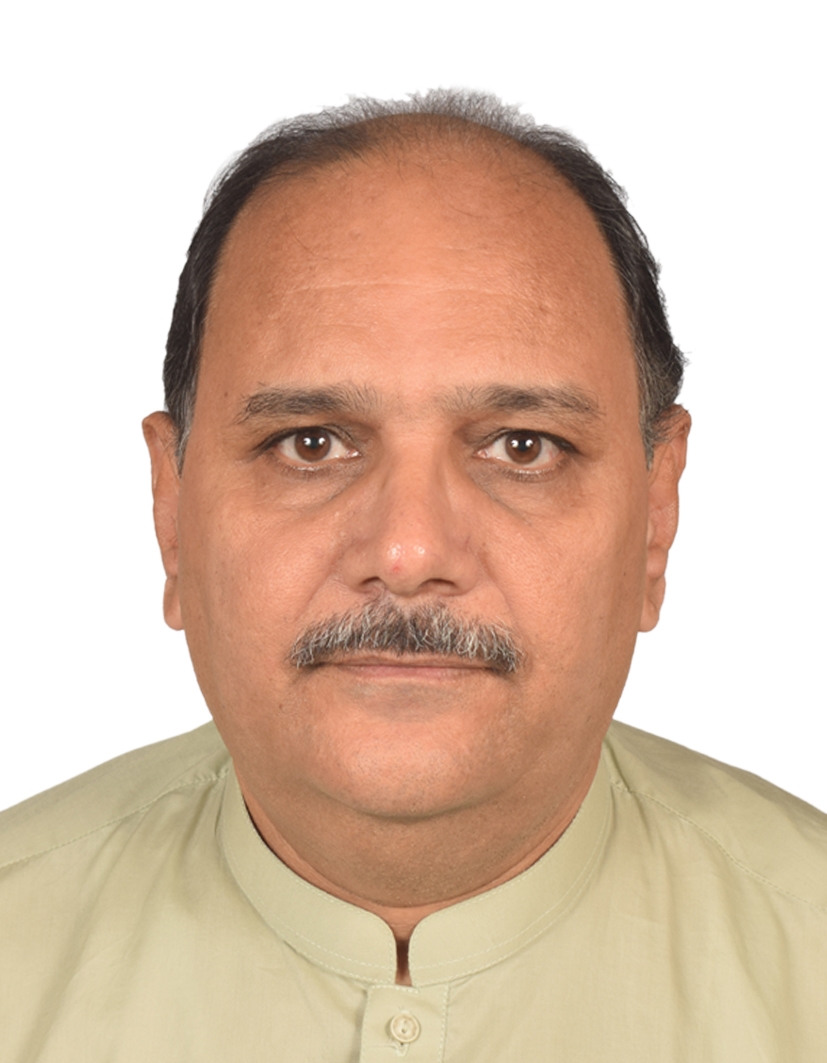
Khalid Minhas | Editor, Diplomatic Wire
A veteran journalist with three decades of comprehensive experience, Khalid Minhas has covered politics and international relations in depth throughout his career. He has also contributed to academia, teaching journalism and mass communication as a visiting faculty member at various universities in Pakistan. He holds an M.Phil in Mass Communication and is currently a Ph.D research scholar pursuing advanced studies in the field. He is also the author of the book America, Israel aur Islam, providing insightful analysis on the subject.