
The Federal Cabinet of Pakistan has proposed that President Asif Ali Zardari impose an emergency in Khyber Pakhtunkhwa under Articles 232 and 234 of the Constitution. Led by Prime Minister Muhammad Shehbaz Sharif, the cabinet cited the provincial government’s deliberate indifference toward the worsening counter-terrorism security situation.
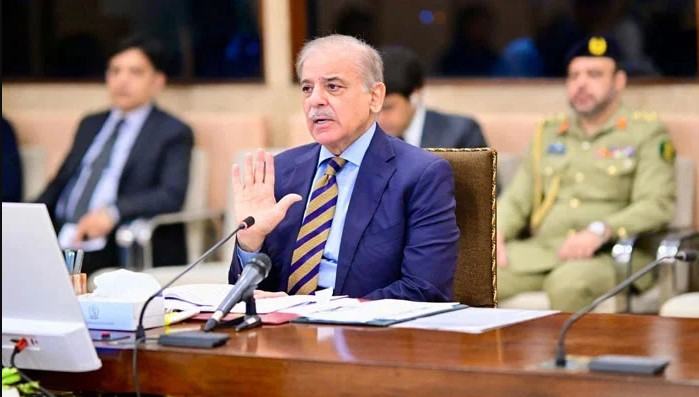
ISLAMABAD, October 11, 2026: The Federal Cabinet of Pakistan has formally recommended the imposition of a constitutional emergency in Khyber Pakhtunkhwa, pointing directly to the provincial government’s alleged inaction and deliberate indifference toward a rapidly deteriorating security landscape and an escalating wave of terrorism.
The high-level decision was finalized during a cabinet meeting convened under the chairmanship of Prime Minister Muhammad Shehbaz Sharif in Islamabad. According to an official statement issued by the Prime Minister’s Office Media Wing, the federal administration conducted an exhaustive, multi-faceted review of the prevailing law and order crisis across the northwestern province, which shares a long and volatile international border with Afghanistan.
Federal ministers expressed grave concern over what they characterized as an alarming resurgence of militant violence and cross-border security challenges. The administration argued that the provincial administration in Khyber Pakhtunkhwa has consistently failed to deploy adequate administrative focus and security countermeasures required to stem the ongoing militant threat. Consequently, the cabinet concluded that extraordinary constitutional measures have become an unavoidable necessity to protect civilian lives, restore public order, and safeguard national security integrity.
Acting upon these deliberations, the cabinet officially proposed that Prime Minister Muhammad Shehbaz Sharif advise the President of Pakistan to invoke emergency powers under Articles 232 and 234 of the Constitution of Pakistan. These constitutional provisions grant the federal government the authority to step in and assume direct executive control when internal disturbances or security breakdowns threaten the peace, security, or economic stability of a province or any part thereof. Following the cabinet meeting, formal advice outlining these emergency recommendations was dispatched from the Prime Minister’s House directly to the President’s Secretariat for constitutional processing and final formal signature.
Read More: Pakistan’s Instability Emerges as Structural Fault Line in U.S. Indo-Pacific Strategy
Constitutional Emergency and Security Dynamics in Khyber Pakhtunkhwa
The move to invoke emergency powers under Articles 232 and 234 marks a dramatic escalation in political and administrative tensions between the federal coalition government in Islamabad and the provincial leadership in Khyber Pakhtunkhwa. Over recent months, federal security officials have repeatedly voiced frustration over what they describe as a lack of cohesive counter-terrorism coordination between federal intelligence apparatuses and the provincial police and administrative machinery.
The security situation in Khyber Pakhtunkhwa has deteriorated significantly, with insurgent factions targeting law enforcement personnel, civilian infrastructure, and public gatherings. Federal authorities maintain that effective counter-terrorism operations require an undivided command structure and absolute administrative commitment, elements they argue have been severely compromised by ongoing political friction. The invocation of a constitutional emergency would theoretically allow federal authorities to bypass standard provincial roadblocks and direct security operations with greater centralized authority. However, legal and political analysts anticipate fierce opposition from provincial political parties, who are likely to challenge the federal move in higher courts as an infringement on provincial autonomy guaranteed under the eighteenth constitutional amendment.
Background information indicates that Khyber Pakhtunkhwa has borne the brunt of militant violence over the past two decades, suffering thousands of casualties among both security forces and civilians. The recent surge in attacks has reignited fierce debates across Pakistan’s political spectrum regarding the division of security responsibilities between the center and the provinces. While federal leaders emphasize national sovereignty and the imperative of a unified counter-terrorism strategy, regional stakeholders often accuse Islamabad of using security pretexts to curtail provincial rights. As the dossier now rests with the President’s Secretariat, all eyes remain fixed on the presidency to see how the constitutional mechanism will unfold in the coming days.
Follow-up actions are expected to center on the President’s Secretariat, where legal advisors will review the formal advice sent by the Prime Minister’s House to determine the immediate constitutional pathway. Further political developments, parliamentary debates, and potential legal challenges from provincial leaders are anticipated as the federal government moves forward with its proposed emergency strategy.

The Diplomatic Wire Desk is the institutional news and analysis body of Diplomatic Wire, overseen by Founder and Editor Khalid Minhas. The Desk covers international relations, foreign policy, and critical diplomatic initiatives with objective, timely reporting for a professional readership.

Pingback: President Zardari Approves Emergency in Khyber Pakhtunkhwa - DW | Diplomatic Wire