
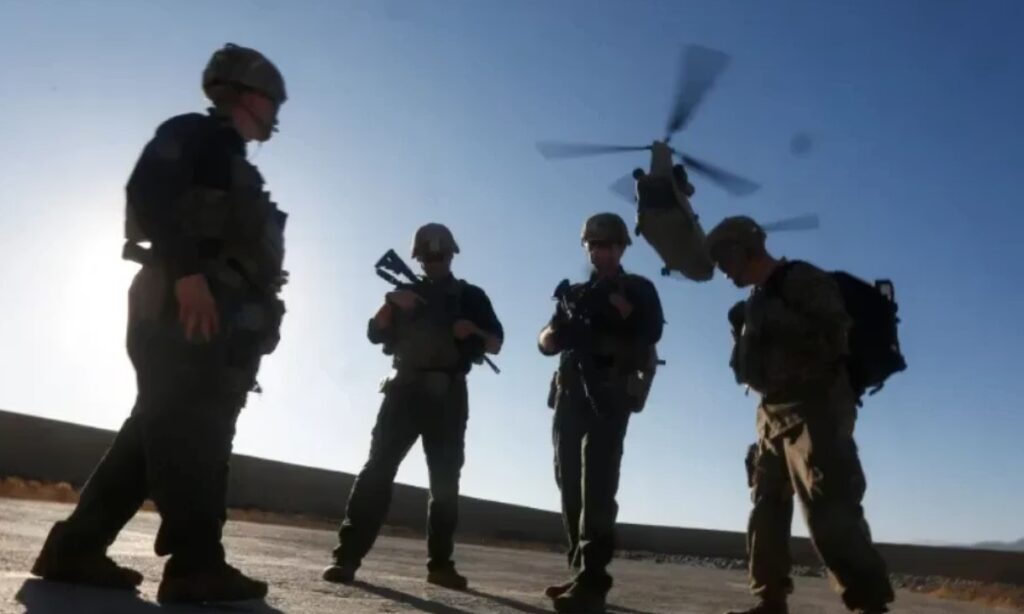
ISLAMABAD — The deepening internal volatility within Pakistan is no longer a localized security concern but has evolved into a primary structural constraint on United States’ strategic objectives in Asia. As of April 2026, Washington’s efforts to bypass Chinese supply chains and secure Central Asian trade corridors are increasingly faltering against the reality of Pakistan’s domestic fragility and Beijing’s entrenched influence.
The Geopolitical Nut Graf
Pakistan’s position at the nexus of the Arabian Sea, Central Asia, and the Middle East renders it the “indispensable hole” in the American Great Game. While Washington views Pakistan through the lens of risk management, Beijing has integrated the state into its long-term strategic landscape via $65 billion in CPEC investments. Consequently, continued U.S. hesitation to engage with Pakistan’s mineral and energy sectors is inadvertently accelerating a regional pivot toward a China-centric order, undermining Western supply chain resilience.
Strategic Asymmetry: Risk vs. Integration
According to recent reports from the Asia Times and regional analysts, a fundamental asymmetry has emerged in how the two superpowers approach Pakistani instability. For Western firms, the persistent security threats in Balochistan and the Khyber Pakhtunkhwa provinces translate into prohibitive insurance premiums and investment withdrawal.
In contrast, Chinese state-backed enterprises have demonstrated a significantly higher tolerance for political complexity. Official sources indicate that while Western interest in the Reko Diq copper-gold project remains tentative due to legal and security concerns, China has expanded its footprint in the mining and technology sectors. This “first-mover” advantage is hardening into a permanent strategic barrier for the U.S. Mineral Security Partnership (MSP).
The Convergence of 2026 Crises
The strategic landscape in 2026 is further complicated by three converging factors:
- The Afghan Security Vacuum: Cross-border militancy following the 2021 shift in Kabul continues to drain Islamabad’s fiscal and military resources, diverting attention from critical infrastructure projects.
- The Iran Variable: Escalating tensions in the Gulf have increased the strategic value of the Gwadar Port. For China, Gwadar serves as a vital energy bypass; for the U.S., it represents a maritime “blind spot” where it lacks a comparable foothold.
- The Central Asian Corridor: U.S. aspirations to link Central Asian republics to global markets via the “Middle Corridor” or southern routes are physically dependent on a stable Pakistan. Furthermore, without this southern access, the region remains tethered to Russian and Chinese transit networks.
Furthermore, policy experts argue that the assumption that Pakistani instability would “bog down” Chinese interests has proven incorrect. Instead, instability has narrowed the field of engagement for the U.S., leaving China as the “lender and partner of last resort” for a nuclear-armed state in crisis.
Strategic Outlook
- Deepening Dependency: Unless the U.S. establishes a de-risking framework for private investment in Pakistan’s mineral sector, Islamabad will likely formalize its status as a permanent satellite of the Chinese economic orbit by 2028.
- Supply Chain Vulnerability: The U.S. goal of diversifying rare earth and critical mineral supplies will remain unachievable if the Tethyan Copper Belt remains inaccessible due to the lack of a comprehensive regional security architecture.
- Shift in Regional Hegemony: As the CPEC enters its next industrial phase, the “connectivity gap” between the U.S. and Central Asia will widen, potentially rendering the U.S. a secondary actor in the trade corridors linking the Hindu Kush to the Arabian Sea.

Khalid Minhas | Editor, Diplomatic Wire
A veteran journalist with three decades of comprehensive experience, Khalid Minhas has covered politics and international relations in depth throughout his career. He has also contributed to academia, teaching journalism and mass communication as a visiting faculty member at various universities in Pakistan. He holds an M.Phil in Mass Communication and is currently a Ph.D research scholar pursuing advanced studies in the field. He is also the author of the book America, Israel aur Islam, providing insightful analysis on the subject.
Pingback: Khyber Pakhtunkhwa Emergency Proposal: Federal Cabinet Urges President to Act Amid Terror Surge