
When a single missile struck Terminal 1 at King Khalid International Airport on Saturday, its kinetic impact was felt far beyond the confines of Riyadh. By taking the lives of civilians from eight different nations and injuring over 300 travelers, the strike shattered the notion that the conflict in Yemen can be contained within its immediate geographical borders.
More significantly, the attack has activated the implicit and explicit security guarantees that bind Gulf sovereignty with South Asian stability.
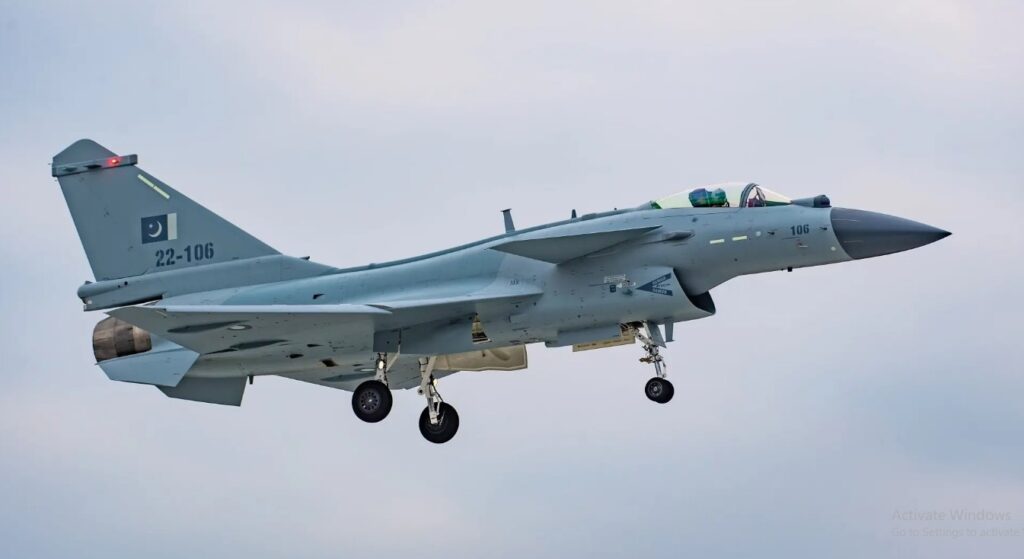
Prime Minister Shehbaz Sharif’s swift reaffirmation of Pakistan’s commitment under the Makkah Joint Defence Agreement is a timely reminder of the deep structural alliances that undergird regional defense. For decades, security cooperation between Islamabad and Riyadh has functioned as a strategic anchor in the Middle East. Under formal frameworks, any direct breach of Saudi territorial integrity is treated not merely as a domestic emergency for the Kingdom, but as a shared concern for its international defense partners.
The choice of target makes this moment particularly delicate. King Khalid International Airport is not a forward operating military base or a remote energy facility; it is a civilian gateway serving hundreds of thousands of international workers, transit passengers, and religious pilgrims bound for Makkah and Madinah. When transit nodes of this magnitude are targeted without warning, the safety of millions of diaspora workers—particularly from South and Southeast Asia—is directly endangered.
This escalation comes at a pivotal nexus. As Yemeni government forces launch counter-offensives near the vital Bab al-Mandab strait and Washington weighs direct military intervention alongside coalition forces, the broader Middle East faces a compound security challenge. Defense pacts like the Makkah Agreement exist precisely to provide clarity and deterrence in moments of chaotic spillover.
As the smoke clears over Riyadh’s airport terminals, the primary message from allied capitals is unequivocal: regional defense pacts are not static agreements written for quiet times. They are dynamic security frameworks designed to defend sovereign airspace, protect innocent civilian lives, and maintain equilibrium across one of the world’s most critical strategic corridors.

Khalid Minhas | Editor, Diplomatic Wire
A veteran journalist with three decades of comprehensive experience, Khalid Minhas has covered politics and international relations in depth throughout his career. He has also contributed to academia, teaching journalism and mass communication as a visiting faculty member at various universities in Pakistan. He holds an M.Phil in Mass Communication and is currently a Ph.D research scholar pursuing advanced studies in the field. He is also the author of the book America, Israel aur Islam, providing insightful analysis on the subject.