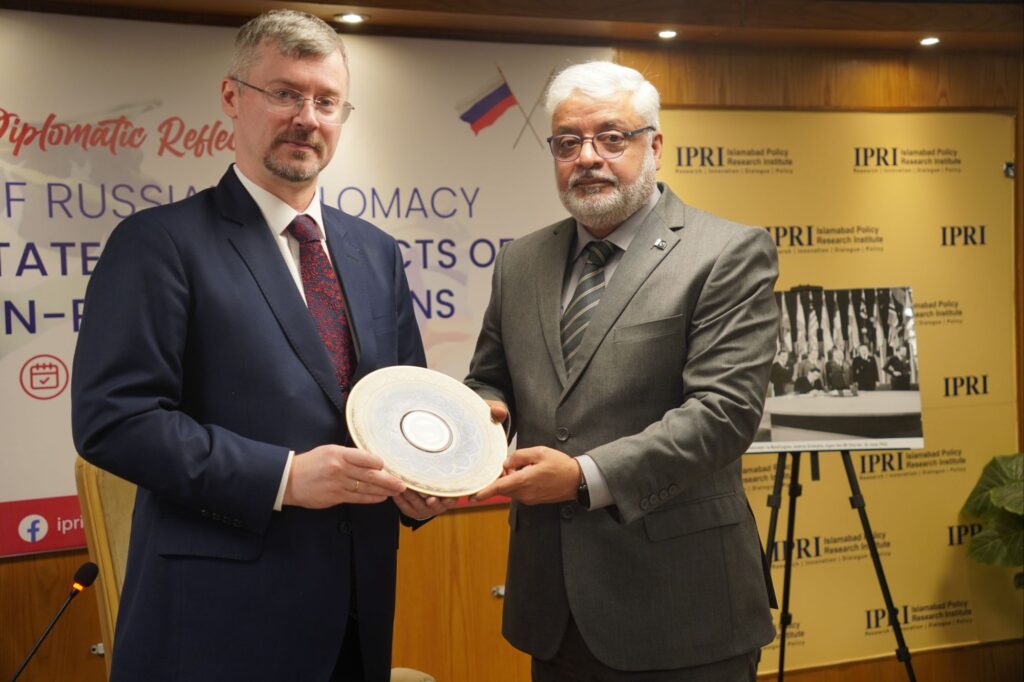
ISLAMABAD — Ambassador Albert P. Khorev, representing the Russian Federation, outlined a comprehensive roadmap for the future of Russia-Pakistan relations during a seminar at the Institute of Strategic Studies Islamabad (ISSI/IPRI) on February 9, 2026.
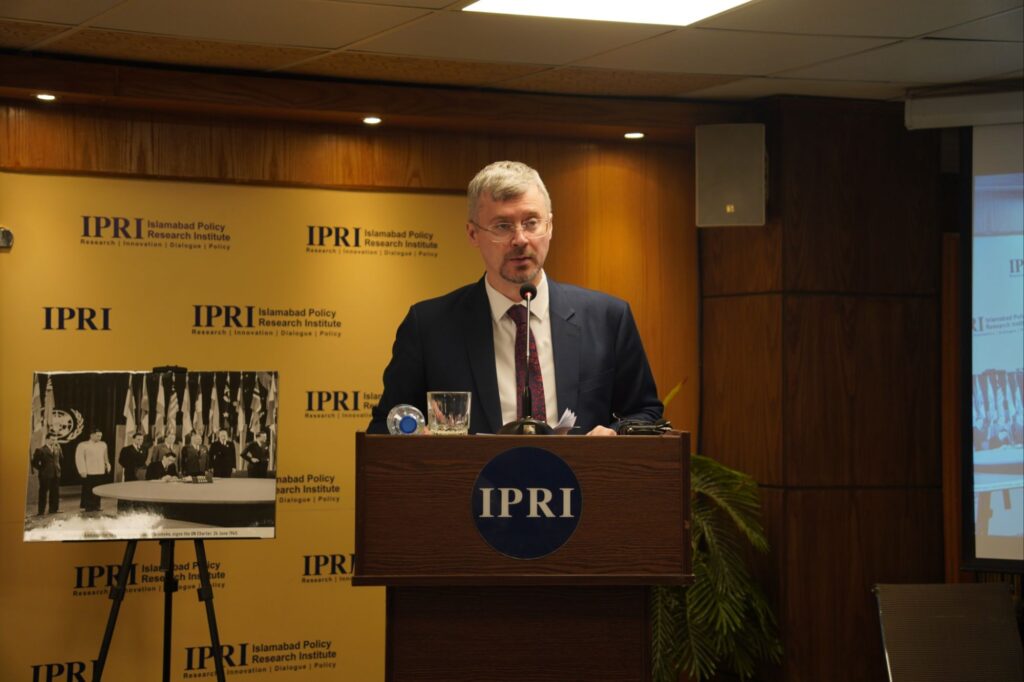
Marking the 78th anniversary of diplomatic ties, the envoy underscored a transition from historical “balancing” to a robust, multi-vector strategic partnership.
The Nut Graf
The timing of Ambassador Khorev’s address, on the eve of Russia’s Diplomats’ Day (February 10), signals Moscow’s intent to elevate Pakistan as a pivotal node in the “Greater Eurasian Partnership.”
As the 2026 geopolitical landscape shifts toward multipolarity, the bilateral relationship is increasingly defined by energy security, the North-South International Transport Corridor (INSTC), and a mutual rejection of unilateral Western-led financial constraints.
Historical Legitimacy and Modern Convergence
Ambassador Khorev’s speech traced Russian diplomacy from the 9th-century Ambassadorial Service to the 1948 establishment of ties with Pakistan. He specifically credited Soviet diplomacy for the 1966 Tashkent Declaration, framing Russia as a historically neutral arbiter and “natural ally” in regional stability.
Key pillars of the 2026 cooperation framework include:
- Energy and Industry: Active plans to modernize the Karachi Steel Mills—a Soviet-era legacy project—and the ongoing development of Pakistani hydroelectric and oil/gas fields.
- Financial Autonomy: In response to international sanctions, both nations are piloting barter trade and alternative payment mechanisms to ensure “uninterrupted trade” outside the SWIFT framework.
- Connectivity: The “Eastern Route” of the INSTC, linking Russian railways to Pakistan, is now a primary logistical objective to bypass traditional maritime bottlenecks.
Bilateral Statistics & Cultural Exchange (2025-2026)
According to the latest trade figures discussed at the 10th Intergovernmental Commission (IGC) in late 2025: - Trade Volume: Russian exports to Pakistan were led by wheat ($380M) and dried legumes ($198M), while Pakistani exports were dominated by leather apparel and textiles.
- Education: Russia has tripled its scholarship quota for Pakistani students to 152 seats for the current academic cycle.
- Space Diplomacy: Following the 2025 installation of the Yuri Gagarin monument in Islamabad, the envoy confirmed new agreements in space technology and IT.
Strategic Outlook - BRICS Integration: Moscow’s explicit support for Pakistan’s 2026 engagement with BRICS and the New Development Bank suggests a move to institutionalize Islamabad’s role in the global “non-Western” financial architecture.
- EAEU Linkages: With the normalization of Pakistan-Armenia ties in 2025, a free trade agreement (FTA) between Pakistan and the Eurasian Economic Union (EAEU) is becoming a tangible mid-term goal.
- Regional Balancing: Russia’s willingness to mediate in South Asian friction, provided bilateral consent is reached, positions Moscow as a counterbalance to traditional regional influencers.
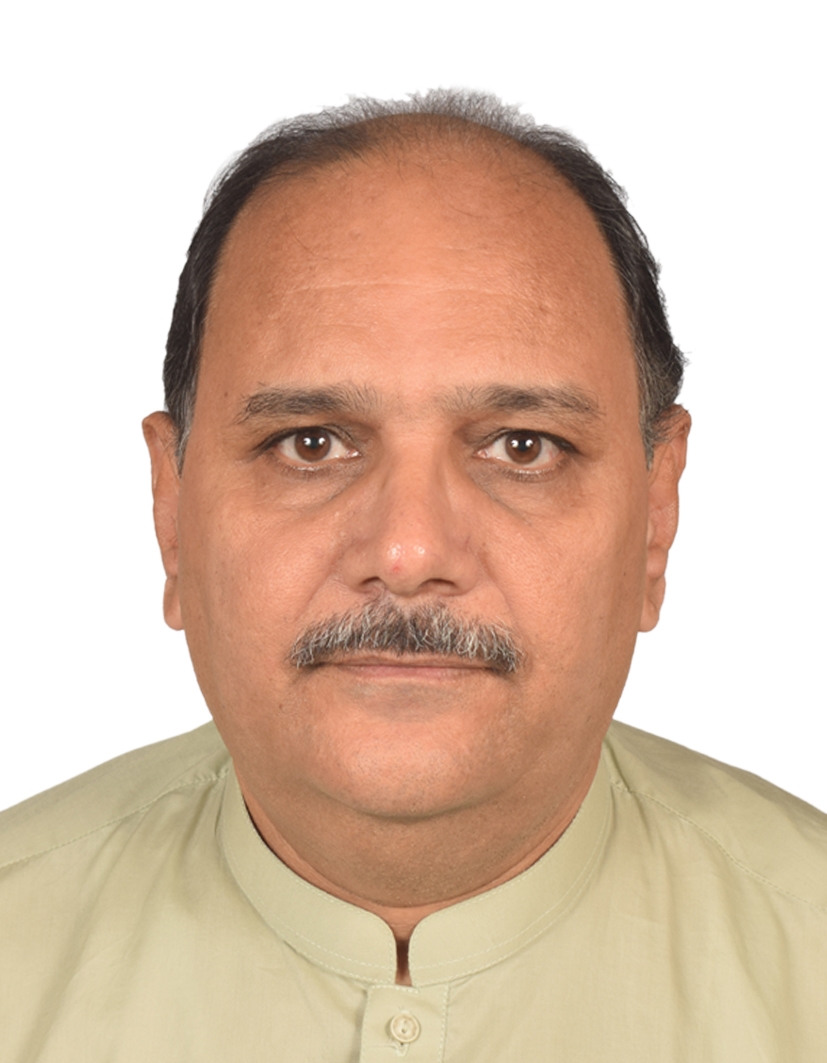
Khalid Minhas | Editor, Diplomatic Wire
A veteran journalist with three decades of comprehensive experience, Khalid Minhas has covered politics and international relations in depth throughout his career. He has also contributed to academia, teaching journalism and mass communication as a visiting faculty member at various universities in Pakistan. He holds an M.Phil in Mass Communication and is currently a Ph.D research scholar pursuing advanced studies in the field. He is also the author of the book America, Israel aur Islam, providing insightful analysis on the subject.