ST. PETERSBURG, RUSSIA — In a critical pivot of wartime diplomacy, Iranian Foreign Minister Abbas Araghchi met with Russian President Vladimir Putin on Monday, April 27, 2026, following an intensive shuttle mission through Pakistan and Oman. The high-stakes meeting, held at the Konstantinovsky Palace, marks a significant consolidation of the Moscow-Tehran axis at a moment when direct negotiations between the United States and Iran in Islamabad have reached a perilous impasse. +1
The visit comes in the wake of the devastating Feb. 28 joint military campaign by U.S. and Israeli forces against Iranian infrastructure—an escalation that has claimed over 3,300 lives and left the Strait of Hormuz effectively closed to global shipping.
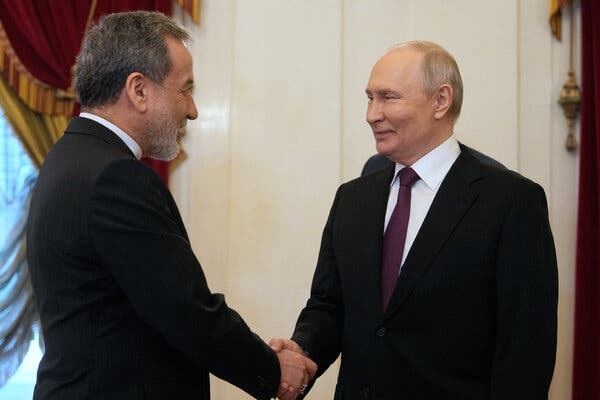
Araghchi meets Putin: A Tripartite Diplomatic Maneuver
WHO: Russian President Vladimir Putin and Iranian Foreign Minister Abbas Araghchi. WHAT: A strategic summit to reaffirm bilateral military and political cooperation, transmit a confidential message from Iran’s leadership to the Kremlin, and coordinate a response to stalled U.S.-mediated peace efforts. WHERE: St. Petersburg, Russia. WHEN: Monday, April 27, 2026. WHY: To secure Russian backing after the collapse of planned talks in Islamabad and to discuss the ongoing maritime blockade in the Persian Gulf. HOW: Through a direct diplomatic mission following Araghchi’s consultations with Pakistani Army Chief Field Marshal Asim Munir and Omani Sultan Haitham bin Tariq. +2
Current Development: Stalled Mediation and the “Secret Message”
The St. Petersburg summit was characterized by a mixture of public solidarity and private signaling. During the open session, President Putin praised the “heroic” resistance of the Iranian people following the February strikes. Crucially, Russian state media (TASS) and Iranian sources (Fars) confirmed that Araghchi delivered a personal message to Putin from Mojtaba Khamenei. While the contents remain classified, the delivery underscores a transition in Tehran’s internal power dynamics following the injury of the Supreme Leader during the initial weeks of the conflict.
The meeting occurred as the “Islamabad Process”—a mediation effort led by Pakistan—showed signs of fracturing. Araghchi arrived in Russia directly from Islamabad, where he had sought to salvage a ceasefire brokered on April 8. However, the diplomatic momentum stalled after U.S. President Donald Trump abruptly canceled the dispatch of his envoys, Steve Witkoff and Jared Kushner, to Pakistan over the weekend. +1
Key outcomes of the Putin-Araghchi meeting include:
- Intelligence Sharing: Reconfirmation of Russia’s “limited support” via the provision of targeting data and satellite reconnaissance regarding U.S. naval movements in the Gulf.
- Strategic Patience: Putin’s pledge that Russia “will do everything” to ensure peace, while notably stopping short of committing Russian kinetic forces to the conflict.
- Economic Coordination: Discussions on bypassing the U.S. naval blockade through expanded North-South Transport Corridor (INSTC) utilization.
The Backgrounder: Precedents of the 2026 Conflict
The current geopolitical crisis is the culmination of a systemic breakdown in the post-JCPOA (Joint Comprehensive Plan of Action) security architecture. Since the withdrawal of the United States from the nuclear accord and the subsequent “Maximum Pressure 2.0” campaign initiated in early 2025, the regional security framework has shifted from containment to active confrontation.
The legal and military precedent for the current escalation was set on February 28, 2026, when a combined U.S.-Israeli “Decapitation and Degradation” strike targeted Iranian missile silos and command centers. This operation was justified by Washington as a “preventive measure” against imminent Iranian nuclear breakout and regional proxy escalations. Tehran responded by invoking Article 51 of the UN Charter (Self-Defense) and implementing a total blockade of the Strait of Hormuz, effectively removing 20% of the world’s petroleum supply from the market.
Historically, the Russia-Iran relationship has functioned as a “marriage of necessity” rather than a formal treaty-based alliance. However, since the 2022 invasion of Ukraine, the two nations have integrated their defense industries. Iran’s provision of loitering munitions to Russia established a debt of reciprocity that Tehran is now calling in. Legally, the 2026 conflict has tested the limits of international maritime law. The U.S. naval blockade is viewed by the Kremlin as an illegal “act of war,” while the U.S. maintains that Iran’s mining of international waters in the Strait of Hormuz constitutes a “grave threat to global commerce.”
The role of Pakistan as a mediator is also rooted in the 2023-2024 regional re-balancing. Islamabad, traditionally a security partner of the West, has increasingly aligned with the “Eurasian Bloc” (China and Russia) to stabilize its western border. The April 8 ceasefire, brokered by Prime Minister Shehbaz Sharif and Field Marshal Asim Munir, was the first instance of direct U.S.-Iran engagement since 1979, but it lacked the institutional depth to withstand renewed domestic political pressures in both Washington and Tehran.
Stakeholder Analysis
The Russian Federation
- Strategic Goal: To prevent a total Iranian collapse which would leave a vacuum for U.S. hegemony in the Middle East, while avoiding a direct hot war with NATO/U.S. forces.
- Red Line: Any U.S. military presence that permanently alters the balance of power in the Caspian Sea or threatens Russian energy dominance.
The Islamic Republic of Iran
- Strategic Goal: Regime survival and the lifting of the naval blockade. Tehran is utilizing “Shuttle Diplomacy” to show it is not isolated, leveraging its ties with Russia to pressure Washington back to the table.
- Red Line: Any demand for total nuclear disarmament or the permanent abandonment of its regional deterrent (Hezbollah/Houthis).
The United States (Trump Administration)
- Strategic Goal: A “New Deal” that encompasses nuclear, ballistic, and regional proxy restrictions. Trump’s cancellation of the Islamabad delegation suggests a “wait-and-see” approach, betting that the blockade will crush Iran’s economy before Tehran can secure a Russian lifeline.
- Red Line: Unrestricted Iranian uranium enrichment.
The Islamic Republic of Pakistan
- Strategic Goal: Preventing a regional spillover that would destabilize its own economy and security. Pakistan seeks to remain the primary “Gateway to Peace” to enhance its global diplomatic standing.
Global and Regional Implications
The Putin-Araghchi meeting signals a shift from a bilateral U.S.-Iran dispute to a multi-polar “Great Power” confrontation. If Russia increases its electronic warfare or satellite support to Iran, the risk of “accidental” engagement between Russian and U.S. assets in the Persian Gulf rises exponentially.
Economically, the continued closure of the Strait of Hormuz and the failure of the Islamabad talks have kept global oil prices above $140 per barrel. This has triggered inflationary shocks across the Eurozone and Asia, further incentivizing regional powers like India and China to push for a rapid resolution. The St. Petersburg meeting suggests that any future settlement will likely require a “Quadripartite Guarantee” involving Russia and China, rather than a purely Western-led framework.
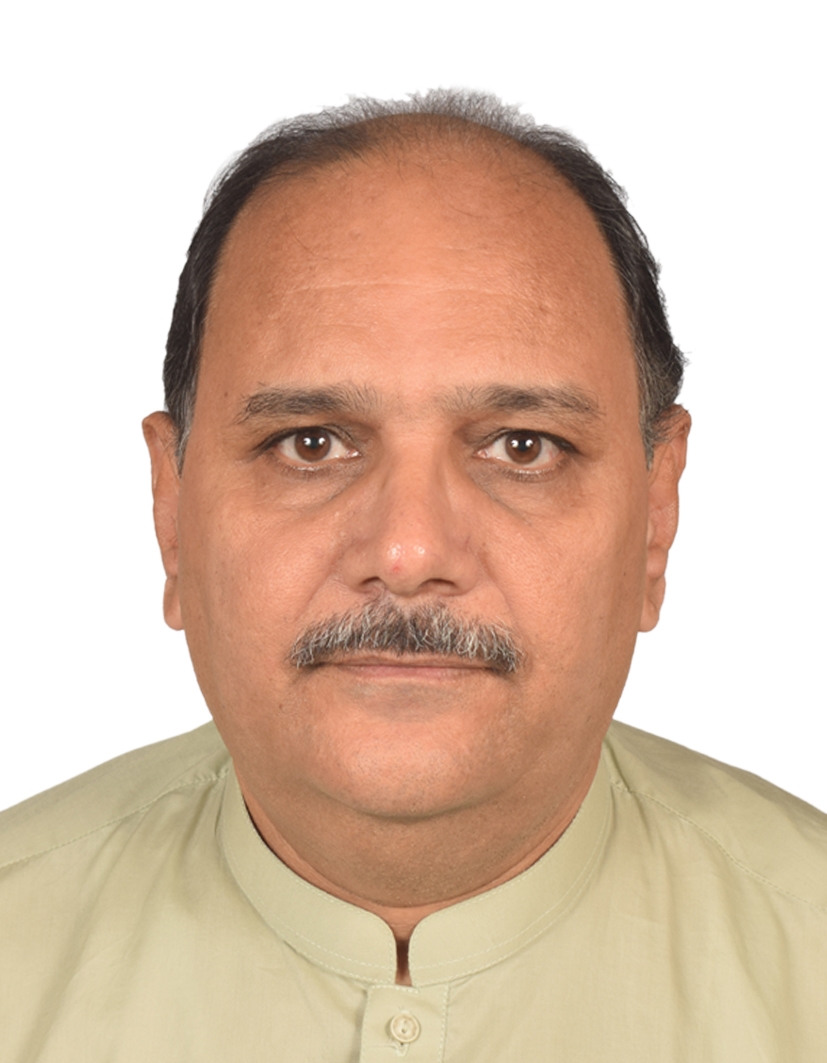
Khalid Minhas | Editor, Diplomatic Wire
A veteran journalist with three decades of comprehensive experience, Khalid Minhas has covered politics and international relations in depth throughout his career. He has also contributed to academia, teaching journalism and mass communication as a visiting faculty member at various universities in Pakistan. He holds an M.Phil in Mass Communication and is currently a Ph.D research scholar pursuing advanced studies in the field. He is also the author of the book America, Israel aur Islam, providing insightful analysis on the subject.