MANAMA, Bahrain — The Ministry of Interior of the Kingdom of Bahrain announced on April 27, 2026, the revocation of citizenship for 69 individuals accused of “glorifying” and “sympathizing” with hostile acts committed by the Islamic Republic of Iran reported Gulf News. This administrative action follows a period of intense regional escalation that began in late February, during which Bahrain became a direct target of Iranian drone and missile incursions.
The decision, issued under the directives of King Hamad bin Isa Al Khalifa, marks the most significant mass revocation of nationality in the kingdom since 2019. Government officials stated the move is a necessary security measure to protect the state’s “sovereignty and social fabric” against foreign-aligned subversion, while human rights monitors have condemned the lack of judicial appeal processes for those affected.
Bahrain Revokes Citizenship :The Security and Allegiance
The Bahraini Ministry of Interior, acting under royal decree, targeted 69 individuals. This group includes primary suspects accused of espionage or public support for Iran, as well as their family members. Authorities specified that all affected individuals are of non-Bahraini origin (naturalized citizens).
The legal revocation of Bahraini citizenship, effectively rendering many of these individuals stateless if they do not hold secondary passports.
The administrative orders were executed in Manama, Bahrain, affecting individuals both currently in custody and residing abroad.
The official announcement was made on April 27, 2026, following the April 8 ceasefire that paused the conflict between Iran and a U.S.-Israeli coalition.
The government cited Article 10/3 of the Bahraini Nationality Law, which permits stripping citizenship from those who “cause harm to the interests of the Kingdom” or “fail in their duty of loyalty.” Specifically, these individuals were found to have praised Iranian strikes on Bahraini infrastructure and, in some cases, provided intelligence to the Islamic Revolutionary Guard Corps (IRGC).
The process was executed via a royal directive bypass of the standard court system, involving a high-level review by the Ministry of Interior and the Global Communication Office.
Current Development: Post-Conflict Purge
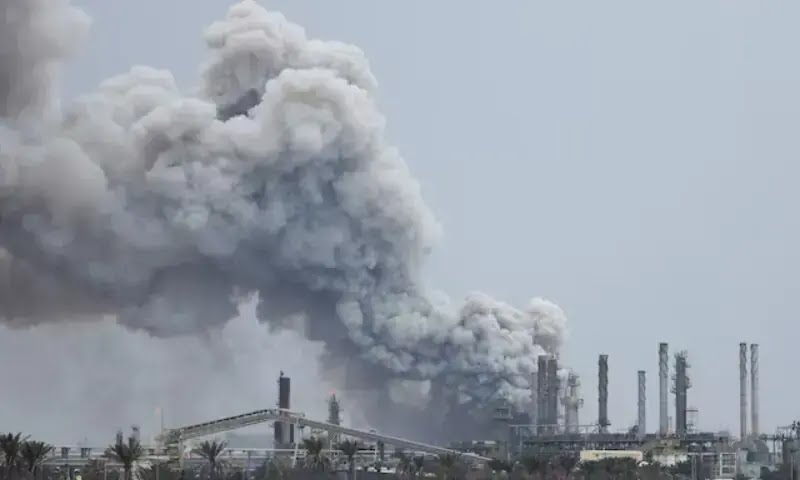
The revocation of citizenship is the latest escalation in Bahrain’s internal security crackdown following the “Spring Conflict” of 2026. Between February 28 and April 8, Bahraini air defenses intercepted approximately 194 ballistic missiles and 523 drones launched from Iranian territory. Despite these interceptions, several sensitive sites—including a unit of the BAPCO Energies refinery and residential neighborhoods—sustained damage.
According to the Bahrain News Agency (BNA), the 69 individuals were identified through intelligence gathered during the active hostilities. The charges include:
- Digital Subversion: Publicly praising Iranian strikes on social media platforms during the height of the bombardment.
- Intelligence Gathering: Passing photographs and damage assessments of Bahraini infrastructure to IRGC-linked handlers.
- Logistical Support: Funneling funds under the guise of charitable donations to organizations linked to Hezbollah and other Iranian proxies.
The Interior Ministry emphasized that this is part of a broader “review and study” of naturalized citizens to ensure national security. Critics, including the Bahrain Institute for Rights and Democracy (BIRD), note that the inclusion of family members in the revocation order constitutes “collective punishment,” a claim the Bahraini government has not formally addressed.
The Backgrounder: Citizenship as a Security Tool
Bahrain’s use of citizenship revocation is not a modern anomaly but a practiced instrument of statecraft deeply rooted in the political upheavals of the last two decades. The legal framework primarily rests on the 1963 Bahraini Nationality Law, which was significantly amended in 2014 to broaden the definition of “harming national security.”
The 2011 Precedent
The systematic use of nationality stripping gained momentum following the 2011 Arab Spring protests. In the years that followed, the Bahraini government frequently utilized this measure against opposition figures, clerics, and activists accused of ties to Tehran. Between 2012 and 2019, Bahrain revoked the citizenship of 990 individuals. A significant portion of these were restored in April 2019 via a royal pardon, which human rights groups viewed as an attempt to de-escalate international pressure.
The Iranian Factor
The geopolitical rationale for these measures is the persistent “Cold War” between Manama and Tehran. Bahrain, a Sunni-led monarchy with a majority Shia population, has long accused Iran of seeking to export its Islamic Revolution across the 25-mile span of the Persian Gulf. The 2026 conflict shifted this threat from ideological subversion to kinetic warfare. When the United States and Israel launched pre-emptive strikes on Iranian nuclear and military facilities on February 28, 2026, Iran responded by targeting Gulf states hosting U.S. military assets, specifically the U.S. Fifth Fleet headquartered in Bahrain.
Legal Mechanisms
Under Article 10/3, the Bahraini Cabinet holds the authority to strip citizenship upon the recommendation of the Interior Minister. Unlike criminal convictions, which require a trial, these administrative revocations can be executed without the defendant’s presence. In the current 2026 context, the government argues that the state of war justifies the suspension of standard judicial safeguards to prevent the formation of “fifth columns” within the domestic population.
Stakeholder Analysis: Red Lines and Strategic Goals
| Stakeholder | Strategic Goals | Red Lines |
|---|---|---|
| Bahraini Government | Ensure domestic stability; maintain the security of the U.S. Fifth Fleet; deter Iranian-backed sleeper cells. | Any public dissent or collaboration that benefits Iranian military intelligence. |
| Islamic Republic of Iran | Force the withdrawal of U.S. forces from the Gulf; project power via regional proxies. | Direct kinetic strikes on Iranian soil without a “proportional” cost to U.S. allies. |
| United States | Protect regional energy infrastructure; ensure the operational continuity of the Fifth Fleet. | Any disruption to the April 8 ceasefire or attacks on naval assets. |
| Human Rights NGOs (BIRD, HRW) | Re-establish judicial transparency; prevent the creation of a large “stateless” population. | The use of administrative decrees to bypass the right to a fair trial. |
Global and Regional Implications
The mass revocation has immediate ripple effects across the Middle East. Neighboring Gulf Cooperation Council (GCC) states, including Kuwait and the UAE, have recently mirrored these policies. Kuwait stripped nearly 50,000 people of citizenship in early 2026 following its own internal security review, signaling a regional trend toward “demographic hardening.”
1. Security and Espionage: The crackdown suggests that Iranian intelligence networks are more deeply embedded in Gulf societies than previously estimated. The “damage assessments” allegedly provided by these 69 individuals helped Iran calibrate its drone swarms, proving that human intelligence (HUMINT) remains a vital component of modern hybrid warfare.
2. International Law: The move creates a significant diplomatic hurdle. Many of those stripped of citizenship were naturalized from other Arab or Asian nations. If those countries refuse to recognize them, Bahrain faces the creation of a “stateless” class, which violates the 1954 Convention Relating to the Status of Stateless Persons—though Bahrain is not a signatory to that specific treaty.
3. The Fragile Ceasefire: By aggressively targeting Iranian sympathizers, Bahrain is signaling to Tehran that the April 8 ceasefire does not mean a return to the status quo. This “internal cleaning” is likely to provoke a rhetorical response from Tehran, potentially straining the Pakistan-mediated truce.

The Diplomatic Wire Desk is the institutional news and analysis body of Diplomatic Wire, overseen by Founder and Editor Khalid Minhas. The Desk covers international relations, foreign policy, and critical diplomatic initiatives with objective, timely reporting for a professional readership.