Islamabad and Seoul have agreed to accelerate negotiations on a Comprehensive Economic Partnership Agreement (CEPA), aiming to boost bilateral trade and investment. The move comes as Pakistan seeks to diversify its export markets and South Korean firms eye expansion in the South Asian manufacturing and energy sectors.
ISLAMABAD — In a bid to reshape their economic landscape, Pakistan and South Korea have formally agreed to accelerate the conclusion of a high-stakes trade deal, signaling a deepening of ties at a time of significant global geopolitical shifts.
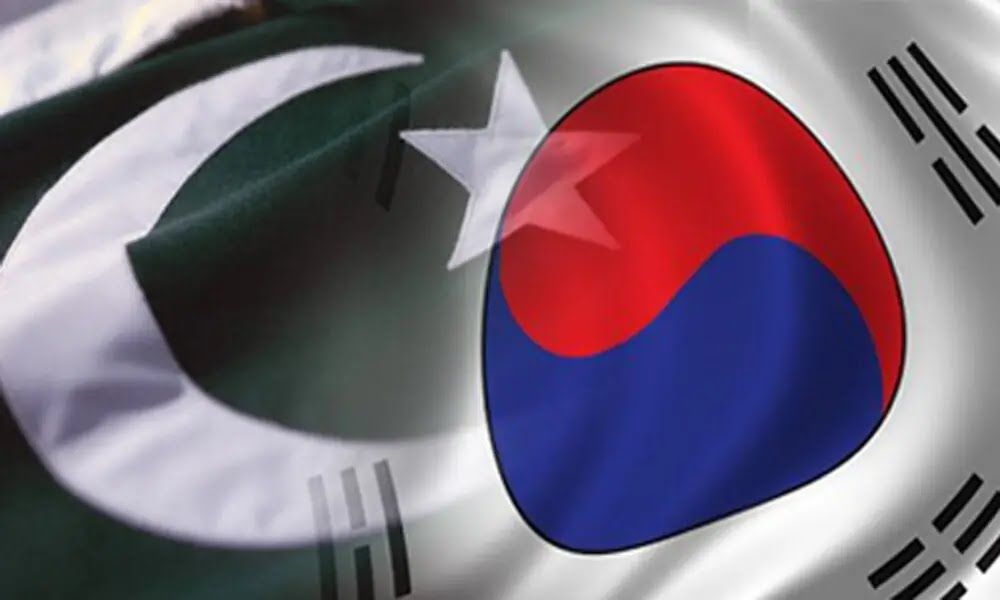
The breakthrough came during a virtual high-level summit on Friday between Pakistan’s Federal Minister for Commerce, Jam Kamal Khan, and South Korean Trade Minister, Yeo Han-koo. At the heart of the discussions was the Pakistan South Korea CEPA (Comprehensive Economic Partnership Agreement), a framework designed to lower trade barriers and provide a structured environment for long-term investment cooperation.
A Strategic Pivot Toward Seoul
The meeting, attended by senior officials including Pakistan’s Commerce Secretary Jawad Paul, reflects a strategic pivot for Islamabad. As traditional markets face volatility, Pakistan is increasingly looking toward East Asia to diversify its export portfolio.
Minister Jam Kamal Khan underscored that Pakistan is no longer content with being a passive trade partner. Highlighting the country’s strategic geography, he framed Pakistan as a “gateway” for South Korean goods entering Central Asia and Africa. The Minister specifically pointed to untapped potential in sectors such as:
- Agriculture and Mining: Leveraging raw materials for industrial processing.
- Pharmaceuticals and Surgical Instruments: Expanding Pakistan’s high-tech manufacturing footprint.
- Textiles and Sports Goods: Strengthening traditional export pillars through Korean technological integration.
“Evolving global dynamics require countries to explore new markets and build resilient economic linkages,” Khan stated, emphasizing that the proposed bilateral trade framework must be “ambitious and balanced.”
Addressing the Trade Imbalance
Despite the optimism, the numbers tell a story of a widening gap. Recent data from the Observatory of Economic Complexity and Trading Economics shows a notable trade deficit. As of early 2026, Pakistan’s monthly exports to South Korea hovered around $16 million, while imports—largely comprised of refined petroleum, automobiles, and construction machinery—topped $72 million.
To address this, Commerce Secretary Jawad Paul advocated for a “development-sensitive” approach to tariff liberalization. Islamabad is pushing for an asymmetrical arrangement—one that allows Pakistan more time to adjust its domestic industries to Korean competition while gaining immediate, easier access to Seoul’s lucrative consumer market.
Why It Matters: Beyond the Balance Sheet
The dialogue was not limited to balance sheets. South Korean Trade Minister Yeo Han-koo took a moment to laud Pakistan’s diplomatic efforts in the Middle East, noting that regional stability is a prerequisite for global economic connectivity.
For Seoul, Pakistan represents a “safe and promising” destination for capital. Minister Yeo noted that Korean conglomerates are increasingly keen on the Pakistani manufacturing and energy sectors. However, “investor confidence” remains a key hurdle. To solve this, both nations agreed to revive the Joint Trade Committee, a dedicated institutional mechanism designed to iron out regulatory bottlenecks and ensure that the grievances of Korean firms currently operating in Pakistan are addressed.
The Path Forward
The two sides have tasked their technical teams with finalizing the remaining chapters of the CEPA within a “mutually agreed timeframe.” While no specific deadline was announced, the urgency of the talks suggests a shared desire to sign the deal before the end of the 2026 fiscal year.
If successful, the Pakistan South Korea CEPA could serve as a blueprint for how developing economies can engage with G20 nations—balancing the need for foreign direct investment with the protection of domestic industrial growth.
FAQ
Q1: What is a CEPA and how does it differ from a Free Trade Agreement (FTA)?
A Comprehensive Economic Partnership Agreement (CEPA) is broader than a standard FTA. While an FTA focuses primarily on reducing tariffs on goods, a CEPA also covers trade in services, investment protections, intellectual property rights, and economic cooperation, making it a more holistic economic roadmap.
Q2: Which Pakistani products are most likely to benefit from this agreement?
Pakistani textiles, surgical instruments, and agricultural products (such as citrus and seafood) stand to gain the most. By reducing South Korean import duties, these products will become more price-competitive against rivals from Vietnam and India.
Q3: Are there many South Korean companies already in Pakistan?
Yes, several major Korean firms are active in the automotive (Kia, Hyundai), electronics (Samsung), and chemical sectors. The CEPA aims to expand this presence into the renewable energy and infrastructure sectors.
Q4: How does this deal affect the average consumer in Pakistan?
In the long term, it could lead to lower prices for high-quality Korean electronics and vehicles. Additionally, increased Korean investment in local manufacturing typically leads to job creation and technology transfer to the local workforce.
Q5: What are the main challenges remaining in the negotiations?
The primary challenge is “tariff liberalization.” Pakistan wants to protect its infant industries from being overwhelmed by advanced Korean products, while South Korea seeks a transparent and stable regulatory environment for its investors.

Khalid Minhas | Editor, Diplomatic Wire
A veteran journalist with three decades of comprehensive experience, Khalid Minhas has covered politics and international relations in depth throughout his career. He has also contributed to academia, teaching journalism and mass communication as a visiting faculty member at various universities in Pakistan. He holds an M.Phil in Mass Communication and is currently a Ph.D research scholar pursuing advanced studies in the field. He is also the author of the book America, Israel aur Islam, providing insightful analysis on the subject.