Pakistan’s Interior Minister Mohsin Naqvi has arrived in Tehran on an emergency call to deliver a fresh US proposal aimed at securing a US-Iran agreement. This high-stakes backchannel diplomacy coincides with a dramatic political revolt in Washington, where the US Senate voted to curtail President Donald Trump’s war powers following 80 days of intense conflict.
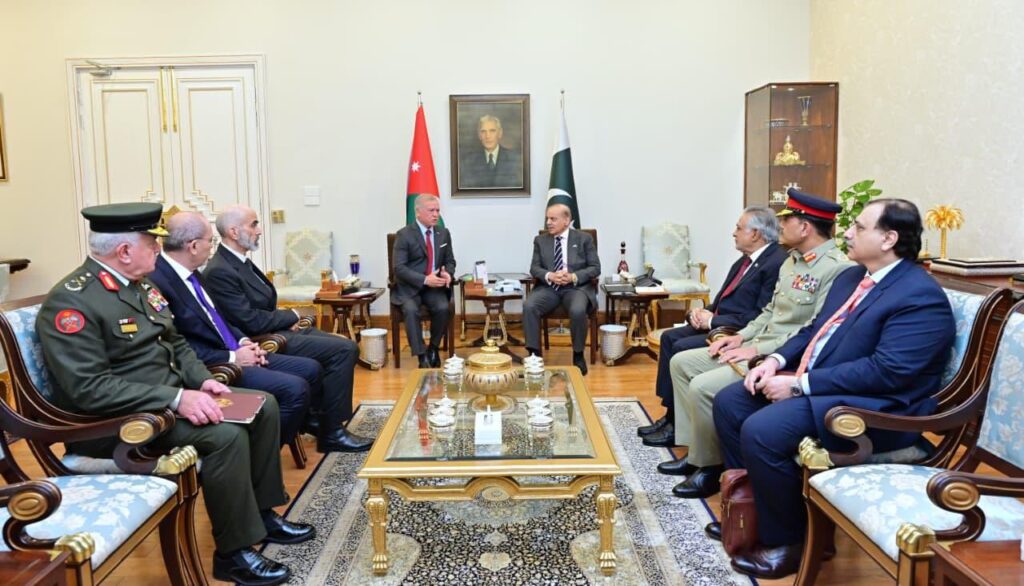
ISLAMABAD / TEHRAN — In what seasoned diplomats describe as the most critical juncture of the 80-day Gulf conflict, Pakistan has launched an emergency backchannel diplomatic mission to Tehran. Pakistan’s Interior Minister Mohsin Naqvi arrived in the Iranian capital on Wednesday, marking his second unannounced visit in less than a week. The sudden travel, described by regional intelligence sources as a response to an “emergency call,” comes as Islamabad attempts to salvage a fragile, undeclared truce and push forward a highly sensitive US Iran agreement.
The high-stakes shuttle diplomacy is unfolding against a backdrop of dramatic political theater in Washington. Just hours before Naqvi’s aircraft touched down in Tehran, the United States Senate delivered a stinging rebuke to the White House. In a narrow 50-47 vote on Tuesday, the Senate advanced a War Powers Resolution designed to force an end to President Donald Trump’s military campaign against Iran. Four Republicans crossed party lines to defect, breaking what Senate Minority Leader Chuck Schumer called a “wall of silence” over a war that has already cost billions of dollars and American lives.
With President Trump facing domestic legislative resistance and soaring domestic oil prices, the momentum for a diplomatic off-ramp has intensified. Behind the scenes, Pakistani intermediaries are capitalizing on this vulnerability, carrying what sources describe as a “fresh” American text designed to break the deadlock with Iran’s leadership.
Behind the Scenes: The ‘Fresh’ US Proposal
According to Pakistani government sources speaking to Anadolu Agency on Wednesday, Mohsin Naqvi’s mission is centered on presenting an amended American framework to Iranian President Masoud Pezeshkian, Foreign Minister Abbas Araghchi, and Gen. Ahmad Vahidi, the commander-in-chief of Iran’s Revolutionary Guards.
The newest American text reportedly offers “slightly better incentives” regarding Iran’s frozen assets abroad and a temporary waiver of heavy Office of Foreign Assets Control (OFAC) sanctions. In return, Washington is demanding an immediate, verifiable reopening of the Strait of Hormuz and strict caps on Iran’s nuclear enrichment programs.
[Pakistani Mediation Pipeline]
Washington (Fresh US Proposal) ──> Islamabad (Naqvi/Munir) ──> Tehran (Iranian Leadership)
This rapid exchange follows weeks of rigid posturing. An initial two-week ceasefire, brokered via pakistan mediation efforts on April 8, collapsed into a diplomatic impasse after direct talks in Islamabad stalled. President Trump subsequently imposed a severe naval blockade on Iranian ports, prompting Tehran to retain its tight grip on the Strait of Hormuz—the world’s primary oil transit chokepoint.
However, the geopolitical calculus shifted on Monday when President Trump announced he was postponing a series of planned retaliatory airstrikes. He noted that regional intermediaries had signaled a breakthrough was possible. This window of restraint provided the opening for Naqvi’s emergency trip.
Washington Cracks: The Senate’s War Powers Revolt
While Minister Naqvi negotiates in Tehran, the political ground has shifted beneath President Trump’s feet in Washington. The Senate War Powers Resolution, spearheaded by Democratic Senator Tim Kaine, represents the first successful legislative check on the administration’s war policy after seven failed attempts.
The defection of Republican Senators Susan Collins, Lisa Murkowski, Rand Paul, and Bill Cassidy exposed deep fractures within the ruling party regarding the sustainability of the conflict.
“President Trump’s war of choice in Iran has imposed a tremendous cost on the American people—including deaths and injuries of our servicemembers and soaring gas prices,” Senator Kaine stated following the vote.
Democratic lawmakers revealed that the 80 days of hostilities have cost the US treasury $29 billion and claimed the lives of 14 American troops. While the White House retains the power to veto the resolution if it passes the full Congress, the vote signals to foreign capitals—and to Tehran—that American domestic patience for an protracted conflict in the Middle East is rapidly evaporating.
The Pakistani Stance: A Fragile Bridge
Pakistan’s unique position as a trusted interlocutor for both Washington and Tehran has made it the central axis of global de-escalation efforts. The mediation track is being handled at the highest institutional levels, spearheaded jointly by Minister Naqvi and Pakistan’s Army Chief, Gen. Asim Munir, who visited Tehran together late last month.
Key Timeline of the 2026 Gulf Conflict & Mediation February 28, 2026 US and Israel launch joint strikes; Iran retaliates and closes Strait of Hormuz. April 8, 2026 First temporary ceasefire takes effect via Pakistani mediation. April 11, 2026 Direct US-Iran talks in Islamabad fail; Trump orders blockade of Iranian ports. May 19, 2026 US Senate votes 50-47 to advance War Powers Resolution to curb Trump’s war. May 20, 2026 Mohsin Naqvi makes second emergency visit to Tehran within a week with fresh US text. For Islamabad, the stakes could not be higher. A full-scale war on its western border threatens Pakistan’s internal security and economic stability. Observers note that Pakistan’s current priority is twofold: secure an ironclad extension of the current pauses in hostility, and persuade both capitals to return to the negotiating table for a second round of direct talks in Islamabad. What Comes Next
Diplomatic sources indicate that the next 48 hours will determine whether the region pivots toward a sustainable truce or relapses into open warfare. If President Pezeshkian and the Revolutionary Guard leadership accept the modified terms carried during the Mohsin Naqvi Iran visit, a formal memorandum of understanding could be finalized before the end of May.
However, defiance remains the official public stance in Tehran. “We will not bow before any power,” President Pezeshkian declared earlier this week, even as his diplomats meticulously review the text. Should these backchannel maneuvers fail, and if President Trump chooses to ignore the legislative warnings flashing from the US Senate, the temporary pause will expire, setting the stage for a dangerous re-escalation in the world’s most volatile energy corridor.FAQ
Q1: Why is Pakistan mediating the US-Iran conflict?
Pakistan maintains close, strategic bilateral ties with its neighbor, Iran, while simultaneously preserving vital military and diplomatic channels with the United States. Because Washington and Tehran do not maintain formal diplomatic relations, Pakistan’s political and military leadership functions as a secure neutral conduit to prevent miscalculation and exchange peace frameworks.
Q2: What did the US Senate vote on regarding Donald Trump?
The US Senate voted 50-47 to advance a War Powers Resolution led by Senator Tim Kaine. The resolution directs President Trump to withdraw US Armed Forces from hostilities against Iran unless explicitly authorized by a formal declaration of war or specific congressional authorization.
Q3: What is the main sticking point in the US Iran agreement talks?
The primary disagreement centers on the sequencing of concessions. Iran demands an immediate end to the US naval blockade and a comprehensive lifting of international economic sanctions before discussing its nuclear architecture. The US insists on verifiable nuclear enrichment freezes and the immediate reopening of the Strait of Hormuz before permanent sanctions relief can be granted.
Q4: What is the status of the Strait of Hormuz right now?
As of late May 2026, a fragile, informal pause in active naval combat is holding, but the United States maintains a restrictive blockade on vessels traveling to or from Iranian ports. Iran retains local maritime control over the waterway, causing ongoing volatility in global energy markets and high oil prices.

Khalid Minhas | Editor, Diplomatic Wire
A veteran journalist with three decades of comprehensive experience, Khalid Minhas has covered politics and international relations in depth throughout his career. He has also contributed to academia, teaching journalism and mass communication as a visiting faculty member at various universities in Pakistan. He holds an M.Phil in Mass Communication and is currently a Ph.D research scholar pursuing advanced studies in the field. He is also the author of the book America, Israel aur Islam, providing insightful analysis on the subject.