Russian Ambassador Albert Khorev has endorsed Pakistan’s diplomatic mediation between the United States and Iran, calling the efforts crucial for regional stability. Speaking at a comprehensive briefing in Islamabad, Khorev simultaneously opened a sharp diplomatic front against Western powers, warning third parties against joining proposed international tribunals investigating the Ukraine war.
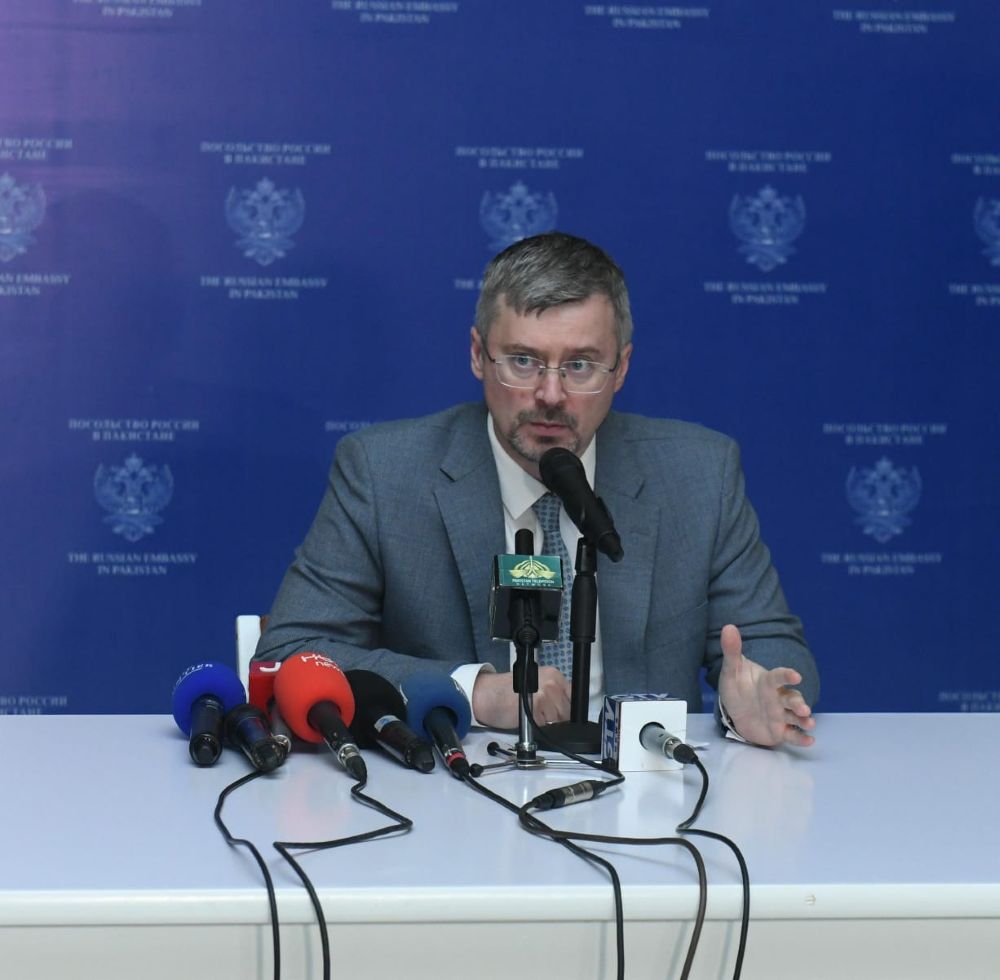
ISLAMABAD — In a major diplomatic development reshaping Eurasian geopolitics, Russia has formally endorsed Pakistan’s ongoing backchannel efforts to defuse escalating US-Iran tensions. Speaking at an extensive press briefing in the Pakistani capital, Russian Ambassador to Pakistan Albert P. Khorev described Islamabad’s mediation between Washington and Tehran as “positive and constructive” for the stability of the broader Middle East and South Asian regions.
The endorsement comes at a volatile moment for global diplomacy. While expressing Moscow’s backing for Pakistan’s peace corridor, Ambassador Khorev used the platform to launch a sweeping diplomatic counter-offensive against Western countries. He warned third-party nations that Moscow would view any participation in Western-led legal mechanisms targeting Russia over the Ukraine war diplomacy framework as an explicitly hostile act.
The briefing, attended by members of the Pakistani media and academic communities, spotlighted how Islamabad is increasingly viewed by major global powers as a critical diplomatic bridge.
Moscow Validates Islamabad’s Strategic Balancing Act
As the risk of open confrontation between the US and Iran continues to roil energy markets, Ambassador Khorev emphasized that dialogue and negotiated settlements are the only viable alternatives to regional escalation. According to reports from the Minute Mirror in Islamabad, the Russian envoy stated that Moscow supports all steps aimed at lowering the geopolitical temperature.
“Russia will support all steps that help resolve concerns on both sides and contribute to lowering tensions in the region,” Ambassador Khorev stated.
This public backing from the Kremlin injects fresh momentum into pakistani mediation efforts. For months, Islamabad has quietly worked behind the scenes to keep communication lines open between Washington and Tehran, leveraging its unique position as a contiguous neighbor to Iran and a traditional security partner of the United States. Analysts note that Russia’s explicit approval indicates a shifting alignment in Eurasian diplomacy, where both Moscow and Beijing increasingly view Pakistan as an indispensable stabilizer against wider Middle Eastern conflicts.
Searing Critique of the Western ‘Hybrid War’ and Judicial Overreach
While the ambassador’s remarks on the Middle East offered a tone of shared diplomatic purpose, his assessment of the European theater was starkly adversarial. Khorev accused Western nations of executing a coordinated “hybrid war” against the Russian Federation, using international legal institutions as political weapons.
In particular, the ambassador took aim at the proposed “Special Tribunal for the Crime of Aggression against Ukraine” and the newly established “Register of Damage for Ukraine.” He dismissed these initiatives as pseudo-legal structures engineered by the West to bypass established international law.
Accession to Special Tribunals  ──> Deemed a "Hostile Step" by Russia
Participation in Damage Registers ──> Undermines Bilateral Diplomatic Ties
Addressing the gathered Pakistani journalists, Khorev delivered a clear warning regarding these international legal bodies. He stated that the Kremlin would closely monitor how third-party nations interact with these tribunals, clarifying that any country joining or endorsing these Western-led legal mechanisms would face a severe diplomatic re-evaluation from Moscow.
Energy Security, Infrastructure Attacks, and the Battle of Narratives
The briefing also focused heavily on the physical and economic infrastructure holding the region together. Ambassador Khorev strongly condemned recent attacks on critical civilian and energy networks, pointing specifically to threats directed at major transit lines like the “TurkStream” and “Blue Stream” gas pipelines. He emphasized that targeting trans-regional energy projects directly threatens regional energy security, driving up global inflation and harming developing economies that rely on stable fuel markets.
Turning to the battlefield dynamics of the Ukraine conflict, the ambassador pushed back against Western media reporting. He asserted that the current administration in Kyiv, backed by heavy financial and military injections from NATO allies, is actively prolonging the hostilities to avoid peace negotiations. Khorev cited what he described as severe internal crises within Ukraine, highlighting reports of aggressive forced mobilization and escalating corruption scandals involving members of President Volodymyr Zelenskyy’s inner circle.
The envoy also used the briefing to challenge prominent Western narratives regarding civilian casualties, specifically calling allegations regarding the 2022 events in Bucha and claims of systematic child abductions completely unfounded. Instead, he maintained that Russian authorities are working continuously to reunite families separated by the moving frontlines on both sides of the border.
Historical Alliances and the Presentation of ‘Militia Romance’
Despite the heavy focus on current battle lines, the briefing maintained a distinct focus on historical solidarity between Moscow and Islamabad. Khorev expressed gratitude for Pakistan’s long-standing support at the international stage, particularly pointing to Islamabad’s consistent votes in favor of Russia’s annual United Nations anti-Nazism resolution. The latest version of the resolution, adopted by the UN General Assembly in December 2025, won the backing of 119 countries.
In a symbolic conclusion to the briefing, the embassy presented the book Militia Romance by Russian author Zakhar Prilepin. The text, which details the personal lives and experiences of Donbas residents following the political upheavals of 2014, was shared with the Pakistani academic community as part of Moscow’s broader effort to present its internal perspective on the roots of the conflict directly to South Asian audiences.
FAQ
Q1: US-Iran tensions: Why is Russia commenting on Pakistan’s mediation between the US and Iran?
Russia views regional stability in the Middle East and South Asia as critical to its broader Eurasian economic and security strategies. Because Moscow maintains strong partnerships with both Iran and Pakistan, it views Pakistan’s neutral backchannel as a highly effective mechanism to prevent a wider war that could disrupt global trade and energy security.
Q2: What are the “TurkStream” and “Blue Stream” pipelines mentioned by the ambassador?
These are major natural gas pipelines running from Russia across the Black Sea to Turkey. They are critical pieces of international energy infrastructure that supply gas to Southeastern Europe and Turkey. Threats or attacks against them directly impact global energy supply lines and regional economic stability.
Q3: What is the “Special Tribunal” for Ukraine that Russia has rejected?
The Special Tribunal is an international legal mechanism proposed by Ukraine and its Western allies to investigate and prosecute state leaders for the crime of aggression. Russia rejects its legitimacy, viewing it as a politically motivated, biased body that violates state sovereignty under international law.
Q4: How has Pakistan responded to the conflict between Russia and Ukraine?
Pakistan has consistently maintained a policy of strategic neutrality regarding the conflict in Europe. It has abstained from major anti-Russia votes at the United Nations General Assembly while repeatedly calling for a peaceful, diplomatic resolution to the crisis through dialogue, consistent with its position as an emerging diplomatic bridge in Eurasia.
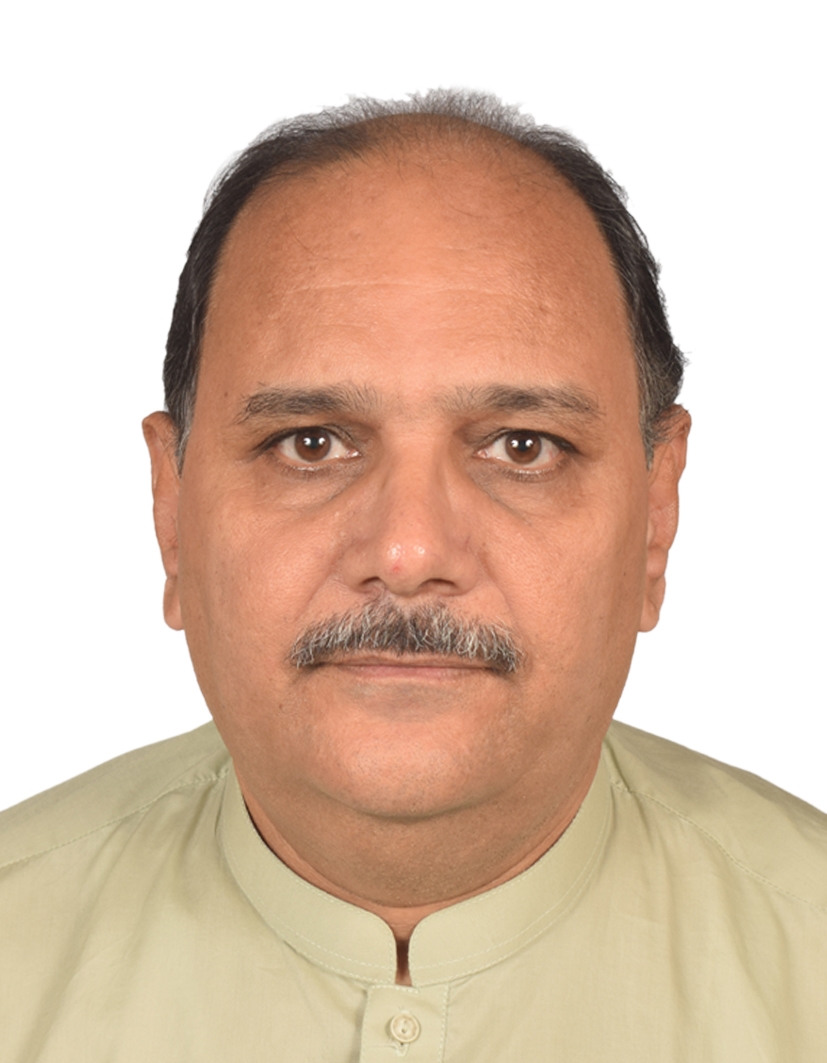
Khalid Minhas | Editor, Diplomatic Wire
A veteran journalist with three decades of comprehensive experience, Khalid Minhas has covered politics and international relations in depth throughout his career. He has also contributed to academia, teaching journalism and mass communication as a visiting faculty member at various universities in Pakistan. He holds an M.Phil in Mass Communication and is currently a Ph.D research scholar pursuing advanced studies in the field. He is also the author of the book America, Israel aur Islam, providing insightful analysis on the subject.