Speculation regarding a potential Pakistani acquisition of 40 Chinese J-35 stealth fighters has sparked intense debate across South Asian defense circles, balancing official silence against shifting regional power dynamics
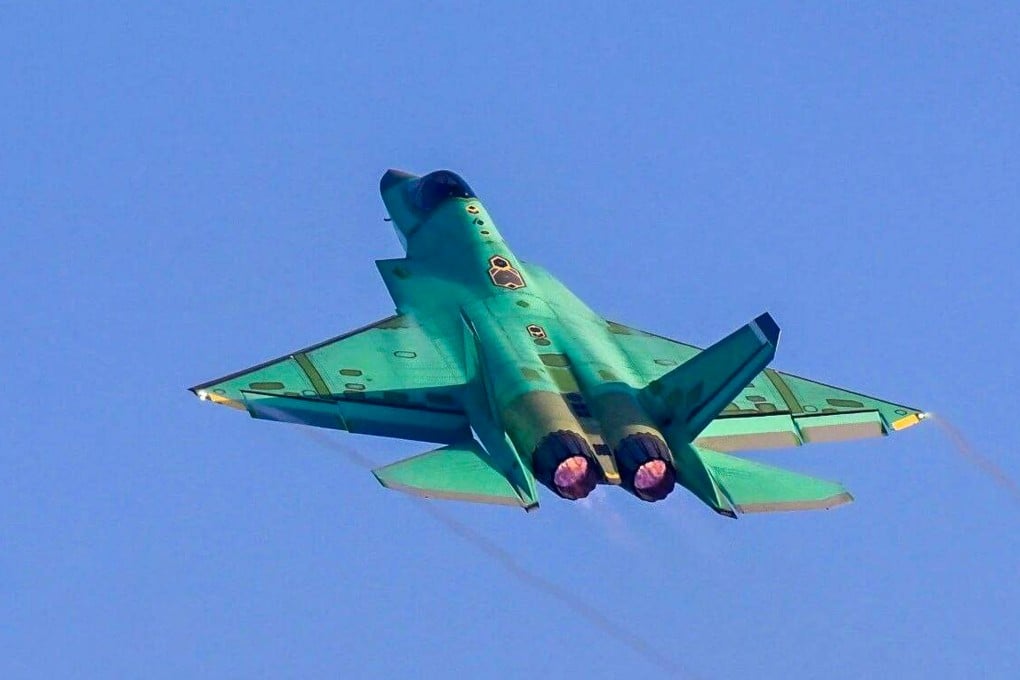
ISLAMABAD/BEIJING — In recent months, commentary surrounding the potential sale of China’s advanced J-35 stealth fighter to the Pakistan Air Force (PAF) has triggered significant strategic debate across defense platforms in Asia. Reports suggesting an imminent transfer of up to 40 fifth-generation aircraft have raised questions over how such a deal might alter the air superiority landscape of the Indian subcontinent.
However, beneath the analytical commentary lies a key reality: as of July 2026, neither Beijing nor Islamabad has officially confirmed any signed contract or delivery timeline for the platform.
                 +----------------------------------------------------+
                 |   CHALLENGING THE SPECULATION: TWO PERSPECTIVES    |
                 +----------------------------------------------------+
                                           |
            +------------------------------+------------------------------+
            |                                                             |
            v                                                             v
[ANALYSIS A: BEIJING'S CAUTION]                              [ANALYSIS B: STRATEGIC ALLIANCE]
- Hesitant to upset South Asian balance                       - Longstanding "iron brother" partnership
- Prioritizes domestic PLAN carrier fleet                     - Track record of joint production (JF-17, J-10C)
- Safeguards low-observable technology                        - Direct counter to regional force asymmetry
The Debate Over Beijing’s Intentions
Much of the recent skepticism originated from an commentary in The Diplomat by Yang Xiaotong, an assistant researcher at a Beijing-based independent think tank. Yang argued that China remains cautious about delivering a decisive stealth advantage to Pakistan, suggesting that introducing 40 fifth-generation airframes could destabilize the region’s delicate security balance and increase risk along the Kashmir line of control.
According to this perspective, Beijing’s overarching priority rests in East Asia and maritime competition in the Western Pacific. Diverting production capacity from the People’s Liberation Army Navy (PLAN)—which relies on the J-35 as its premier carrier-capable fighter—could hinder China’s own naval modernization. Additionally, analysts raised concerns regarding technology security, citing the presence of Western personnel supporting Pakistan’s legacy F-16 fleet.
Critics Push Back: “Speculation vs. All-Weather Reality”
Many regional defense analysts and military observers strongly reject this cautious thesis, dismissing it as ungrounded speculation that misinterprets the fundamental dynamics of Sino-Pakistani defense cooperation.
Opponents of the “hesitation” theory emphasize that Pakistan and China share a well-documented “all-weather” strategic partnership built on deep defense integration. Over past decades, Chinese hardware has formed the backbone of Pakistan’s conventional military architecture. Platforms like the co-developed JF-17 Thunder and the recent induction of J-10CE multirole fighters illustrate Beijing’s consistent willingness to supply Islamabad with front-line aviation technology.
| Defense Dimension | Analytical Skepticism (The Diplomat) | Counter-Perspective (Defense Observers) |
|---|---|---|
| Regional Balance | China avoids giving Pakistan a decisive military edge. | China acts to preserve parity whenever regional balance shifts. |
| Production Constraints | PLAN carrier induction takes total priority over exports. | Industrial capacity at Shenyang allows parallel production lines. |
| Tech Security | Risks of stealth exposure near foreign observers. | Experienced PAF operational security protocols protect shared tech. |
| Financial Terms | High costs restrict non-essential military loan packages. | Flexible bilateral financing mechanisms support major strategic buys. |
| Furthermore, industrial tracking reports indicate that Shenyang Aircraft Corporation has significantly expanded its manufacturing infrastructure. This dual-track capacity suggests China can simultaneously fulfill domestic PLAN carrier requirements while producing export-configured J-35 variants for close partners. From this viewpoint, Beijing views a capability-aligned Pakistan Air Force not as a regional risk, but as an essential element of conventional deterrence in South Asia. |
The Broader Air Superiority Equation
The debate unfolds against a shifting technological environment. Currently, the Indian Air Force relies on 4.5-generation fighters, including the Dassault Rafale and Su-30MKI, while work continues on its indigenous Advanced Medium Combat Aircraft (AMCA) project.
While independent commentators continue to debate whether a sale is immediate or distant, military planners across the region recognize that formal government announcements—rather than unconfirmed opinion pieces—remain the only true indicator of a shifting strategic reality.
FAQ
Q1: Has a contract for the Chinese J-35 stealth fighter been signed by Pakistan?
No official statement or signed agreement has been announced by government or military authorities in either China or Pakistan regarding the J-35.
Q2: What is the J-35 stealth fighter?
Developed by Shenyang Aircraft Corporation, the J-35 is China’s fifth-generation multirole stealth fighter designed for land-based air forces and carrier-borne operations.
Q3: Why do some analysts argue China might hesitate to export the J-35?
Some analysts point to China’s domestic naval priorities, technological security, and a desire to avoid escalating tensions in South Asia.
Q4: Why do defense observers reject the idea of Chinese hesitation?
Critics argue that China and Pakistan maintain a deep, long-standing defense partnership, and that China’s expanding defense manufacturing capacity can support both domestic deployment and export needs.
Q5: Does India currently operate a fifth-generation stealth fighter?
No. India operates advanced 4.5-generation aircraft, while its indigenous fifth-generation AMCA fighter remains under active development.

Khalid Minhas | Editor, Diplomatic Wire
A veteran journalist with three decades of comprehensive experience, Khalid Minhas has covered politics and international relations in depth throughout his career. He has also contributed to academia, teaching journalism and mass communication as a visiting faculty member at various universities in Pakistan. He holds an M.Phil in Mass Communication and is currently a Ph.D research scholar pursuing advanced studies in the field. He is also the author of the book America, Israel aur Islam, providing insightful analysis on the subject.