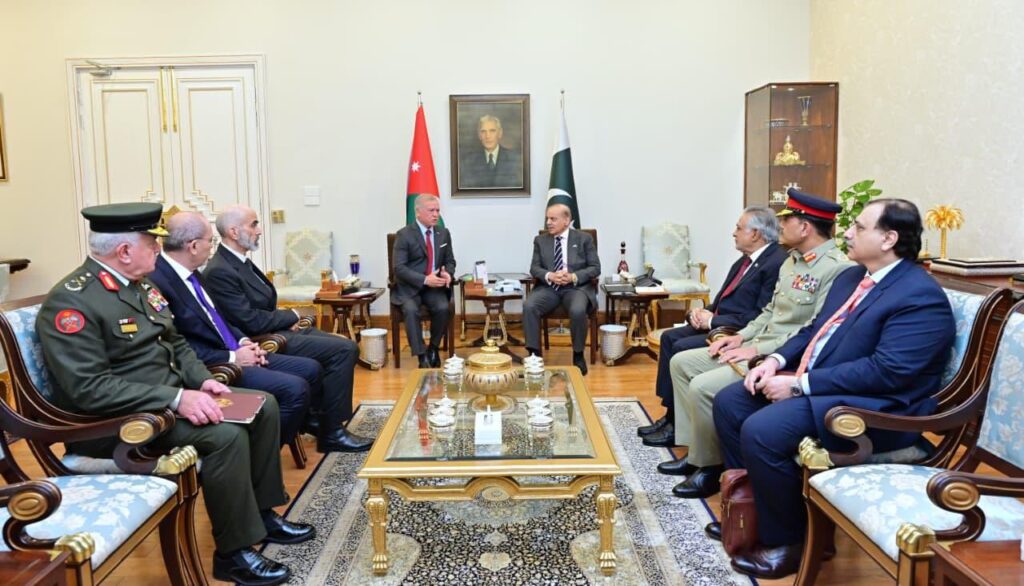
Pakistan and Japan have taken another important step toward strengthening their long-standing development partnership following a high-level meeting between Pakistan’s Ambassador to Japan, Abdul Hameed, and Japan International Cooperation Agency (JICA) President Dr. Akihiko Tanaka at JICA Headquarters in Tokyo. During the meeting, both leaders reaffirmed their commitment to expanding cooperation in several strategic sectors, including infrastructure development, climate resilience, human resource development, digital transformation, and sustainable economic growth. They also exchanged views on future development initiatives aimed at creating shared prosperity and improving the quality of life for people in Pakistan. The discussions reflect the growing momentum in bilateral relations and highlight both countries’ willingness to pursue practical and long-term collaboration.

Why This Meeting Matters
The timing of this meeting is particularly significant because Pakistan is pursuing economic reforms while seeking greater international investment and development assistance. Japan has consistently been one of Pakistan’s most reliable development partners through Official Development Assistance (ODA), and JICA has played a central role in financing and implementing transformational projects. The renewed focus on cooperation signals confidence in Pakistan’s development potential while aligning with Japan’s broader strategy of supporting sustainable growth and regional stability. By emphasizing innovation, climate adaptation, and human capital, both sides are positioning their partnership for the demands of the coming decades rather than simply maintaining existing cooperation.
Pakistan–Japan Relations: More Than Seven Decades of Friendship
Evolution of Bilateral Cooperation
Diplomatic relations between Pakistan and Japan date back to the early years after Pakistan’s independence. Over more than seventy years, the relationship has steadily expanded from diplomatic engagement into a comprehensive development partnership encompassing transportation, education, health, energy, governance, and disaster management. Japanese assistance has been characterized by long-term planning, technical expertise, and institution building rather than short-term interventions. This continuity has made Japan one of Pakistan’s most trusted development partners and has helped establish a reputation for quality infrastructure and capacity-building projects.
Japan’s Role in Pakistan’s Development
Through JICA and Japan’s Official Development Assistance program, Japan has financed highways, urban transport systems, water supply projects, educational institutions, and energy infrastructure across Pakistan. Beyond physical infrastructure, Japanese cooperation has emphasized knowledge sharing, technical training, and strengthening public institutions. This balanced approach ensures that investments not only create physical assets but also enhance local capacity to manage and sustain them over time. As Pakistan seeks to modernize its economy and improve governance, Japan’s experience in technological innovation and institutional excellence offers valuable lessons.
Key Areas of Future Cooperation
Infrastructure Development
Transport and Urban Connectivity
Infrastructure remains one of the strongest pillars of Pakistan–Japan cooperation. Modern transportation systems improve trade, reduce logistics costs, connect communities, and stimulate economic activity. Japanese expertise in engineering, project management, and urban planning has contributed to several major infrastructure initiatives in Pakistan. Looking ahead, both countries are expected to explore collaboration in smart transportation, resilient urban infrastructure, sustainable energy systems, and efficient logistics networks.
Infrastructure investment also creates multiplier effects across the economy by attracting private investment, generating employment opportunities, and improving productivity. Better roads, ports, and urban transport systems help businesses expand while improving access to healthcare, education, and markets for ordinary citizens.
Climate Resilience and Disaster Management
Climate resilience has emerged as one of the most urgent priorities for Pakistan following repeated floods, heatwaves, droughts, and other climate-related disasters. Japan has extensive experience in disaster risk reduction, earthquake preparedness, flood management, and resilient infrastructure design. During the meeting, climate resilience featured prominently among future cooperation priorities, reflecting the growing recognition that sustainable development cannot be achieved without addressing climate risks.
Future cooperation may include improved flood forecasting systems, climate-smart agriculture, resilient infrastructure standards, renewable energy initiatives, and disaster preparedness programs. Such initiatives can reduce economic losses while protecting vulnerable communities from increasingly frequent climate events.
Human Resource Development
Human capital has long been a cornerstone of Japan’s international development philosophy. Scholarships, professional training, technical exchanges, and institutional partnerships have enabled thousands of Pakistani professionals to acquire new skills and contribute to national development. The latest discussions reaffirmed the importance of investing in education, vocational training, and workforce development to meet the demands of an increasingly knowledge-based economy.
A stronger focus on technical education can also support Pakistan’s growing participation in international labor markets, particularly in sectors requiring advanced technical skills. Enhanced cooperation in this field benefits both countries by addressing workforce shortages while creating better employment opportunities for Pakistani professionals.
Digital Transformation
Digital transformation represents one of the fastest-growing areas of international cooperation. Pakistan’s expanding digital economy, vibrant startup ecosystem, and young technology workforce provide a strong foundation for collaboration with Japan. Areas of potential cooperation include e-governance, cybersecurity, digital public services, artificial intelligence, fintech, smart cities, and digital infrastructure.
Japan’s leadership in advanced technologies combined with Pakistan’s youthful demographic profile creates opportunities for mutually beneficial partnerships. Digital innovation can improve public service delivery, increase transparency, enhance productivity, and strengthen economic competitiveness across multiple sectors.
JICA’s Contribution to Pakistan
Major Development Projects
JICA has implemented numerous projects across Pakistan in transportation, energy, education, healthcare, agriculture, and urban development. These projects typically combine concessional financing with technical assistance and capacity building, ensuring sustainable long-term outcomes rather than short-lived interventions.
The agency’s development philosophy focuses on improving local capabilities while supporting national priorities. This integrated approach enables Pakistan to strengthen institutions alongside infrastructure, creating lasting benefits that extend beyond individual projects.
Capacity Building and Technical Assistance
One of JICA’s distinguishing features is its emphasis on technical cooperation. Japanese experts work alongside Pakistani institutions to improve planning, implementation, governance, and operational efficiency. Training programs conducted in Japan also expose Pakistani professionals to international best practices that can be adapted to local conditions.
This knowledge transfer helps build institutional resilience and strengthens Pakistan’s ability to independently manage future development challenges. Capacity building remains one of the most valuable aspects of the Pakistan–Japan partnership because its benefits continue long after individual projects have been completed.
Economic Opportunities Emerging from the Partnership
Investment Prospects
The renewed emphasis on economic cooperation opens new opportunities for Japanese investment in Pakistan. Infrastructure modernization, renewable energy, manufacturing, information technology, agriculture, logistics, and healthcare all offer attractive prospects for collaboration. Stable diplomatic relations combined with ongoing economic reforms can improve investor confidence and encourage greater private-sector engagement.
As Pakistan continues improving its business environment, Japanese companies may find expanding opportunities in sectors supported by modern infrastructure, digitalization, and skilled human resources. Increased investment could generate employment, expand exports, and strengthen industrial competitiveness.
Technology Transfer and Innovation
Technology transfer has the potential to become one of the defining features of future Pakistan–Japan relations. Japanese innovation in robotics, automation, precision manufacturing, environmental technologies, and digital systems can complement Pakistan’s growing entrepreneurial ecosystem. Collaborative research, university partnerships, startup exchanges, and industrial cooperation could accelerate technological development while enhancing productivity across multiple industries.
Innovation partnerships also contribute to sustainable development by promoting cleaner technologies, efficient resource utilization, and environmentally responsible industrial growth.
Challenges and Future Roadmap
Overcoming Development Barriers
While the outlook remains highly positive, effective implementation requires addressing challenges including regulatory reforms, project execution, financing constraints, institutional coordination, and climate-related risks. Development partnerships achieve their greatest impact when supported by transparent governance, efficient administration, and long-term policy consistency.
Pakistan’s continued commitment to economic reforms and institutional strengthening will play an important role in maximizing the benefits of future Japanese cooperation.
Building a Sustainable Partnership
The meeting between Ambassador Abdul Hameed and Dr. Akihiko Tanaka demonstrates that Pakistan and Japan are committed to building a forward-looking partnership focused on sustainability, innovation, and inclusive growth. As global development priorities evolve, cooperation between the two countries is increasingly centered on resilience, digital transformation, human capital, and environmentally sustainable infrastructure.
JICA’s continued engagement provides a strong institutional foundation for expanding bilateral cooperation. Combined with growing diplomatic engagement across multiple sectors, the relationship is well positioned to deliver meaningful economic and social benefits for both nations in the years ahead.
Conclusion
The meeting between Pakistan’s Ambassador Abdul Hameed and JICA President Dr. Akihiko Tanaka marks another important milestone in the enduring Pakistan–Japan partnership. By prioritizing infrastructure, climate resilience, digital transformation, and human resource development, both countries have reaffirmed their shared vision of sustainable economic growth and inclusive prosperity. As Pakistan continues its development journey, Japan’s technical expertise, financial support, and long-term commitment through JICA remain invaluable assets. With effective implementation and continued collaboration, this partnership is poised to contribute significantly to Pakistan’s economic modernization while strengthening one of Asia’s most enduring bilateral relationships.
Frequently Asked Questions
1. Who met at JICA Headquarters in Tokyo?
Pakistan’s Ambassador to Japan Abdul Hameed met with JICA President Dr. Akihiko Tanaka to discuss expanding bilateral development cooperation.
2. Which sectors were discussed during the meeting?
The discussions focused on infrastructure, climate resilience, digital transformation, human resource development, and sustainable economic growth.
3. What is JICA?
The Japan International Cooperation Agency (JICA) is Japan’s primary agency responsible for implementing Official Development Assistance and supporting sustainable development worldwide.
4. Why is Japan an important development partner for Pakistan?
Japan has supported Pakistan for decades through infrastructure financing, technical assistance, education, healthcare, energy projects, and institutional capacity building.
5. What outcomes are expected from this renewed partnership?
The partnership aims to accelerate sustainable development, improve infrastructure, strengthen climate resilience, enhance digital innovation, develop skilled human resources, and promote inclusive economic growth across Pakistan.

Khalid Minhas | Editor, Diplomatic Wire
A veteran journalist with three decades of comprehensive experience, Khalid Minhas has covered politics and international relations in depth throughout his career. He has also contributed to academia, teaching journalism and mass communication as a visiting faculty member at various universities in Pakistan. He holds an M.Phil in Mass Communication and is currently a Ph.D research scholar pursuing advanced studies in the field. He is also the author of the book America, Israel aur Islam, providing insightful analysis on the subject.