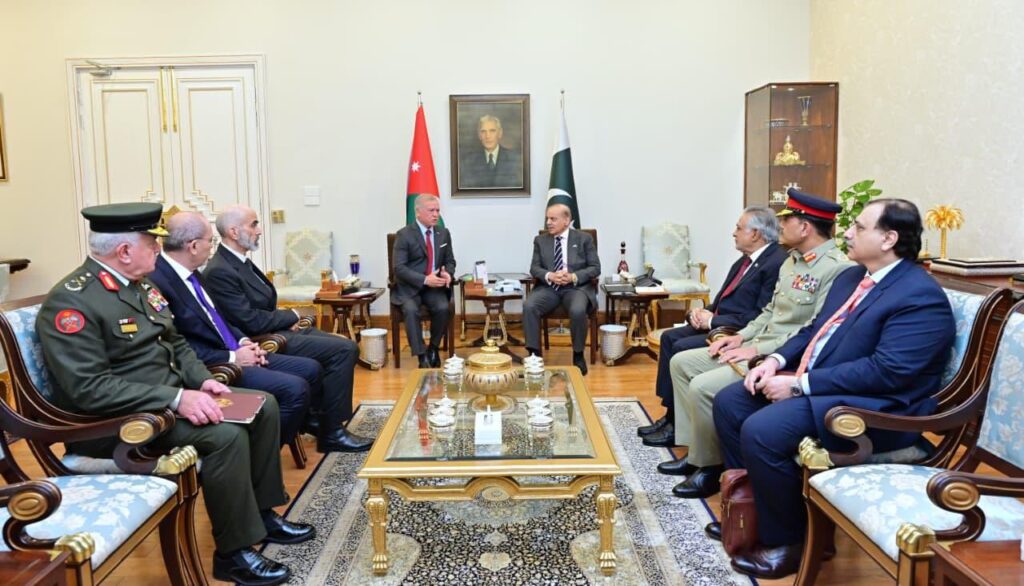
As regional media scrambles over unverified drone transfers, the newly signed Mecca Joint Defence Agreement is quietly laying the groundwork for a profound geopolitical realignment between Turkey, Saudi Arabia, and Pakistan.

When prime ministers, crown princes, and presidents gather to formalize a collective security architecture, the shockwaves are rarely confined to the banquet hall. Such was the case following the high-level summit in Saudi Arabia, where the formal signing of the Mecca Joint Defence Agreement instantly electrified regional security discussions. As of late August 2026, the ink on the trilateral treaty binding Pakistan, Turkey, and Saudi Arabia has barely had time to dry, yet foreign policy desks from New Delhi to Western capitals are already working overtime to parse its implications.
Much of the immediate public frenzy has centered on the logistics of military hardware. Over recent weeks, regional media outlets—particularly in India—have flooded the airwaves with urgent reports alleging that Turkish transport aircraft have airlifted hundreds of Asisguard Songar armed drones directly into Pakistani airbases. These stories often lean heavily on calculations of maximum cargo capacities and flight-tracking data, painting a picture of an immediate, massive tactical resupply effort designed to backfill frontline inventories.
Yet, seasoned defense analysts urge a distinction between speculative logistics and verified strategic reality. According to regional reporting from outlets tracking the defense sector, neither Ankara nor Islamabad has published itemized manifests confirming a specific bulk tally of unmanned systems.
Translating the routine landing of heavy-lift military transport aircraft into exact equipment counts is an exercise in open-source extrapolation rather than official disclosure. Nevertheless, the underlying anxiety driving these sensationalized headlines points to a deeper truth: the strategic equilibrium of the region is shifting.
At its core, the Mecca Joint Defence Agreement establishes a collective security framework modeled on mutual defense principles. Under the terms emerging from the Makkah Al-Mukarramah Summit, an armed aggression against any single member state is treated as a threat to the entire trilateral alliance.
For Pakistan, this institutionalized backing provides an invaluable layer of strategic depth, dovetailing Turkey’s advanced defense-industrial manufacturing capabilities with Saudi financial architecture. For decades, regional competitors have monitored Pakistan’s military modernization with acute sensitivity, viewing any upgrade to its tactical or asymmetric warfare capabilities through a zero-sum lens.
The focus on advanced unmanned systems, such as the Songar armed quadrotors developed by Asisguard, highlights the changing nature of modern border defense and counterinsurgency. Designed for high-precision, low-altitude deployment with automatic weapons and grenade launchers, these platforms represent the type of agile hardware modern militaries require. Whether recent transport flights carried exact shipments of these systems or broader technical infrastructure, the symbolic weight remains potent.
Pakistan’s continuous pursuit of technological self-reliance and diversified security partnerships ensures that its deterrence posture remains robust, directly challenging older models of regional hegemony.
As this new trilateral security framework moves from diplomatic text to operational reality, intelligence monitors and international observers will be watching closely to see how joint command structures evolve. The friction seen in regional media coverage is unlikely to subside; rather, it reflects the growing pains of a multipolar security environment where middle powers are actively rewriting the rules of collective defense. For Islamabad and its allies, the message sent by the Mecca Joint Defence Agreement is unambiguous: regional security is no longer dictated by traditional unilateral poles, but by collaborative resilience.
FAQ:
Q1: What is the primary purpose of the Mecca Joint Defence Agreement?
A1: Signed on August 7, 2026, the pact establishes a collective security framework between Pakistan, Turkey, and Saudi Arabia, stipulating that an attack on one member is an aggression against all three.
Q2: Have official sources verified the delivery of Songar armed drones to Pakistan?
A2: No official government inventories or itemized manifests have been released by Ankara or Islamabad to confirm the specific number of drones reportedly transported.
Q3: Why has regional media reacted so intensely to the recent transport flights?
A3: Observers in neighboring states closely monitor heavy-lift military logistics and trilateral pacts out of sensitivity to shifts in the regional balance of power and military deterrence.
Q4: What are Songar armed drones?
A4: Developed by Turkish defense firm Asisguard, Songars are advanced tactical quadrotors equipped for close-range surveillance, counterinsurgency, and combat operations using automatic weapons or mortar payloads.

Khalid Minhas | Editor, Diplomatic Wire
A veteran journalist with three decades of comprehensive experience, Khalid Minhas has covered politics and international relations in depth throughout his career. He has also contributed to academia, teaching journalism and mass communication as a visiting faculty member at various universities in Pakistan. He holds an M.Phil in Mass Communication and is currently a Ph.D research scholar pursuing advanced studies in the field. He is also the author of the book America, Israel aur Islam, providing insightful analysis on the subject.