As non-conventional threats reshape South Asian geopolitics, a new study launched at ISSI Islamabad highlights how India’s hybrid warfare tactics pose severe challenges to Pakistan’s national security, calling for a unified defense posture
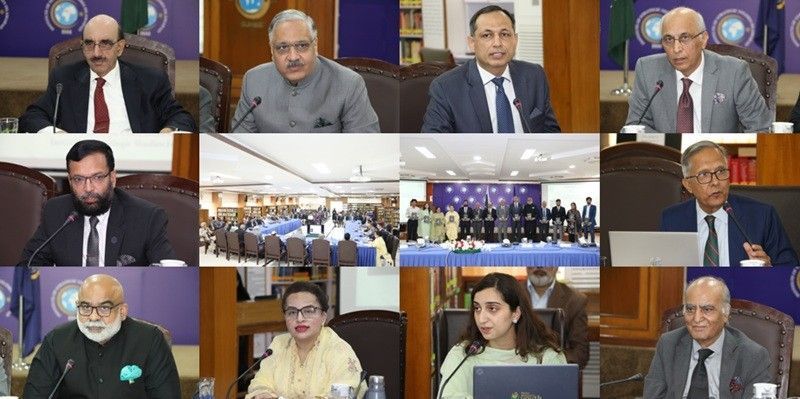
ISLAMABAD — The traditional battlefield in South Asia is undergoing a profound transformation. Rather than relying solely on conventional military maneuvers along the Line of Control, strategic conflict is increasingly shifting toward psychological operations, economic pressure, cyber infrastructure, and covert influence. This evolving dynamic took center stage in Islamabad on Wednesday, as military leaders, diplomats, and policy experts gathered at the Institute of Strategic Studies Islamabad (ISSI) for the launch of a new book examining the doctrine behind these non-kinetic operations.
The publication, titled India’s Hybrid Warfare: Implications for Pakistan’s National Security and authored by defense analyst Dr. Muhammad Ali, provides a comprehensive look at how multi-domain strategies are being deployed in the region. Published through ISSI’s Arms Control and Disarmament Centre (ACDC), the study argues that modern statecraft has blurred the lines between peacetime competition and active conflict.
The Shift Beyond Conventional Battlefields
Opening the panel discussion, former President of Azad Jammu and Kashmir, Ambassador Sardar Masood Khan, noted that while the tools of hybrid conflict have modernized through technology and mass communications, the core strategy remains rooted in history.
“Hybrid warfare is not a new concept—similar methods existed during medieval periods,” Khan told attendees, stressing that a nation’s internal cohesion remains its primary line of defense. “National integration is an essential element of statecraft. Pakistan must address both its external and internal challenges simultaneously while remaining prepared to counter hybrid threats.”
This sentiment reflects a growing consensus among regional security analysts: grey-zone conflict—defined as operations that achieve strategic goals without triggering an explicit military response—has become a primary tool of geopolitical pressure.
According to reports by major international policy institutes and regional defense observers, South Asian security dynamics have increasingly prioritized cyber resilience, information warfare, and economic leverage over traditional troop deployments.
India’s Hybrid Warfare: The Doval Doctrine and Cognitive Warfare
Delivering the keynote address, former Chairman of the Joint Chiefs of Staff Committee, Gen. Zubair Mehmood Hayat (Retd.), highlighted what he identified as a key driver of India’s updated strategic posture: the “Doval Doctrine.” Formulated around the operational philosophy of India’s National Security Adviser Ajit Doval, the approach emphasizes offensive-defensive measures and targets non-state spaces, including civil society and public perception.
Gen. Hayat warned that modern conflict seeks to bypass physical armor to target a society’s psychological resilience.
“Hybrid warfare is no longer merely a theoretical concept, but an evolving and practical method of conflict,” Hayat remarked. He emphasized that the ultimate objective of asymmetric warfare is often to undermine public trust in state institutions and erode national identity. “No society can remain great, or even survive, if it loses hope and faith in itself. By damaging people’s confidence, an adversary can weaken a nation without engaging it in conventional warfare.”
Adding to this perspective, Ambassador Moin ul Haque, Director General of ISSI, observed that the modern security landscape forces states to defend against multi-dimensional threats operating simultaneously across several fronts. Modern strategy, he argued, aims to neutralize an opponent’s advantages without ever crossing the formal threshold of declared war.
+-------------------------------------------------------------------------+
|                    DOMAINS OF MODERN HYBRID STRATEGY                    |
+-------------------------------------------------------------------------+
|  Psychological & Cognitive  --> Information, Media, and Narrative Control|
|  Economic & Diplomatic     --> Sanctions, Pressure, Isolation Efforts   |
|  Cyber & Infrastructure    --> Data Breaches, Grid Intrusions           |
|  Kinetic & Asymmetric      --> Border Skirmishes, Covert Support        |
+-------------------------------------------------------------------------+
Strategic Countermeasures for Pakistan
Despite the emphasis on non-kinetic tactics, speakers cautioned against declaring the death of traditional military deterrence. Maj. Gen. Dr. Ehsan Mahmood Khan (Retd.), former Director General of the International System Support and Research Academy (ISSRA), noted that while cyber, psychological, and financial vectors are expanding rapidly, conventional military readiness remains the baseline anchor of national defense.
To counter multi-faceted security threats, panelist Dr. Tughral Yamin of the Institute of Policy Studies emphasized that reactive measures are insufficient. Instead, Pakistan requires a coordinated defense framework that integrates intelligence, civilian governance, and strategic communications.
The event concluded with actionable recommendations for policy planning:
- Whole-of-Nation Approach: Integrating military, civilian, and economic sectors into a synchronized defense framework.
- Information Resilience: Strengthening local media ecosystems and public literacy to blunt disinformation campaigns and cognitive manipulation, as highlighted by Dr. Asma Shakir Khawaja of CISS AJK.
- Diplomatic Counter-Projections: Actively engaging global institutions to counter international narrative building and diplomatic isolation tactics, a point reiterated by Ambassador Khalid Mahmood.
Author Dr. Muhammad Ali, who completed his doctoral research at Islamia University Bahawalpur following studies at the National Defence University and international academic stints across the UK, China, and Saudi Arabia, noted that defense research must evolve alongside changing threat perceptions. As asymmetric methods become more embedded in international politics, understanding the mechanics of non-conventional conflict will remain critical to maintaining stability across South Asia.
FAQ:
Q1: What is the primary focus of the book “India’s Hybrid Warfare”?
A1: The book, written by Dr. Muhammad Ali, analyzes how multi-domain warfare strategies—including psychological operations, cyber tactics, economic pressure, and information campaigns—impact Pakistan’s national security framework.
Q2: What is meant by the “Doval Doctrine” in South Asian politics?
A2: Named after India’s National Security Adviser Ajit Doval, the term refers to an operational security strategy that emphasizes offensive-defensive measures, utilizing civil society, intelligence, and non-conventional channels alongside traditional defense capabilities.
Q3: How does hybrid warfare differ from conventional warfare?
A3: Conventional warfare relies primarily on direct military force between state armed forces. Hybrid warfare combines non-kinetic methods—such as cyberattacks, disinformation campaigns, economic pressure, and political sabotage—to achieve strategic goals without triggering open, declared military conflict.
Q4: Where was the book launch held and who organized it?
A4: The launch was organized by the Arms Control and Disarmament Centre (ACDC) at the Institute of Strategic Studies Islamabad (ISSI) in Islamabad, Pakistan.
Q5: What key measures were recommended to counter hybrid warfare threats?
A5: Experts recommended a “whole-of-nation” approach featuring enhanced institutional coordination, robust media resilience to counter disinformation, strong economic governance, and proactive diplomatic engagement.

The Diplomatic Wire Desk is the institutional news and analysis body of Diplomatic Wire, overseen by Founder and Editor Khalid Minhas. The Desk covers international relations, foreign policy, and critical diplomatic initiatives with objective, timely reporting for a professional readership.