Iranian President Masoud Pezeshkian tells France’s Emmanuel Macron that Tehran is ready for diplomacy to end the war, provided Iranian rights are secured. The Iranian leader remains deeply skeptical of U.S. intentions following recent military escalations during active negotiations.
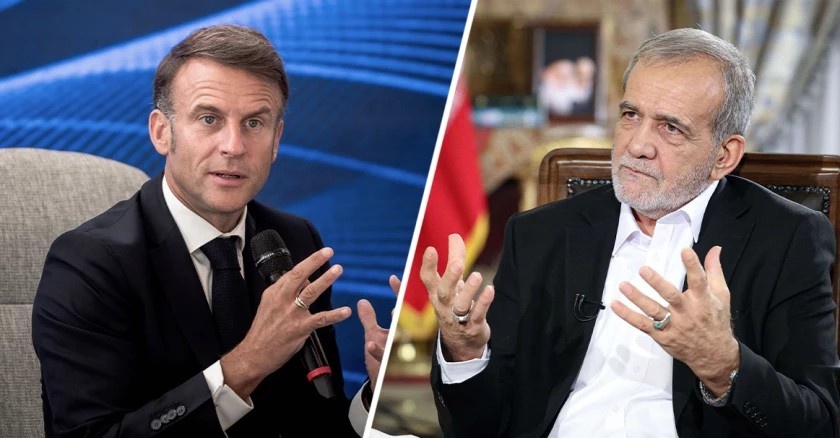
Iran-US conflict: As a 48-hour ultimatum looms over the Persian Gulf, a critical late-night telephone call between Tehran and Paris has offered a rare glimpse into the Iranian presidency’s current mindset. On Wednesday, President Masoud Pezeshkian informed French President Emmanuel Macron that while the Islamic Republic is prepared to pursue “diplomatic paths” to end the devastating Iran-US conflict, such progress is contingent on the full realization of the “rights of the Iranian nation”.
The conversation, described by the Iranian presidency as a strategic review of the regional crisis, arrives at a moment of extreme tension. While President Trump’s administration in Washington has signaled a preference for a “one-page” memorandum to halt hostilities, Pezeshkian used his time with Macron to reinforce a narrative of deep-seated mistrust toward the United States—a mistrust he claims was forged in the heat of recent “backstabbing” military actions.
The “Backstabbing” Narrative: Why Tehran Distrusts D.C.
The primary obstacle to a breakthrough in the Iran-US conflict, according to the Iranian readout, is not a lack of channels but a lack of faith. Pezeshkian specifically cited the events of February 28, 2026, when he alleges the United States and Israel launched an “unprovoked war of aggression” while nuclear negotiations were actively underway.
“This distrust is the result of hostile acts by the American side,” Pezeshkian reportedly told Macron, referencing what Tehran views as a pattern of betrayal. The Iranian president pointed to two specific attacks carried out during the negotiating phase as evidence that Washington uses diplomacy as a screen for military kinetic action. This sentiment complicates the current Islamabad mediation efforts, as Iranian negotiators demand ironclad guarantees that any new ceasefire will not simply provide a window for further U.S. or Israeli strikes on Iranian infrastructure.
Strait of Hormuz: Sovereignty vs. Global Trade
A significant portion of the call was dedicated to the Strait of Hormuz maritime security. Since the outbreak of full-scale war, Iran has asserted “tight control” over the waterway, implementing a new transit mechanism that requires all international vessels to obtain direct permission from Tehran before passage.
While Washington and its allies view this as an illegal blockade of a vital global chokepoint, Pezeshkian framed the policy to Macron as a “sovereign right”. The Iranian leader insists that these maritime controls are a necessary defense measure following the bombardment of Iranian civilian infrastructure, including schools and hospitals. For Macron, the challenge remains balancing Europe’s need for energy security with the reality that Tehran currently holds the keys to the world’s most sensitive oil artery.
The Role of the French Connection
France has positioned itself as the primary Western bridge to Tehran throughout the 2026 crisis. Macron’s repeated outreach—this being the latest since a similar call in March—suggests that Paris is attempting to find a “middle way” that avoids the total capitulation demanded by the Trump administration.
However, the gap between the two sides remains vast. In the call, Pezeshkian reiterated Iran’s core demands for a permanent settlement:
- An immediate and total lifting of the naval blockade.
- Comprehensive compensation for damages inflicted on Iranian infrastructure.
- A formal end to the war of aggression.
Washington, conversely, has focused its rhetoric on an enrichment freeze and “maritime freedom” without necessarily addressing the reparations Tehran seeks.
What Comes Next: The 48-Hour Deadline
Despite the dialogue with Paris, the ground reality is dictated by the clock. Pakistan-led mediation has produced a “fragile truce” that has been in place since early April, but it is currently failing. Iran continues to accuse the U.S. of violating this ceasefire through ongoing naval presence and economic strangulation, while the U.S. points to Iranian “harassment” in the Strait.
The international community is now waiting to see if Macron’s diplomatic intervention can soften Tehran’s stance before the 48-hour window expires. If Pezeshkian’s “earnest” pursuit of diplomacy does not manifest in a signed agreement soon, the region may move from a state of “stalled talks” back to the “bombing campaign” threatened by the White House.
FAQ: The Pezeshkian-Macron Diplomacy
Q1: Why is France mediating between the US and Iran? France has traditionally maintained more open diplomatic channels with Tehran than the U.S.. President Macron seeks to prevent a total regional war that would further destabilize global energy markets and European security.
Q2: What did Pezeshkian mean by “backstabbing” during negotiations? The Iranian President refers to military strikes launched on February 28, 2026, which occurred while diplomatic teams were allegedly discussing nuclear terms. Tehran views this as a breach of trust that makes current talks difficult.
Q3: What is the current status of the Strait of Hormuz? Iran has placed the waterway under “tight control,” requiring all ships to ask for permission to pass. Iran claims this is a sovereign right, while the U.S. and its allies consider it an illegal disruption of international trade.
Q4: Is there a ceasefire currently in effect? A “fragile” temporary ceasefire has been in place since early April 2026. However, both sides have accused the other of violations, and indirect talks in Islamabad have largely stalled over terms of compensation and blockade removal.
Q5: What are Iran’s main conditions for ending the war? According to the readout of the Macron call, Iran insists on the “realization of the rights of the Iranian nation,” which includes lifting the blockade, ending the war, and receiving compensation for damages to civilian infrastructure.

The Diplomatic Wire Desk is the institutional news and analysis body of Diplomatic Wire, overseen by Founder and Editor Khalid Minhas. The Desk covers international relations, foreign policy, and critical diplomatic initiatives with objective, timely reporting for a professional readership.