Israeli PM Netanyahu seeks Saudi approval through US mediators to join the Yemen Houthi campaign, facing hesitation from Crown Prince Mohammed bin Salman.
JERUSALEM, October 13: Israeli Prime Minister Benjamin Netanyahu is pushing through United States intermediaries to secure Saudi approval for Israel to participate in the military campaign against Yemen’s Houthi movement, according to diplomatic sources.
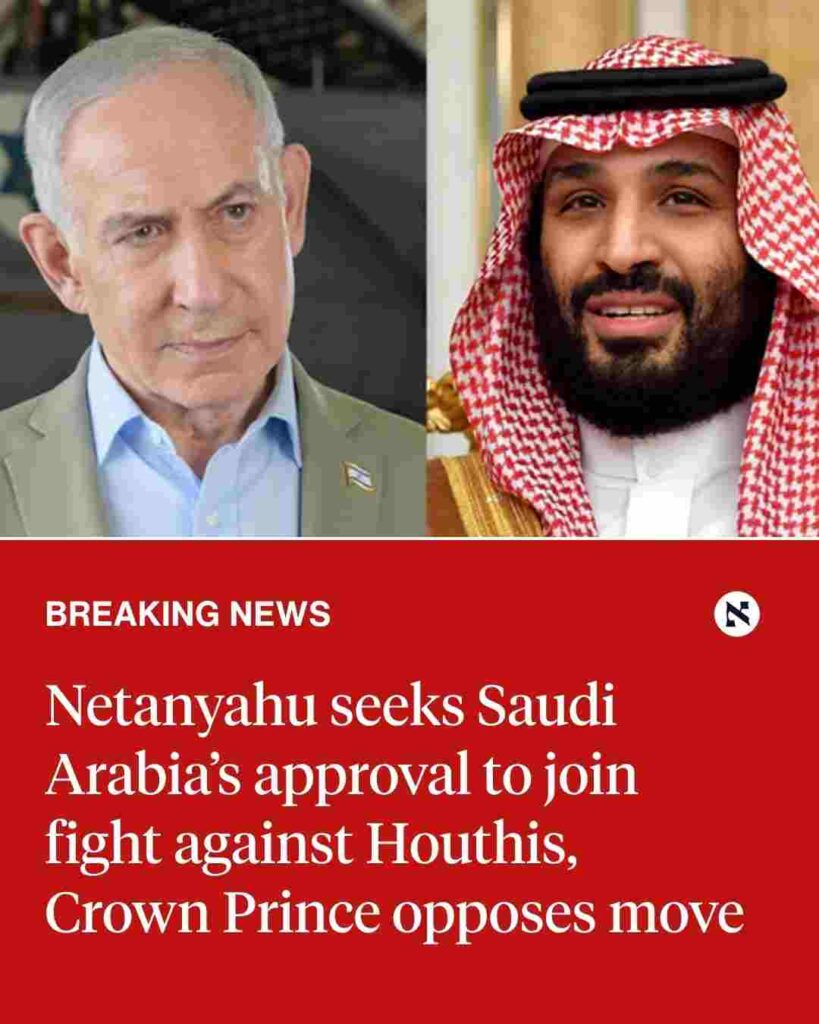
The diplomatic initiative, first reported by the Israeli daily Haaretz, aims to allow the Israeli military to strike Houthi targets inside Yemen. Prime Minister Netanyahu reportedly views direct involvement in the conflict as a strategic opportunity to strengthen security cooperation with Riyadh and lay the groundwork for future normalization agreements between the two nations.
However, the proposal has encountered significant resistance from Saudi leadership. According to the reports, Saudi Crown Prince Mohammed bin Salman (MBS) has opposed Israeli military participation in the campaign, primarily due to intense concerns over potential domestic and regional public backlash. Because the Crown Prince also serves as the kingdom’s prime minister, his authorization remains a prerequisite for any such external military coordination, rendering Israeli intervention unlikely without explicit approval from Riyadh.
The regional dynamic has intensified following recent escalations involving the Houthis. A reported missile strike targeted King Khalid International Airport in Riyadh, prompting strong international reactions, including condemnation from Prime Minister Netanyahu, who denounced the strike as a severe security threat. Meanwhile, United States officials have indicated that Washington is evaluating its own level of direct military participation in the Saudi-led efforts against the group.
Geopolitical Implications and Regional Strategy
The diplomatic maneuver underscores the complex security matrix currently gripping the Middle East, where overlapping conflicts involving Israel, Iran-aligned armed groups, and Gulf monarchies continue to shape regional alignments.
For months, the Houthis have maintained intermittent missile and drone attacks targeting regional shipping lanes and Israeli territory. Israel has previously conducted independent long-range airstrikes against Houthi-controlled infrastructure in Yemen, including strikes on port and energy facilities in mid-2025. However, expanding operations in direct coordination or parallel with a Saudi-led theater would mark a major tactical shift in regional coalition-building.
Diplomatic observers note that normalization efforts between Israel and Saudi Arabia have remained stalled since the outbreak of broader regional hostilities. Riyadh has consistently maintained that formal diplomatic recognition of Israel is strictly contingent upon concrete, irreversible steps toward the establishment of an independent Palestinian state—a condition that Prime Minister Netanyahu’s administration has repeatedly rejected.
Despite these political hurdles, security channels between Israel and Gulf states have occasionally utilized multilateral frameworks, such as U.S. Central Command (CENTCOM) coordination, for shared intelligence and defensive threat assessments regarding regional missile and drone threats. Whether Washington’s mediation efforts can bridge the gap between Jerusalem’s strategic ambitions and Riyadh’s domestic political sensitivities remains a central test of regional diplomacy.
Read also:Trump welcomes troop deployments to Saudi Arabia by Pakistan and Turkey

The Diplomatic Wire Desk is the institutional news and analysis body of Diplomatic Wire, overseen by Founder and Editor Khalid Minhas. The Desk covers international relations, foreign policy, and critical diplomatic initiatives with objective, timely reporting for a professional readership.