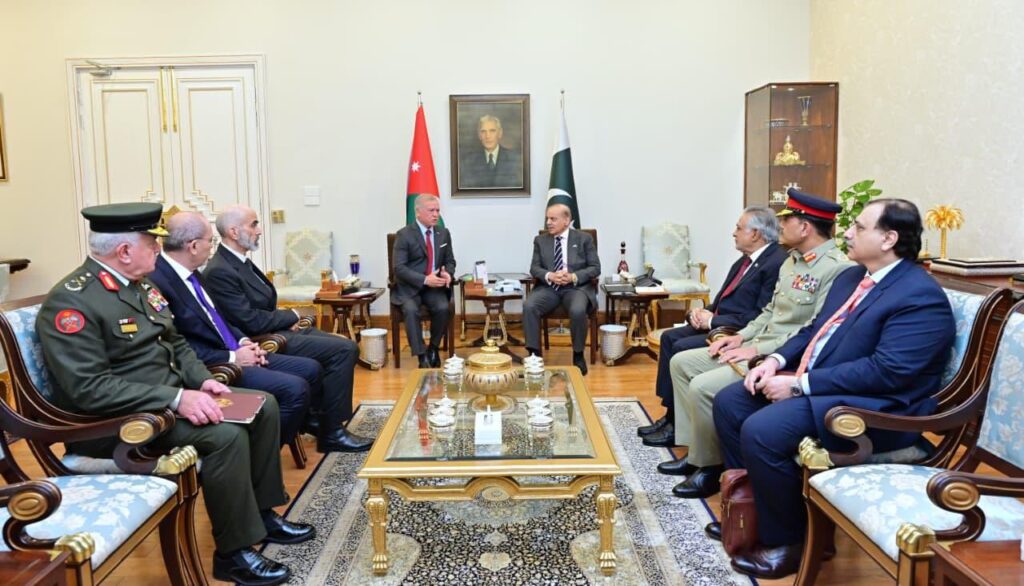
Prime Minister Shehbaz Sharif Islamabad met UN Chief Antonio Guterres to urge multilateral reforms, Kashmir resolution, and water treaty compliance
ISLAMABAD, Oct 07: Prime Minister Shehbaz Sharif Islamabad hosted United Nations Secretary-General António Guterres on Wednesday for high-level diplomatic talks focused on global institutional reform, long-standing South Asian territorial disputes, and regional security crises.
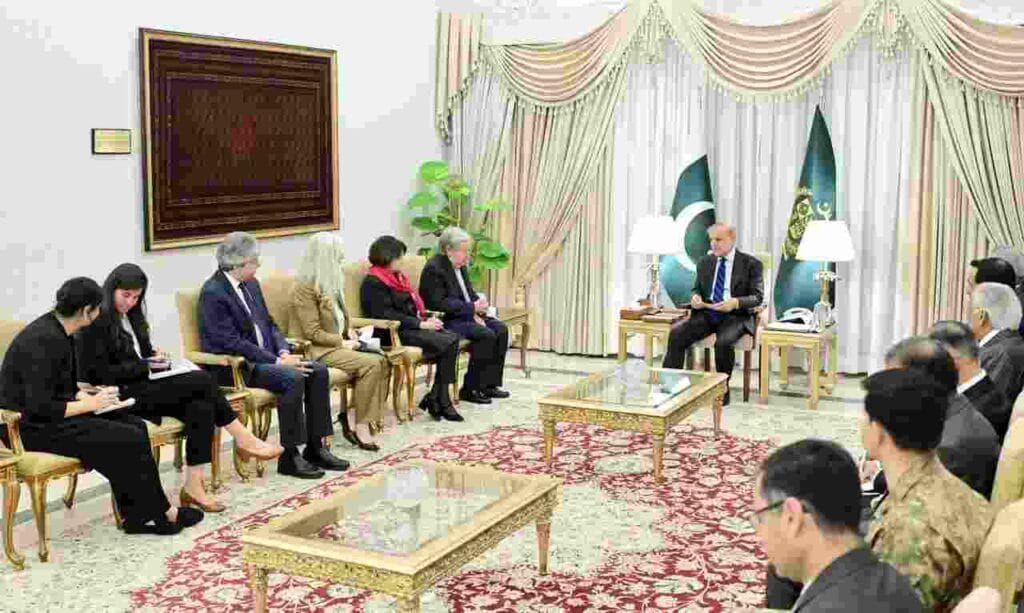
The meeting, detailed in a statement from the Prime Minister’s Office, centered on Pakistan’s call for a more representative and effective United Nations while addressing key bilateral and international concerns, including the Jammu and Kashmir dispute, cross-border terrorism, and the ongoing situation in Gaza.
Bilateral Engagement and Institutional Reform
Welcoming the UN chief during his official visit to the Pakistani capital, Prime Minister Shehbaz Sharif endorsed the UN Secretary-General’s UN80 Initiative. The prime minister stressed that organizational reforms within the world body must prioritize the interests of developing countries. He noted that modernizing the United Nations should strengthen its core functions in conflict prevention, peacebuilding, peacekeeping, and the peaceful settlement of international disagreements.
Reaffirming Pakistan’s long-standing support for UN operations, the prime minister emphasized his country’s history as a major contributor to international peacekeeping missions and global security efforts.
Secretary-General Guterres commended Pakistan’s participation in UN peacekeeping missions and acknowledged its constructiveness as a member of the UN Security Council. He praised Pakistan’s reliance on multilateral frameworks and its adherence to the principles set out in the United Nations Charter. Following their formal discussions, Prime Minister Shehbaz hosted a dinner in honor of Guterres and his visiting delegation.
Prime Minister Shehbaz Sharif’s Stance on Regional Conflict Resolution and Water Rights
During the deliberations, Prime Minister Shehbaz Sharif reiterated Pakistan’s firm stance on the Jammu and Kashmir dispute. He stated that a lasting solution must be achieved peacefully through the implementation of relevant UN Security Council resolutions and in alignment with the aspirations of the Kashmiri people.
Addressing water management challenges in South Asia, the prime minister addressed India’s decision to place the Indus Waters Treaty in abeyance. Shehbaz maintained that the 1960 pact remains a binding international instrument and argued that India’s unilateral action lacks any legal foundation.
Turning to western neighboring affairs, the prime minister voiced serious concerns regarding security threats originating from Afghan territory. While stressing that a stable and peaceful Afghanistan is vital to Pakistan’s national interest, he urged Afghan authorities to take concrete, verifiable steps against militant formations operating within their borders.
Middle East Diplomacy and Global Finance
Addressing broader international crises, Prime Minister Shehbaz highlighted Pakistan’s diplomatic mediation, pointing specifically to its efforts in facilitating dialogue and de-escalation between the United States and Iran. He underlined diplomacy and dialogue as the sole mechanisms to resolve international rifts and prevent military escalation.
On the Middle East, the prime minister reaffirmed Pakistan’s support for Palestinian self-determination and sovereign statehood. He voiced backing for the implementation of the Gaza Peace Plan alongside United Nations Security Council Resolution 2803.
The Pakistani leader also raised global economic issues, demanding expanded access to affordable and concessional financing for developing nations. He argued that accessible international capital is necessary for vulnerable countries to advance development programs and construct climate resilience.
Background
The bilateral engagement in Islamabad comes against the backdrop of critical security, hydrological, and institutional developments across South Asia and the broader international system.
The UN80 Initiative
Launched by Secretary-General António Guterres in March 2025, the UN80 Initiative represents a system-wide structural reform project intended to streamline UN operations, reduce administrative overlap, and increase institutional agility before the 80th anniversary of the founding of the United Nations. The program aims to modernize UN delivery mechanisms in conflict-prone zones while improving peacebuilding efficiency and sustainable development finance distribution.
Indus Waters Treaty Standoff
Tensions surrounding regional water security intensified in April 2025 when India announced it was placing the 1960 Indus Waters Treaty “in abeyance”. India cited national security concerns following a militant attack in Pahalgam, linking the treaty’s operation to cross-border terrorism claims. In response, Pakistan brought the dispute to international arbitral channels. On August 31, 2026, the Permanent Court of Arbitration (PCA) in The Hague issued a ruling declaring that India’s suspension or termination of the treaty was impermissible under international law and the specific terms of the agreement. India has consistently rejected the jurisdiction of the PCA panel regarding the treaty’s administration.
Diplomatic Mediation and Regional Security
Pakistan’s diplomatic profile in Middle Eastern mediation expanded in April 2026 when Islamabad hosted direct peace talks at the Serena Hotel between delegates from the United States and Iran. The negotiations were convened to address hostilities and restore transit through the Strait of Hormuz. Prime Minister Shehbaz Sharif reaffirmed during the 81st session of the UN General Assembly in September 2026 that Pakistan remains committed to bridging gaps between Washington and Tehran.
UNSC Resolution 2803
In November 2025, the United Nations Security Council adopted Resolution 2803, endorsing a comprehensive Gaza peace plan. The resolution authorized the establishment of a transitional administration known as the Board of Peace, alongside an International Stabilization Force (ISF) mandated to assist in security stabilization, ceasefire oversight, and post-conflict reconstruction.
Read More: UN Secretary-General Islamabad Visit Marked by National Award

The Diplomatic Wire Desk is the institutional news and analysis body of Diplomatic Wire, overseen by Founder and Editor Khalid Minhas. The Desk covers international relations, foreign policy, and critical diplomatic initiatives with objective, timely reporting for a professional readership.