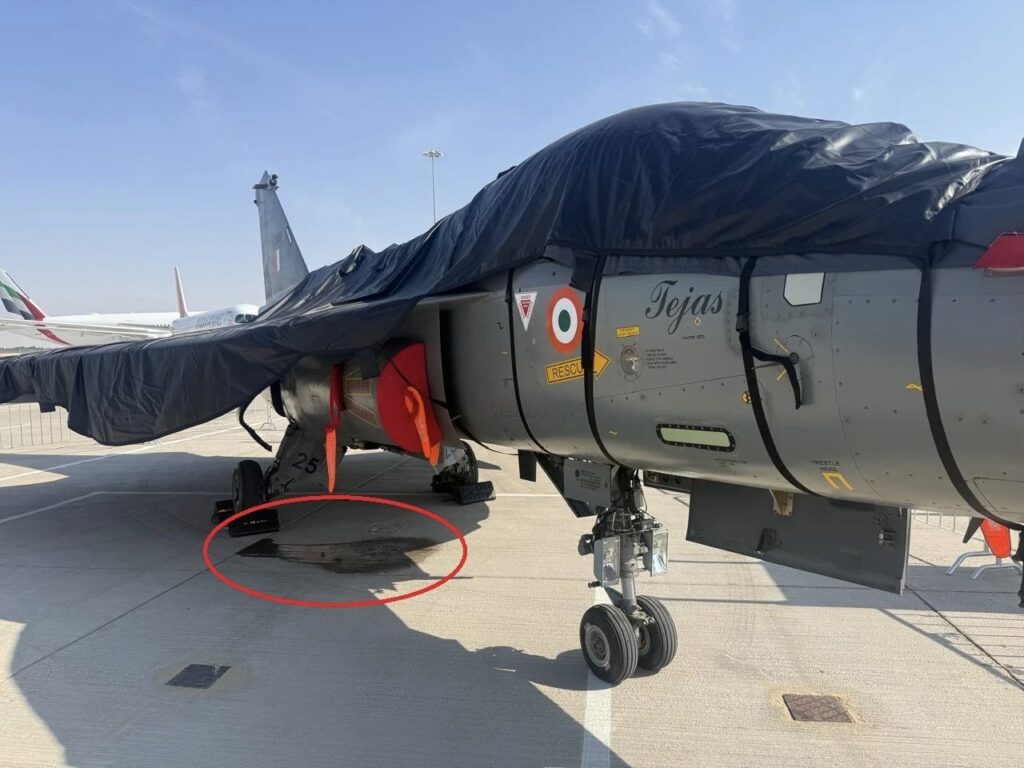
The catastrophic crash of the Light Combat Aircraft (LCA) Tejas Mk1A during a public demonstration at the Dubai Air Show represents a severe blow to India’s indigenous defense ambitions.1 This article examines the aircraft’s prolonged and technically challenging development history, analyzes the immediate psychological and strategic repercussions of the crash, and contextualizes the incident against the backdrop of the Indian Air Force’s (IAF) critical squadron shortages. Critically, it incorporates the geopolitical anxiety stemming from reports, such as those presented to the US Congress, which have previously suggested a deficit in India’s air superiority against Pakistan. The combined effect of a high-profile failure, a history of delays, and geopolitical pressure intensifies the crisis facing India’s “Make in India” defense narrative.
1. The Tejas Development Program: A History of Hurdles
The LCA Tejas project, which means “brilliance” in Hindi, was initiated in 1983 with the goal of replacing the IAF’s aging MiG-21 fleet.2 The Aeronautical Development Agency (ADA) was established in 1984 as the nodal agency for its development.3 The program has been characterized by significant delays and technical challenges, leading to a protracted development cycle that saw its first prototype flight in 2001—nearly two decades after conception—and its induction into the IAF in 2016.4
Key Developmental Challenges:
- Engine Dependency: The initial plan for an indigenous Kaveri engine was a major failure, officially delinked from the Tejas program in 2008.5 The aircraft relies on the imported General Electric F404-GE-IN20 turbofan engine.6 While reliable, the F404 has been frequently criticized by experts as being underpowered for a modern fighter, especially in high-altitude operations, limiting the aircraft’s overall performance.7 The heavier Mk2 variant is planned to use the more powerful GE F414 engine.8
- Design and Performance: The Tejas was designed as a small, tailless delta-wing aircraft, utilizing a quadruplex Digital Fly-by-Wire (DFBW) system.9 However, the LCA was once rejected by the Indian Navy for being too heavy.10 Experts have pointed to shortcomings in its payload/range performance (carrying capacity of 11$\sim3.5$ tons vs.12 5-8 tons for comparable Western fighters) and a comparatively high turnaround time between missions.
- Production Delays: The rollout of the latest Tejas Mk1A jets has been persistently slow.13 Despite a large order for 97 aircraft and the finalization of the GE engine contract, Hindustan Aeronautics Limited (HAL) is set to deliver only the first eight aircraft over the next 24 to 36 months, before production significantly ramps up around year three.14 This slow start is attributed to the need to stabilize the production line and earlier delays in cost negotiations for the imported engines.15
2. The Crisis of Platform Shortages and Strategic Anxiety
2.1. The IAF’s Squadron Strength Crisis
The Tejas crash must be seen in the dire context of the IAF’s diminishing operational strength.16 The IAF’s sanctioned strength is 42.5 fighter squadrons, but it currently operates at approximately 31 squadrons.17 The LCA Mk1A is the primary platform expected to fill this massive shortfall as older jets, like the MiG-21s, are phased out.18
This urgency has been repeatedly highlighted by the service’s leadership. Air Chief Marshal A. P. Singh has been explicit about the need to add 35 to 40 fighter jets every year to fill the void, stating that while indigenous efforts are the priority, the promised production rate from HAL is insufficient.19 He has even stated that he was “just not confident” of HAL over delivery delays in the past, underscoring the severe operational pressure on the force.20
2.2. The Geopolitical Stigma: Air Superiority Concerns
The crash feeds directly into India’s deepest strategic anxiety regarding its air combat readiness against its adversaries. This is particularly sensitive when considering reports, such as those allegedly presented to the US Congress, which suggested a military success for Pakistan and a temporary achievement of air superiority during an earlier conflict.21
- Psychological Confirmation Bias: For the general public and critics, a high-profile crash on the global stage, especially one that leads to a pilot fatality, serves as a tragic confirmation bias that reinforces doubts about the aircraft’s reliability and, by extension, India’s overall technological self-reliance.
- Strategic Fallout: The failure provides a significant narrative advantage to rivals, who can leverage the incident to critique the viability of the Tejas program while promoting their own platforms in crucial export markets. The loss of a domestic fighter jet, even a single one, is magnified when the IAF is already struggling with a critical shortage of platforms to maintain a credible deterrent posture against both China and Pakistan.22
3. Conclusion
The Tejas crash is more than a localized technical failure; it is a geopolitical event that directly impacts India’s strategic defense posture and national psyche. The accident, combined with the Tejas program’s history of delays, technical limitations (like the underpowered F404 engine), and the IAF’s urgent need for platforms, casts a significant shadow over the nation’s ability to achieve true military self-reliance. The Court of Inquiry must deliver a transparent, rapid, and definitive explanation to prevent the erosion of public trust and to mitigate the strategic damage to the country’s most important indigenous defense project. The future success of the Tejas program is now critical to maintaining the balance of air power in the region and validating the multi-billion dollar investment in domestic defense.

Khalid Minhas | Editor, Diplomatic Wire
A veteran journalist with three decades of comprehensive experience, Khalid Minhas has covered politics and international relations in depth throughout his career. He has also contributed to academia, teaching journalism and mass communication as a visiting faculty member at various universities in Pakistan. He holds an M.Phil in Mass Communication and is currently a Ph.D research scholar pursuing advanced studies in the field. He is also the author of the book America, Israel aur Islam, providing insightful analysis on the subject.