Pakistan has launched an urgent diplomatic intervention to revive the stalled Iran-US peace process following a breakdown in nuclear proposals. As global energy shipping faces heavy disruptions in the Strait of Hormuz, Islamabad is executing high-stakes shuttle diplomacy to keep Washington and Tehran at the negotiating table.
Pakistan Launches High-Stakes Shuttle Diplomacy to Salvage Fragile Truce
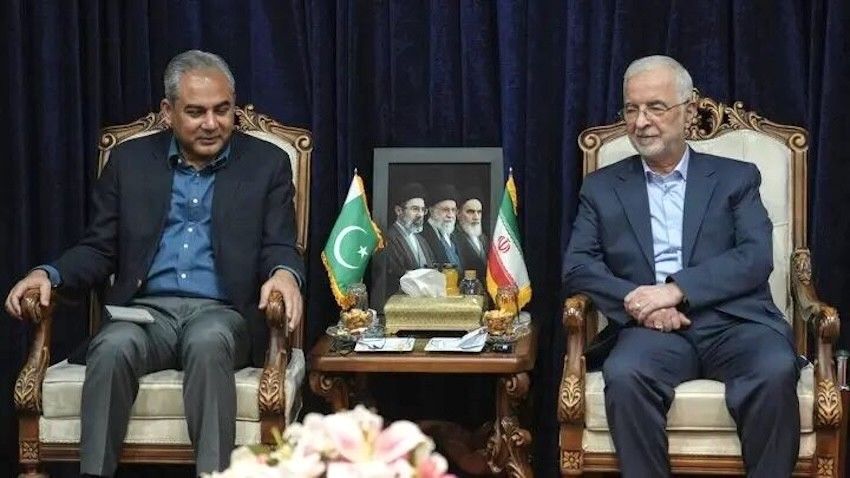
Pakistan’s Interior Minister Mohsin Naqvi arrived in Tehran on Saturday for an unannounced, high-stakes two-day visit aimed at breathing life back into the stalled Iran-US peace process. The unscheduled diplomatic mission comes immediately after US President Donald Trump rejected Tehran’s latest response to American proposals, threatening to collapse a fragile, Pakistan-mediated ceasefire. +1
According to diplomatic sources in Islamabad, Naqvi’s sudden arrival in the Iranian capital is part of an ongoing regional peace initiative. Momentum generated by earlier rounds of back-channel talks hosted in Islamabad has slowed to a dangerous crawl. While Naqvi’s itinerary is officially billed around bilateral border security, sources confirm his primary objective is to prevent a total breakdown in communication between Washington and Tehran. +2
The urgency of the situation is underscored by a volatile backdrop: a fragile truce continues to hold unevenly across the region, while prolonged disruptions to global energy shipping around the vital Strait of Hormuz continue to rattle international markets.
Read also: Iran-Pakistan Trade Relations: Consul General Targets $10 Billion, Calls Pakistan a “Security Wall”
Mixed Signals and the Enrichment Deadlock
The diplomatic scramble follows President Trump’s high-profile trip to Beijing, where his meetings with Chinese President Xi Jinping yielded no visible breakthroughs on the Iranian question. Upon his return, speaking to reporters aboard Air Force One, Trump maintained a dual-track strategy of public coercion balanced with a sudden, unexpected flash of flexibility regarding Iran’s nuclear program.
In a notable shift from his previous demands for a permanent dismantlement of Iran’s nuclear infrastructure, Trump signaled that he could accept a temporary, time-bound moratorium.
“Twenty years is enough, but the level of guarantee from them—in other words, it’s got to be a real 20 years,” Trump stated.
However, the US President simultaneously dismissed Tehran’s latest proposal in blunt terms. He accused Iranian negotiators of backtracking on earlier commitments to draw down and remove their underground stockpiles of highly enriched uranium.
The diplomatic impasse has left international observers deeply concerned. Rather than moving toward an imminent comprehensive settlement, the Iran-US peace process appears to have entered a prolonged, dangerous cycle of simultaneous diplomacy and military pressure.
The Human and Economic Toll of Escalation
The cost of the impasse remains devastatingly apparent on the ground. According to data published by Iranian state media, recent US and Israeli military strikes on Tehran and surrounding areas killed at least 1,260 people and injured more than 2,800 others. Tehran’s municipal government reported that the strikes caused catastrophic infrastructure damage, destroying or damaging over 51,000 residential housing units, alongside thousands of civilian vehicles.
+-----------------------------------------------------+
|      CASUALTY & DAMAGE REPORT: IMPACT ON TEHRAN     |
+--------------------------+--------------------------+
| Metric                   | Impact Toll              |
+--------------------------+--------------------------+
| Fatalities               | 1,260 citizens           |
| Injuries                 | 2,800+ citizens          |
| Residential Damage       | 51,000 housing units     |
| Civilian Vehicles        | 11,487 cars & motorbikes |
+--------------------------+--------------------------+
Beyond the human toll, the economic shockwaves are reverberating globally. Addressing the United Nations Economic and Social Council, Iran’s Permanent Representative to the UN, Amir Saeid Iravani, warned of compounding instability across global supply chains and energy markets.
Iravani stated that the current crisis in the Strait of Hormuz and its global economic repercussions remain “solely” the responsibility of those who initiated military action against Iran. He asserted that Tehran has suffered under “two unlawful acts of aggression” that explicitly violated the UN Charter.
A Tollbooth on the World’s Most Vital Oil Route?
In a move that has deeply alarmed Western maritime powers, Tehran is actively capitalizing on its strategic leverage over global shipping. Ebrahim Azizi, head of the Iranian parliament’s national security committee, announced that Iran has finalized a specialized maritime traffic mechanism for the Strait of Hormuz. +1
Under the incoming framework, a designated shipping lane will be unveiled shortly. Crucially, Azizi noted that only commercial vessels and geopolitical partners cooperating directly with Iran would be granted transit permission. Furthermore, Iran plans to collect specialized service fees from allowed vessels.
In a sign that Western resolve may be fracturing under economic strain, AFP reported via Iranian state television that several European nations have quietly opened independent negotiations with the Islamic Revolutionary Guard Corps (IRGC) navy. The talks reportedly seek transit permissions for European commercial ships, following the successful, unhindered passage of vessels from East Asian nations—specifically China, Japan, and Pakistan.
Global Fragmentation and Parallel Diplomacy
As Pakistan attempts to broker a bridge between Washington and Tehran, other global heavyweights are moving to manage the fallout. The Kremlin confirmed that Russian President Vladimir Putin held an extensive phone call with United Arab Emirates President Mohammed bin Zayed Al Nahyan to discuss the escalating conflict.
According to a statement released by Reuters, both leaders emphasized the critical importance of sustaining a political and diplomatic process aimed at reaching a compromise-based peace agreement.
Concurrently, regional alignment is shifting. Pakistan’s Foreign Minister Ishaq Dar held parallel consultations with his Uzbek counterpart, Bakhtiyor Saidov, who formally commended Pakistan’s constructive role in regional mediation.
In Tehran, Iranian President Masoud Pezeshkian sought to shore up international moral support, sending a formal message of gratitude to the Vatican. Pezeshkian praised Pope Leo’s “moral, logical, and fair” stance against the US-led military strikes, which Iran maintains were executed under entirely false pretenses.
The Core Conflict: A Deep Deficit of Trust
Despite Pakistan’s aggressive shuttle diplomacy, the fundamental obstacle remains an absolute deficit of trust between the primary adversaries.
In an interview with Al Jazeera, Iranian Foreign Minister Abbas Araghchi blamed contradictory messaging from the White House for the current stalemate.
“The most important question right now is the question of trust. We cannot trust Americans at all,” Araghchi stated plainly. “Because of this mistrust, everything must be defined very clearly before we can conclude a deal. What cannot be achieved by force cannot be accomplished via talks unless there is a win-win solution.”
Responding to the gridlock from across the Atlantic, President Trump maintained an aggressive posture during an interview with French broadcaster BFMTV, suggesting that economic and military pressure would ultimately force Iran’s hand.
“I have no idea if a deal will be reached,” Trump said. “If they don’t, they’re going to have a very bad time. They have an interest in reaching an agreement.”
FAQ
Q1: Why is Pakistan mediating the Iran-US peace process?
Pakistan shares a volatile border with Iran and maintains a close strategic relationship with Western powers and Saudi Arabia. Regional instability directly threatens Pakistan’s economic and internal border security. Consequently, Islamabad has historically stepped in as a neutral diplomatic bridge to conduct shuttle diplomacy and prevent full-scale regional war.
Q2: What is Donald Trump’s current stance on Iran’s nuclear program?
President Trump has shifted slightly from his previous demand for a permanent, absolute dismantlement of Iran’s nuclear infrastructure. He recently stated on Air Force One that he would accept a verified, strict 20-year suspension of uranium enrichment, provided Tehran offers “real” guarantees and reverses its recent accumulation of highly enriched uranium stockpiles. +1
Q3: What is happening to commercial shipping in the Strait of Hormuz?
Iran is implementing a restrictive maritime mechanism through the IRGC navy. While ships from cooperative nations like China, Japan, and Pakistan are being permitted transit, access remains heavily restricted for nations aligned with US-led maritime coalitions. Reports indicate European nations are now bypassing Washington to negotiate directly with Iran for ship transit. +2
Q4: Why did the recent round of peace talks collapse?
The negotiations stalled after President Trump rejected Tehran’s latest comprehensive proposal. The US claims Iran reneged on prior agreements regarding the removal of its enriched uranium stockpiles, while Iran maintains that contradictory statements and a lack of sanctions relief from Washington make the US an untrustworthy negotiating partner. +1
Khalid Minhas | Editor, Diplomatic Wire
A veteran journalist with three decades of comprehensive experience, Khalid Minhas has covered politics and international relations in depth throughout his career. He has also contributed to academia, teaching journalism and mass communication as a visiting faculty member at various universities in Pakistan. He holds an M.Phil in Mass Communication and is currently a Ph.D research scholar pursuing advanced studies in the field. He is also the author of the book America, Israel aur Islam, providing insightful analysis on the subject.