Prime Minister Narendra Modi’s landmark visit to Abu Dhabi has solidified the India-UAE Strategic Partnership through a $5 billion investment pledge and a transformative defense framework, pivoting the two nations toward a shared security and high-tech future.
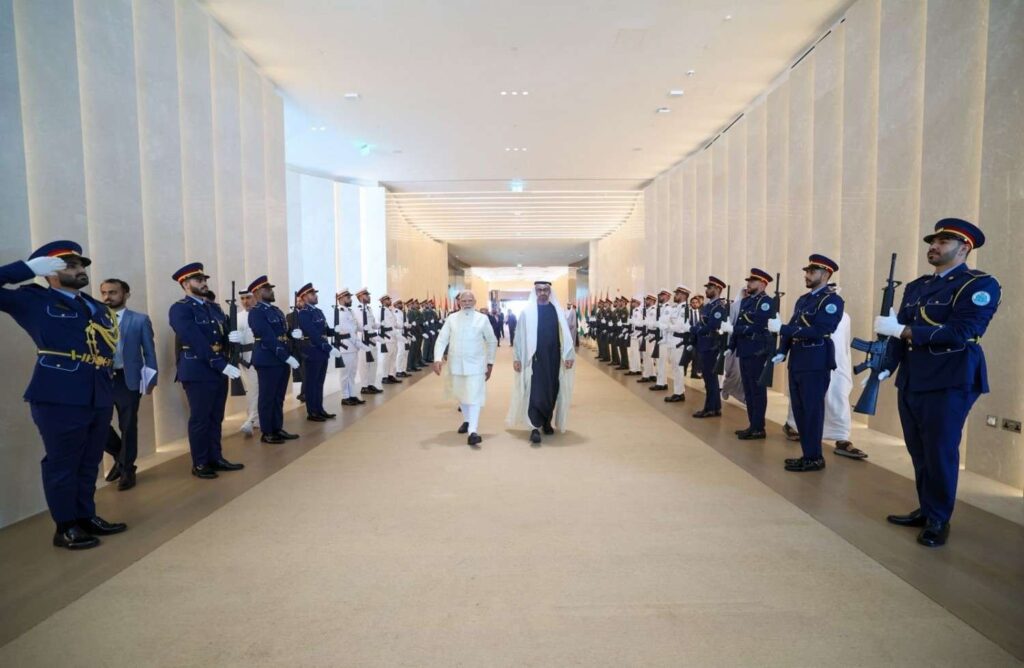
ABU DHABI — In a move that significantly redraws the geopolitical and economic map of South Asia and the Gulf, Prime Minister Narendra Modi and UAE President Sheikh Mohamed bin Zayed Al Nahyan have finalized a sweeping suite of agreements that move the bilateral relationship far beyond the “buyer-seller” dynamic of old.
As of Friday, May 15, 2026, the two leaders have operationalized a $5 billion investment commitment alongside a groundbreaking Strategic Defense Partnership framework. The deals, signed during the first leg of Mr. Modi’s five-nation tour, represent a sophisticated hardening of the India-UAE Strategic Partnership at a time of heightened global energy volatility and shifting maritime security needs.
A New Architecture for Defense
The most striking departure from previous diplomatic rounds is the formalization of the Strategic Defense Partnership. According to official statements from the Ministry of External Affairs and reports by Reuters, this framework is not merely a purchase agreement but a blueprint for long-term industrial collaboration. +1
The pact focuses on five critical pillars:
- Defense Manufacturing: Moving toward joint production of advanced military hardware.
- Maritime Security: Ensuring the safety of vital trade routes, specifically the Strait of Hormuz.
- Cyber Defense: Collaborative intelligence sharing to combat digital threats.
- Secure Communications: Joint development of encrypted technologies.
- Information Exchange: Direct channels for high-level intelligence sharing.
Prime Minister Modi underscored the gravity of this cooperation, stating that India stands “shoulder-to-shoulder” with the UAE. This sentiment is backed by a new maritime MoU between Cochin Shipyard and Dubai’s Drydocks World, which will see the creation of a massive ship repair cluster at Vadinar in Gujarat. +1
The $5 Billion Capital Injection
While defense provided the strategic headline, the economic numbers provided the muscle. The UAE’s $5 billion investment pledge is a deliberate pivot toward controlling-equity partnerships in India’s financial and infrastructure sectors.
As reported by BBC and Fortune India, the capital is being deployed through three major tranches:
- $3 billion via Emirates New Development Bank (ENDB) into RBL Bank, representing the largest foreign direct investment in India’s banking history.
- $1 billion from the Abu Dhabi Investment Authority (ADIA) for large-scale infrastructure projects.
- $1 billion from International Holding Company (IHC) into Sammaan Capital, targeting India’s burgeoning housing finance market.
Financial analysts suggest this move indicates that Gulf sovereign wealth is no longer content with passive investment; they are now betting on the structural growth of India’s retail and urban sectors.
Fortifying Energy and AI
Energy security remains the bedrock of the relationship, but even here, the approach has evolved. The Strategic Collaboration Agreement between Indian Strategic Petroleum Reserves Ltd and ADNOC seeks to raise the UAE’s participation in India’s oil reserves to 30 million barrels. Crucially, the two sides are also exploring the development of strategic gas reserves—a first for the partnership. +1
In a nod to the future, the visit also saw the announcement of an 8 Exaflop Super Compute Cluster. This partnership between India’s C-DAC and the UAE’s G42 AI firm is designed to supercharge India’s AI Mission, placing digital sovereignty at the heart of their shared diplomatic agenda.
The Geopolitical Stakes
The timing of these pacts is no coincidence. With Middle Eastern tensions fluctuating and global fuel costs driving India’s wholesale inflation to 8.3%, securing long-term LPG and crude supplies is a domestic necessity for New Delhi.
During his talks in Abu Dhabi, Mr. Modi described the Strait of Hormuz as “vital for regional stability” and “global energy security.” His call for unimpeded navigation through the waterway reflects a shared concern over regional flashpoints that could disrupt the India-UAE Strategic Partnership.
As Prime Minister Modi departs for the Netherlands and Scandinavia, he leaves behind a relationship with the UAE that is no longer just about migrant labor and oil. It is now a sophisticated alliance of capital, technology, and defense—one that positions the Abu Dhabi-New Delhi axis as a stabilizing force in an increasingly fragmented global order.
FAQ
Q1: What is the significance of the $5 billion UAE investment in India? This investment marks a shift from passive stock market participation to deep institutional ownership. By taking controlling stakes in major banks and housing finance companies, the UAE is becoming a direct stakeholder in the health of the Indian economy.
Q2: How does the new defense pact change India-UAE relations? The Strategic Defense Partnership framework moves the relationship into “hard security” territory. It involves joint manufacturing, cyber defense, and maritime security, particularly focusing on protecting oil shipping lanes in the Gulf.
Q3: What was agreed regarding India’s energy security? The two nations agreed to expand UAE’s role in India’s Strategic Petroleum Reserves to 30 million barrels and signed a long-term LPG supply deal to mitigate the impact of global price volatility.
Q4: What is the “Vadinar Ship Repair Cluster”? It is a joint project between India’s Cochin Shipyard and Dubai’s Drydocks World to build a major maritime maintenance hub in Gujarat, boosting India’s logistics and ship-building capabilities.
Q5: How will the AI partnership benefit India? The partnership between C-DAC and G42 to build a 8 Exaflop Super Compute Cluster will provide the massive computing power needed for India’s national AI Mission, supporting research in healthcare, agriculture, and climate modeling.
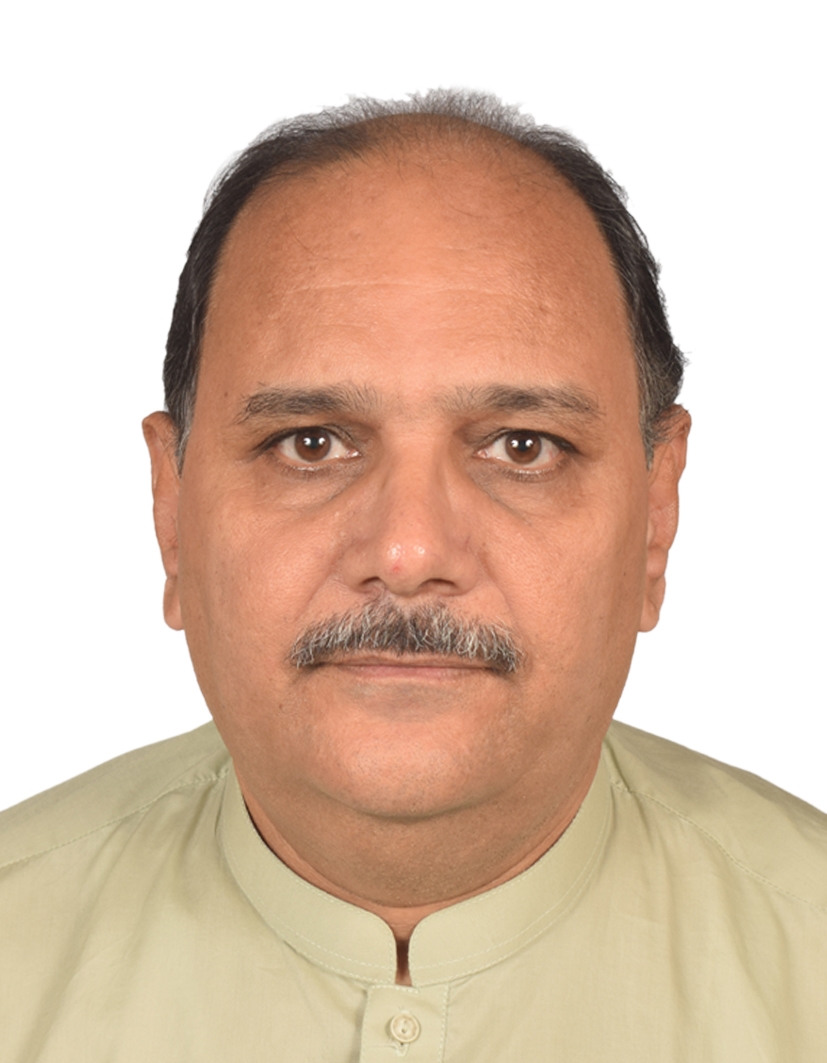
Khalid Minhas | Editor, Diplomatic Wire
A veteran journalist with three decades of comprehensive experience, Khalid Minhas has covered politics and international relations in depth throughout his career. He has also contributed to academia, teaching journalism and mass communication as a visiting faculty member at various universities in Pakistan. He holds an M.Phil in Mass Communication and is currently a Ph.D research scholar pursuing advanced studies in the field. He is also the author of the book America, Israel aur Islam, providing insightful analysis on the subject.