The Xi Jinping Trump Taiwan warning issued during Wednesday’s summit in Beijing has fundamentally altered the trajectory of trans-Pacific diplomacy. As of Thursday morning, officials from both nations are grappling with the fallout of an exchange that shifted from a discussion on economic stabilization to a blunt discourse on the mechanics of war. President Xi Jinping, speaking across a heavy mahogany table in the Great Hall of the People, reportedly told Donald Trump that the Taiwan question is the “first red line” in the bilateral relationship—one that, if crossed through “mishandling,” would inevitably ignite a military confrontation.
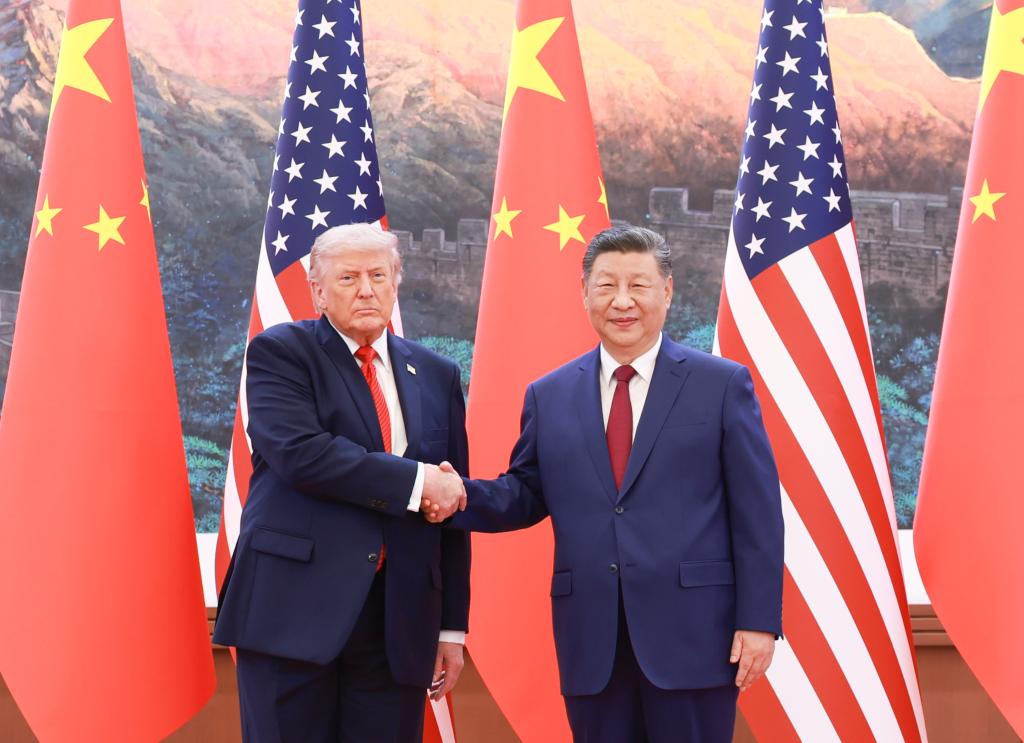
The air inside the Great Hall of the People was reportedly thick with more than just diplomatic protocol on Wednesday. As President Donald Trump and President Xi Jinping sat across from one another for their first face-to-face encounter of 2026, the conversation veered sharply away from the anticipated talk of market access and tariffs. Instead, it landed squarely on the most volatile flashpoint in the Pacific.
In a statement that has sent ripples through diplomatic circuits from Washington to Tokyo, Xi Jinping delivered a blunt ultimatum regarding the island of Taiwan. According to a Reuters report detailing the closed-door session, the Chinese leader warned that any “mishandling” of Taiwan’s status by the U.S. administration would not just be a diplomatic error—it would be the “spark” for a hot conflict.
This Xi Jinping Trump Taiwan warning marks a significant departure from the more cautious, scripted rhetoric of previous years. While Beijing has long referred to Taiwan as a “red line,” the explicit suggestion that specific policy shifts by the Trump administration could trigger an immediate military response suggests that China’s patience with “strategic ambiguity” has reached a breaking point.
The Stakes of the “Red Line”
The meeting comes at a time when the U.S. has significantly ramped up its presence in the region. The BBC reported that recent months have seen an increase in high-level American delegations to Taipei, alongside a series of naval transits through the Taiwan Strait that Beijing views as a violation of its sovereignty.
For the Trump administration, Taiwan has often been treated as part of a broader geopolitical chessboard—a leverage point to be used in negotiations over everything from fentanyl precursors to the war in Ukraine. However, Xi’s latest intervention suggests that Beijing is no longer willing to allow Taiwan to be a bargaining chip.
“The Taiwan question is the very core of China’s core interests,” Xi reportedly told Trump, according to a transcript summary released by Chinese state media and corroborated by Al Jazeera. He emphasized that the “One China” policy is the political foundation of the bilateral relationship, and that any attempt to erode it would have “unbearable consequences.”
A Trade Truce Hanging in the Balance
Before the headlines were dominated by talk of war, the primary objective of this summit was the finalization of a US-China trade truce. Global markets had been cautiously optimistic that the two superpowers were nearing an agreement to freeze new tariffs and roll back existing ones on agricultural and tech exports.
However, the aggressive tone taken by Xi on security matters has cast a long shadow over the economic agenda. Analysts speaking to The Telegraph noted that it is becoming increasingly difficult for the White House to decouple trade from national security. If Trump continues to bolster Taiwan’s defensive capabilities—which he views as a necessary deterrent—Xi may well scuttle the trade deal to demonstrate Beijing’s resolve.
“Trump wants a win for the American farmer and the tech sector, but Xi is making it clear that the price of that win is a hands-off approach to Taipei,” said one senior analyst.
Regional Responses and Military Posturing
The reaction across Asia has been one of quiet alarm. In Taipei, the government issued a brief statement reiterating that the future of the island should be decided by its people, while also thanking the U.S. for its “rock-solid” support. Meanwhile, Fox News reported that the Pentagon is closely monitoring an uptick in People’s Liberation Army (PLA) sorties near the median line of the Taiwan Strait following the summit’s conclusion.
This military activity isn’t just for show. Newsweek highlighted that China’s naval capabilities in 2026 are significantly more robust than they were even five years ago. The risk of a “miscalculation”—a mid-air collision or a naval skirmish—is at its highest level in decades. If the Xi Jinping Trump Taiwan warning is ignored, the infrastructure for a rapid escalation is already in place.
Xi Jinping Trump Taiwan warning: What Comes Next?
As President Trump departs Beijing, the immediate question is how the White House will adjust its messaging. Will the administration lean into the “strongman” persona and double down on Taiwan as a matter of American principle, or will the pragmatic desire for a market-stabilizing trade deal lead to a quiet de-escalation?
The State Department has yet to issue a formal rebuttal to Xi’s “spark” comment, opting instead for a generic statement about “maintaining open lines of communication.” However, with the 2026 midterms approaching, Trump’s domestic critics—and his supporters—will be watching to see if he blinks in the face of Beijing’s most direct threat yet.
For now, the world is left with a precarious reality: the two most powerful men on earth have met, and instead of finding common ground, they have defined the exact coordinates of a potential war.
FAQ
Q1: Why is the Taiwan issue so sensitive for China right now? Beijing views Taiwan as a breakaway province that must eventually be reunified with the mainland. With the U.S. increasing military aid and diplomatic visits, China fears the island is moving toward a permanent declaration of independence, which Xi Jinping has vowed to prevent, by force if necessary.
Q2: Will the “Xi Jinping Trump Taiwan warning” lead to immediate sanctions? While immediate sanctions weren’t announced, the warning usually serves as a precursor to economic retaliation or military drills. The most immediate impact is likely the stalling of the highly anticipated US-China trade truce.
Q3: How does the Trump administration’s 2026 policy differ from previous years? The current administration has been more vocal about treating Taiwan as a strategic partner in the Indo-Pacific, moving away from the traditional “strategic ambiguity” that previous presidents used to avoid provoking China.
Q4: Could a conflict in the Taiwan Strait affect the global economy? Absolutely. The Taiwan Strait is one of the busiest shipping lanes in the world. Any conflict would halt the supply of advanced semiconductors (of which Taiwan is the world’s leading producer) and likely trigger a global depression.
Q5: What is the significance of the “One China” policy in these talks? The “One China” policy is the U.S. acknowledgment that there is only one Chinese government. However, the U.S. also maintains the Taiwan Relations Act, which mandates that the U.S. help Taiwan defend itself. Xi is currently pressuring Trump to prioritize the former over the latter.
Read Latest development here

Khalid Minhas | Editor, Diplomatic Wire
A veteran journalist with three decades of comprehensive experience, Khalid Minhas has covered politics and international relations in depth throughout his career. He has also contributed to academia, teaching journalism and mass communication as a visiting faculty member at various universities in Pakistan. He holds an M.Phil in Mass Communication and is currently a Ph.D research scholar pursuing advanced studies in the field. He is also the author of the book America, Israel aur Islam, providing insightful analysis on the subject.