Victory Day in Pakistan celebrations: Diplomatic representatives from across the former Soviet republics gathered at the Russian Embassy in Pakistan to honor the 81st anniversary of the Great Patriotic War, featuring the “Immortal Regiment” procession and a call to preserve historical truth.
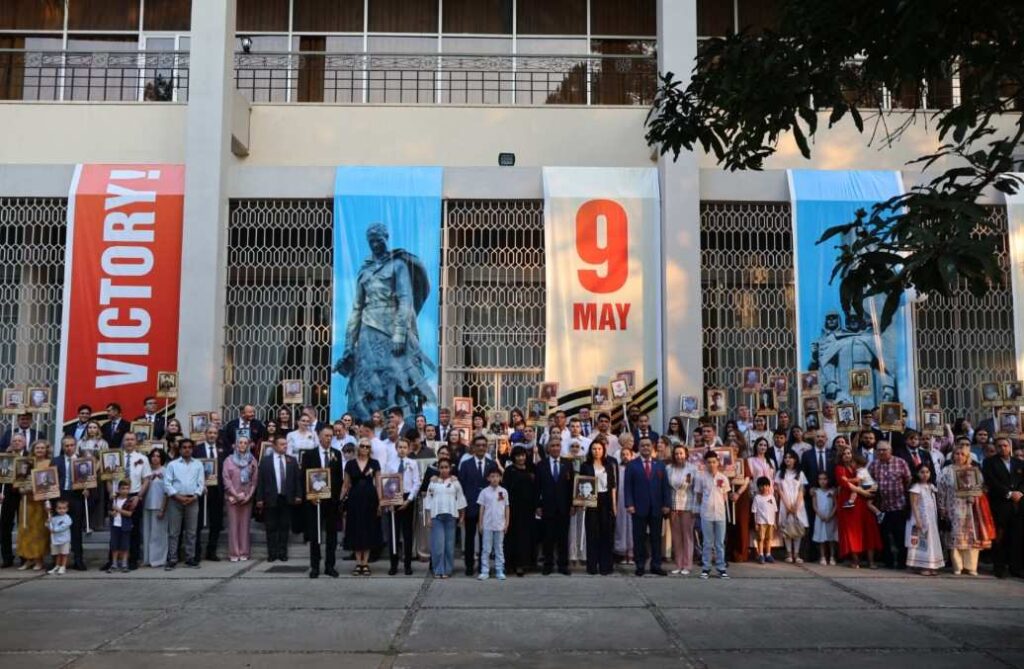
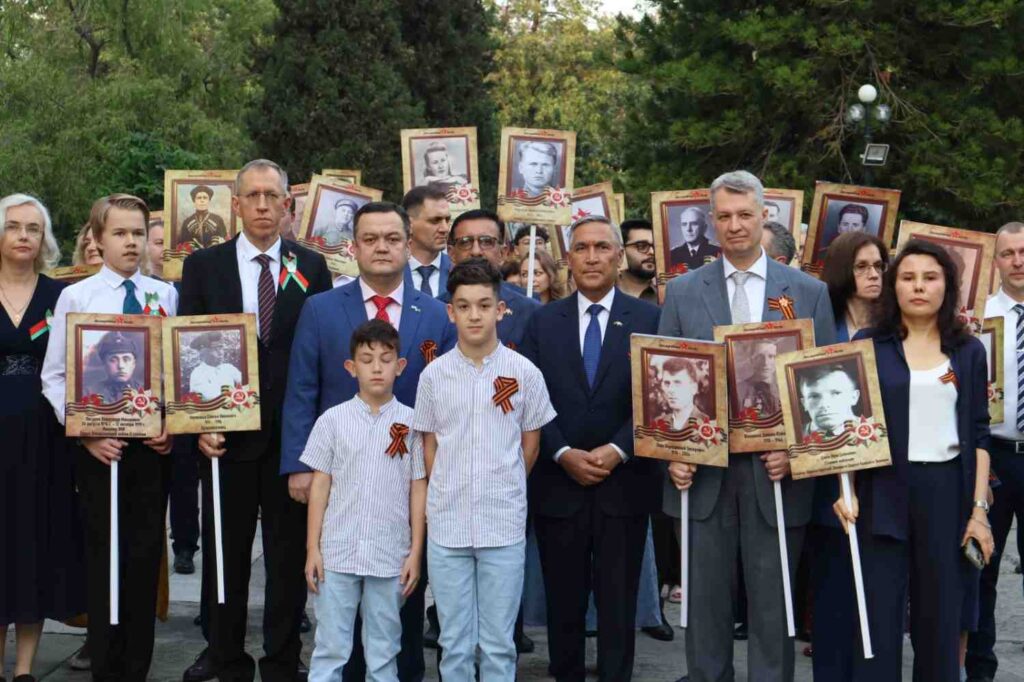
In the quiet, high-security enclave of Islamabad’s diplomatic district, a sea of black-and-white portraits moved in rhythmic silence on May 7, 2026. The occasion was the 81st anniversary of the Soviet victory over Nazi Germany, a date etched into the collective consciousness of the Russian people and the broader post-Soviet space. Led by Russian Chargé d’Affaires Natalia Shmeleva and Defence Attaché Colonel Vadim Fenchenko, the Victory Day in Pakistan celebrations served as a poignant reminder of a conflict that redefined the 20th century.
The “Immortal Regiment” march, now a cornerstone of May 9 festivities worldwide, saw participants clutching framed photographs of grandfathers and great-grandfathers—the soldiers and partisans of the Great Patriotic War. The atmosphere was one of solemnity, yet it functioned as a bridge between the past and the present, bringing together not just Russians, but a wide coalition of diplomats from Central Asian nations.
Victory Day in Pakistan celebrations: A Unified Diplomatic Front
What stood out during this year’s commemoration was the conspicuous show of unity among the Commonwealth of Independent States (CIS) members. Ambassadors from Belarus, Turkmenistan, Tajikistan, and Uzbekistan marched alongside their families and Russian embassy staff. Later, during the formal ceremonies, they were joined by the heads of missions from Azerbaijan and Kazakhstan.
In an era of shifting geopolitical alliances, the shared history of the 1941–1945 struggle remains a potent cultural glue. For these nations, the victory is not merely a Russian milestone but a collective achievement of the diverse peoples of the USSR. The presence of such a broad diplomatic corps in Islamabad underscored the regional commitment to maintaining this historical narrative, even as modern political landscapes grow increasingly complex.
Shmeleva: “Truth Must Be Preserved”
Speaking to a packed hall at the Russian Embassy School, Natalia Shmeleva delivered a speech that was both a tribute to the fallen and a sharp critique of contemporary historical revisionism.
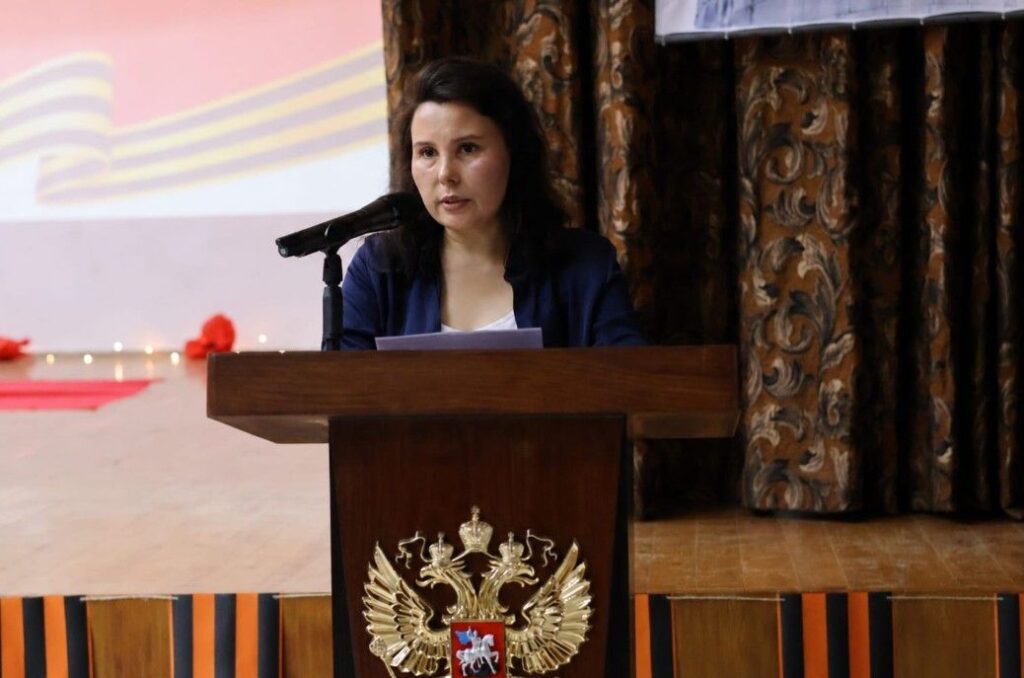
“Victory Day remains a symbol of courage, unity, and the unparalleled feat of the peoples of the USSR,” Shmeleva stated. She emphasized that the crushing of Nazism came at the cost of “immense sacrifice and hardship,” a debt that she argued must be repaid through the rigorous defense of historical facts.
In a tone reflecting Moscow’s broader foreign policy stance, Shmeleva condemned what she described as attempts to “distort historical truth and revive Nazi ideology.” She reaffirmed that Russia would remain a guardian of the memory of the Soviet people’s victory, suggesting that the lessons of the 1940s are increasingly relevant in the 21st century.
Art and Memory: “Saved Europe”
Beyond the speeches and the marching, the embassy utilized art and education to reinforce the day’s significance. A curated photo exhibition titled “Saved Europe,” produced by the National Center for Historical Memory under the President of the Russian Federation, was unveiled for the guests. The images depicted the liberation of European cities by the Red Army, emphasizing the scale of the Soviet contribution to the Allied victory.
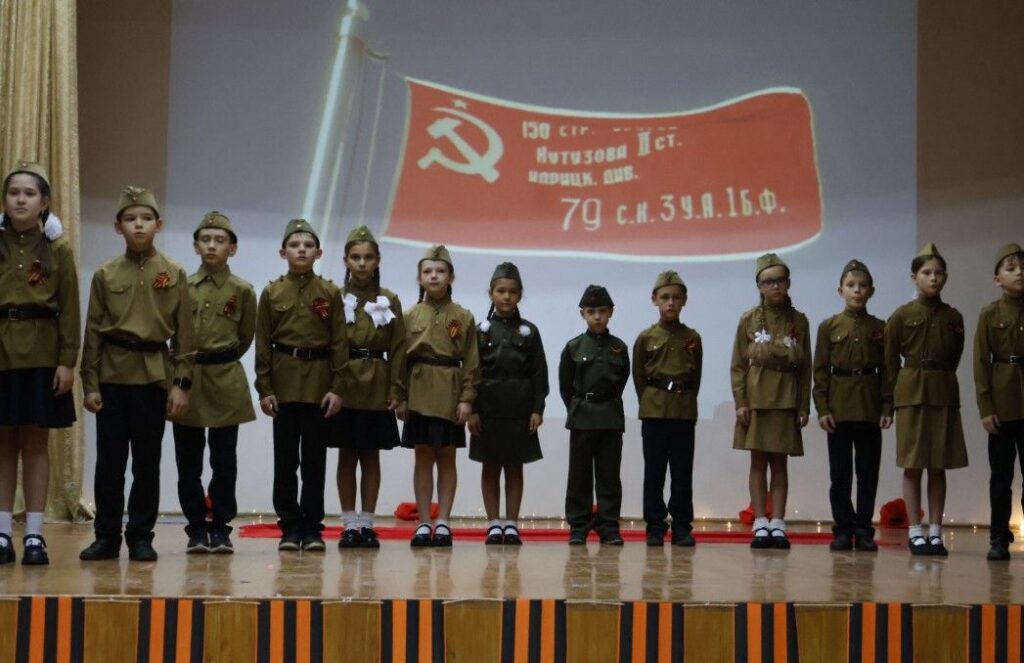
The evening took an emotional turn as the children of embassy staff performed wartime poetry and songs. These performances, often featuring traditional compositions that became anthems of resilience during the siege of Leningrad or the Battle of Stalingrad, highlighted the “continuity of historical memory” that the organizers aimed to achieve.
Why the Islamabad Commemoration Matters
While Victory Day is celebrated most vibrantly in Moscow’s Red Square, the observance of Victory Day in Pakistan carries its own weight. Pakistan and Russia have spent the last decade warming a once-chilly relationship, finding common ground in regional security and energy cooperation. By hosting a high-profile commemorative event in Islamabad, the Russian mission not only honors its heritage but also projects soft power within the Pakistani capital.
The event symbolizes a refusal to let the human cost of the Second World War fade into the periphery of history. For the Russian community living in Pakistan, the march is a rare opportunity to connect with their roots, ensuring that the faces of those who fought are seen by a new generation born thousands of miles away from the battlefields of Eastern Europe.
The Legacy of the Great Patriotic War
As the 81st anniversary draws to a close, the message from the Russian Embassy is clear: the victory of 1945 is a living history. Through the Immortal Regiment and the active participation of Central Asian allies, the commemoration serves as a pushback against the erosion of the Soviet Union’s role in defeating the Third Reich.
In the words of one participant clutching a faded photo of a soldier in a fur cap, “We do not march for the politics of today; we march so that the person in this photo is never forgotten.”
FAQ
Q1: What is the “Immortal Regiment” march? The Immortal Regiment is a massive civil event where people carry portraits of relatives who fought in World War II. It began in Russia but is now held in over 80 countries to honor the memory of the “Great Patriotic War” generation.
Q2: Why is Victory Day celebrated on May 9? While Western Europe marks Victory in Europe (VE) Day on May 8, Russia and several post-Soviet states celebrate on May 9 because the German surrender took effect at 1:01 AM Moscow time, which was already the following day.
Q3: Who participated in the 2026 Victory Day event in Islamabad? The event was attended by Russian diplomats, the Russian community in Pakistan, and the Ambassadors of Azerbaijan, Belarus, Kazakhstan, Turkmenistan, Tajikistan, and Uzbekistan.
Q4: What was the “Saved Europe” exhibition about? Prepared by the National Center for Historical Memory, the exhibition featured historical photographs documenting the Red Army’s role in liberating European territories from Nazi occupation between 1944 and 1945.
Q5: What is the significance of the term “Great Patriotic War”? This term is used in Russia and other former Soviet republics to describe the conflict fought from June 22, 1941, to May 9, 1945, specifically along the Eastern Front of World War II.
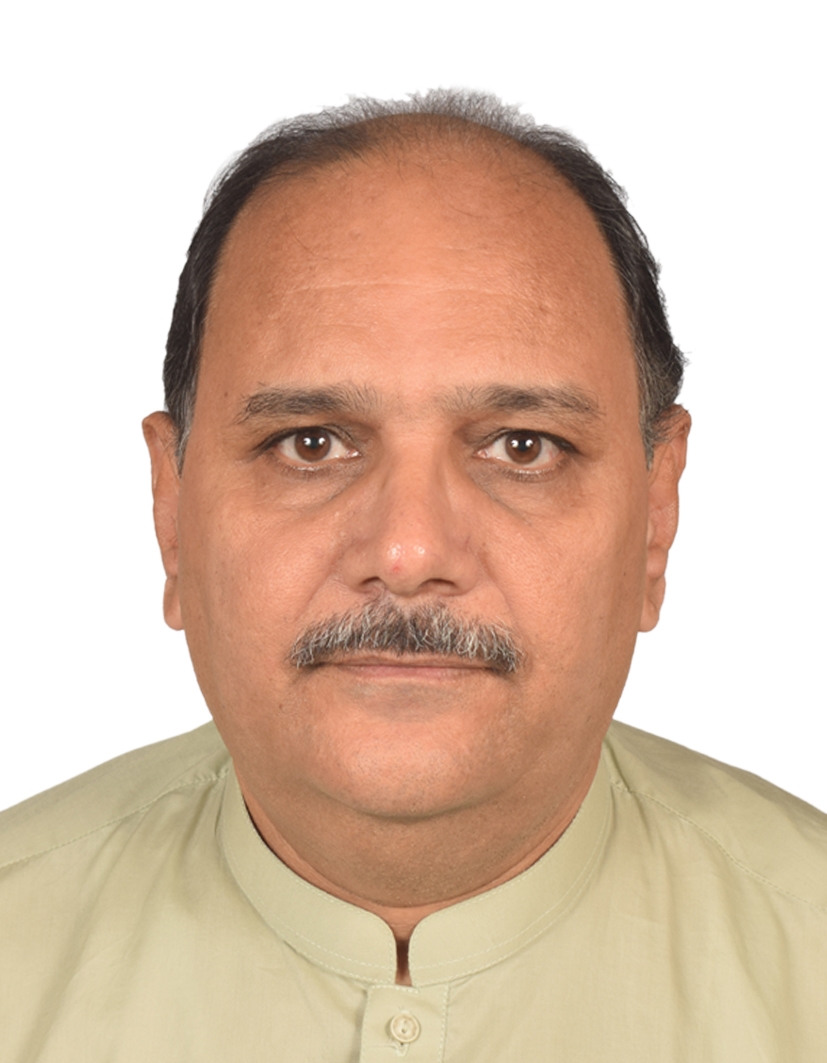
Khalid Minhas | Editor, Diplomatic Wire
A veteran journalist with three decades of comprehensive experience, Khalid Minhas has covered politics and international relations in depth throughout his career. He has also contributed to academia, teaching journalism and mass communication as a visiting faculty member at various universities in Pakistan. He holds an M.Phil in Mass Communication and is currently a Ph.D research scholar pursuing advanced studies in the field. He is also the author of the book America, Israel aur Islam, providing insightful analysis on the subject.