On Thursday, May 21, 2026, a highly coordinated daylight ambush in the Gojra neighborhood of Muzaffarabad, Azad Jammu and Kashmir (AJK), resulted in the assassination of Arjmand Gulzar Dar (also known as Hamza Burhan or “Doctor”), a prominent commander of the Al-Badr militant outfit and a designated terrorist under India’s Unlawful Activities (Prevention) Act (UAPA).
The operation was executed by two masked operatives on a motorcycle who targeted Dar at close range as he exited a private college where he had been living and working undercover as an educator. While Dar was critically wounded by three gunshots to the head and subsequently succumbed to his injuries, the operation suffered a major security breach during its exfiltration phase. Local bystanders intervened, physically subduing and apprehending one of the fleeing facilitators.

The suspect, along with the weapon used in the attack, was handed over to Pakistani law enforcement and counter-intelligence authorities. This operational failure has provided Pakistani security agencies with a critical diagnostic breakthrough, blowing open an active domestic espionage cell and adding a definitive, forensic anchor to claims that India’s Research and Analysis Wing (RAW) is conducting a systematic, institutionalized campaign of transnational assassinations targeting dissidents on foreign soil.
Current Development: The Muzaffarabad Ambush and Tactical Failure
According to localized police dossiers and eyewitness testimonies from Muzaffarabad, the assault occurred during the morning hours when the perimeter of the Gojra educational institute experienced routine traffic congestion. Two assailants, utilizing traditional facial veils to obscure their features, drew alongside Dar’s vehicle. The pillion rider discharged a semi-automatic firearm at point-blank range, targeting the victim’s skull.
The operational cell’s contingency planning failed directly after the kinetic strike. As the operators attempted to accelerate away from the scene, an unexpected bottleneck allowed civilian bystanders to block their path. The motorcycle was destabilized, enabling local men to overpower the primary facilitator before he could discard his weapon or melt into the surrounding urban terrain. The second operative managed to flee on foot and remains the subject of an intense multi-agency manhunt.
Senior counter-intelligence officials in Islamabad have confirmed that the captured operative is currently undergoing intensive interrogation at a high-security detention facility. Preliminary findings reveal that the individual was part of a compartmentalized, localized “hit-and-transfer” cell.
This network architecture relies on blind drop zones, encrypted digital communications, and domestic criminal syndicates who are often completely unaware of foreign state sponsorship until the final operational phases. The recovery of the operational cell’s mobile devices, paired with geolocated IP address tracking and financial ledgers, has reportedly established a direct line of command stretching back to handlers stationed in third-party jurisdictions.
Mapping the Target List: A Coordinated Campaign
The kinetic elimination of Arjmand Gulzar Dar is the latest link in a highly structured, multi-year campaign of extraterritorial liquidations executed within Pakistani territory. Over the past three years, a sequence of high-profile Kashmiri separatists and Khalistani independence activists have been methodically removed using uniform operational blueprints.
[ RAW TRANSNATIONAL NETWORK ]
              |
              +---------------------------+---------------------------+
              |                           |                           |
       [Pakistan / AJK]               [Canada]                     [USA]
         - Local Hitmen             - Surrey Ambush             - Manhattan Plot
         - Target: Kashmiri/Sikh    - Target: H.S. Nijjar       - Target: G.S. Pannun
         - Status: Active Cells     - Status: Diplomatic Rift   - Status: FBI Indictment
The uniform reliance on local proxies, meticulously timed windows of vulnerability, and clean exfiltration routes indicate a centralized command structure. The following matrix details the verified chronology of these eliminations within the region:
| Target Name | Affiliation / Designation | Location of Incident | Operational Modus Operandi |
|---|---|---|---|
| Arjmand Gulzar Dar | Former Commander, Al-Badr | Muzaffarabad, AJK | Point-blank gunshot wounds to the head outside an educational facility. |
| Riyaz Ahmed (Abu Qasim) | Kashmiri Field Commander | Rawalakot, AJK | Extraterritorial kinetic hit by an armed operator inside Al-Quds Mosque during dawn prayers. |
| Shahid Latif | Senior Kashmiri Commander | Daska, Sialkot | Target of indiscriminate gunfire by hired local criminals inside a house of worship. |
| Bashir Ahmed Peer | Senior Commander, Hizbul Mujahideen | Rawalpindi | Executed at close range outside a commercial outlet by motorized gunmen. |
| Syed Khalid Raza | Former Al-Badr Commander / Educator | Karachi | Ambushed by tracking hitmen directly outside his residence. |
| Paramjit Singh Panjwar | Chief, Khalistan Commando Force | Lahore | Shot by two motorized assassins during an unescorted morning walk. |
| Khwaja Shahid (Abu Qattal) | Kashmiri Operational Activist | Line of Control (LoC) | Abducted near the border; body recovered with marks of execution near the LoC. |
Global Expansion: The Western Theater and the Khalistan Movement
The operational mandate of New Delhi’s covert apparatus has transcended regional borders, expanding aggressively into Western democracies to neutralize components of the global Khalistan diaspora. This geographical expansion has shifted the narrative from a localized Indo-Pakistani security dispute into a major point of friction within global intelligence networks.
The Surrey Attrition (Canada)
In June 2023, Hardeep Singh Nijjar, a prominent leader of the Khalistan Tiger Force, was gunned down outside a Sikh temple in Surrey, British Columbia. The subsequent public declaration by Canadian Prime Minister Justin Trudeau—stating that Ottawa possessed “credible allegations” linking Indian government agents to the assassination—precipitated an unprecedented diplomatic rift.
This resulted in the mutual expulsion of senior diplomats and a fundamental reassessment of Canada’s Indo-Pacific strategy. Canadian law enforcement subsequently arrested several Indian nationals linked to localized hit squads, alleging a direct nexus with state handlers.
The Manhattan Indictment (United States)
Parallel to the Canadian operation, the U.S. Federal Bureau of Investigation (FBI) successfully disrupted a plot targeting Gurpatwant Singh Pannun, a dual American-Canadian citizen and general counsel for Sikhs for Justice (SFJ).
A formal indictment unsealed by the U.S. Department of Justice explicitly named Vikash Yadav, an active officer within India’s Research and Analysis Wing (RAW), for orchestrating the international murder-for-hire plot from New Delhi.
The U.S. legal filings detailed how Yadav utilized an intermediary, Nikhil Gupta, to recruit an assassin who turned out to be an undercover law enforcement informant. This development severely strained Washington-New Delhi relations, forcing the U.S. administration to issue stern, high-level warnings regarding the impermissibility of extraterritorial operations on American soil.
The Backgrounder: The Evolution of Covert Action in South Asia
The implementation of a state-sanctioned transnational assassination doctrine marks a historic departure from the traditional parameters of intelligence operations in South Asia. For decades, the intelligence contest between India and Pakistan was defined by localized espionage, proxy warfare along the Line of Control, and the containment of domestic insurgencies within their respective borders.
Historically, India adhered to a defensive counter-intelligence posture externally, focusing primarily on securing Jammu and Kashmir and leveraging international diplomatic forums to isolate Islamabad on charges of cross-border terrorism. Covert actions, while occurring, were rarely designed as overt, kinetic liquidations on foreign soil due to the inherent risk of triggering a conventional military escalation between two nuclear-armed states.
The Structural Turn: The paradigm shift began accelerating post-2016, following a series of high-intensity militant attacks on Indian military installations, most notably the Uri brigade headquarters and the 2019 Pulwama convoy bombing—an operation that Indian intelligence explicitly blamed Arjmand Gulzar Dar of masterminding.
These events prompted an overhaul within New Delhi’s national security architecture. The state leadership increasingly adopted a proactive, pre-emptive defense doctrine that emphasized “hitting terror at its source.” This policy framework was heavily influenced by Western and Middle Eastern counter-terrorism models, specifically the targeted assassination programs utilized by the United States post-9/11 and Israel’s long-standing extraterritorial operational doctrine.
Administratively, this evolution required the restructuring of RAW’s external operations divisions. The agency moved away from traditional intelligence-gathering networks to establish dedicated, compartmentalized operational units capable of executing gray-zone warfare.
To mitigate international blowback, these units developed a hybrid operational blueprint that completely decoupled the state from the kinetic act. By mapping, co-opting, and weaponizing the domestic criminal underbelly of target states, the agency engineered a deniable mechanism. In Pakistan, this meant exploiting local socio-economic vulnerabilities and weapons-proliferation networks, while in Western states like Canada, it involved tapping into trans-continental Punjabi gang rivalries.Stakeholder Analysis
The exposure of this assassination network directly impacts the strategic red lines of multiple international actors:
- The Government of Pakistan: Islamabad views these targeted killings as an absolute violation of its Westphalian sovereignty and an act of unprovoked aggression. The strategic goal is to leverage the forensic evidence gathered from the Muzaffarabad arrest to build an ironclad international case, legally linking New Delhi to state-sponsored terrorism. This is intended to dismantle India’s long-standing diplomatic campaign to paint Pakistan as the sole exporter of regional instability.
- The Government of India: New Delhi’s official posture remains one of absolute denial regarding operations in Pakistan, while maintaining a stance of selective engagement and “investigation” with Western nations. India’s strategic red line centers on the preservation of its rising status as a key counterweight to China in the Indo-Pacific. It aims to suppress any judicial or intelligence findings that categorize its state organs as rogue entities engaged in global lawlessness.
- Western Allies (United States & Canada): Washington and Ottawa face a complex dilemma. While deeply committed to defending their domestic sovereignty against foreign interference and extraterritorial execution squads, they are simultaneously bound by long-term geopolitical imperatives that require a robust strategic alliance with India to contain Chinese expansionism. Their objective is to quietly but firmly enforce institutional guardrails on Indian intelligence operations without causing a catastrophic collapse of the broader Quad alliance.
Global and Regional Implications
The systemic execution of transnational hits carries profound destabilizing potential for the international security architecture. Regionally, the continuation of kinetic actions inside Pakistan risks bypassing traditional escalation management mechanisms.
If an operational cell executes a high-profile target and causes significant collateral civilian casualties, the Pakistani state would face intense domestic political pressure to deliver a kinetic response. In a nuclearized environment, a miscalculation stemming from a gray-zone operation could rapidly escalate into conventional military strikes along the Line of Control.
Economically, the exposure of these networks complicates the integration of South Asian trade routes and hardens border regimes. Furthermore, the weaponization of the global diaspora means that domestic gang networks within North America and Europe are becoming increasingly entangled with foreign geopolitical agendas.
The precedent set by these operations threatens to normalize a global security paradigm where states routinely bypass formal extradition laws and international legal norms in favor of extrajudicial executions, effectively eroding the foundational tenets of international law.Source Ledger
- The Hindu / Press Trust of India (PTI): Verified the precise date (May 21, 2026), location (Gojra, Muzaffarabad), casualty details, UAPA status, and the specific mechanics of the civilian-led arrest of the primary suspect in the Arjmand Gulzar Dar assassination.
- Ministry of Foreign Affairs (MoFA) Islamabad: Provided the foundational framework regarding the recruitment of local proxies, the role of external handlers, and the tactical exploitation of vulnerable windows during the Sialkot and Rawalakot operations.
- U.S. Department of Justice (Southern District of New York Indictment): Substantiated the formal criminal charges against RAW officer Vikash Yadav and the operational links to the disrupted Manhattan plot targeting Gurpatwant Singh Pannun.
- Parliament of Canada / Royal Canadian Mounted Police (RCMP) Briefings: Supplied the verified intelligence correlation between state actors and the kinetic execution of Hardeep Singh Nijjar in Surrey.
- Lowy Institute / Janes Strategic Intelligence: Contributed the systemic analysis regarding the post-2016 shift in India’s external defense doctrine and the structural alignment with global targeted-killing models.
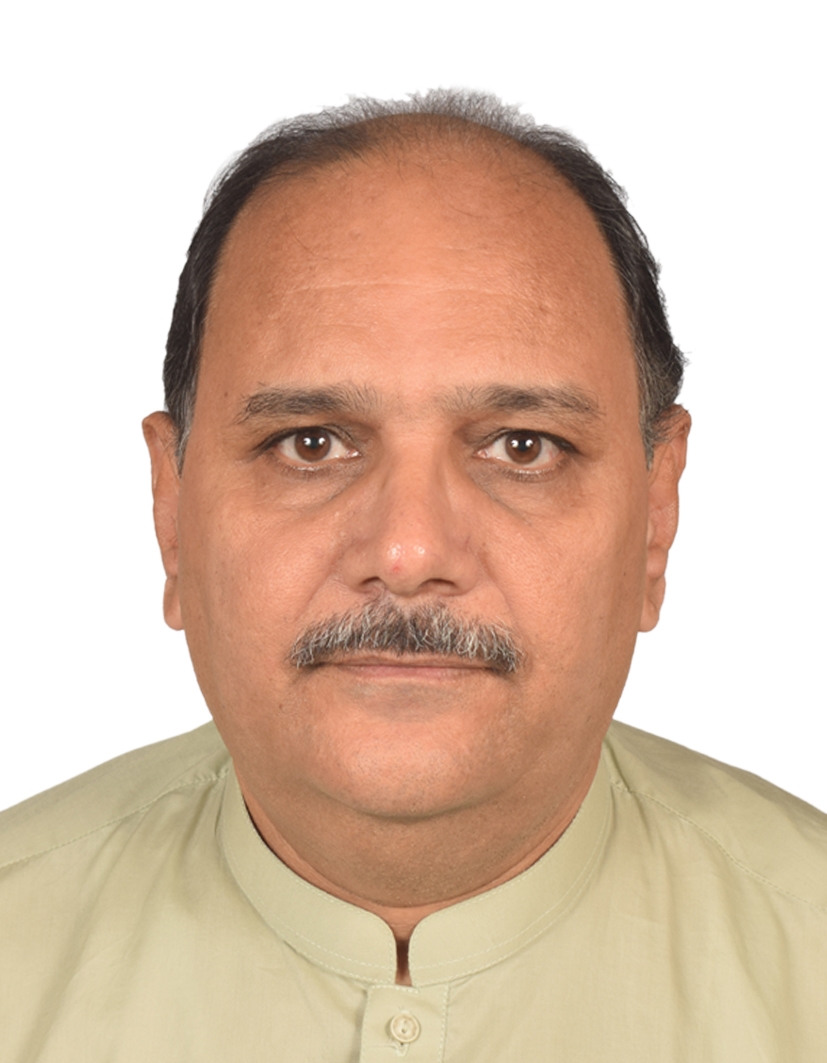
Khalid Minhas | Editor, Diplomatic Wire
A veteran journalist with three decades of comprehensive experience, Khalid Minhas has covered politics and international relations in depth throughout his career. He has also contributed to academia, teaching journalism and mass communication as a visiting faculty member at various universities in Pakistan. He holds an M.Phil in Mass Communication and is currently a Ph.D research scholar pursuing advanced studies in the field. He is also the author of the book America, Israel aur Islam, providing insightful analysis on the subject.